
Marcus Chen spent three frustrating years watching his backyard Meyer lemon tree decline. The leaves turned a sickly yellow between the veins. New growth was sparse and twisted. He tried every citrus spike at the garden center, yet the tree dropped more fruit than it kept. Then a soil test revealed the real problem: high pH and severe magnesium deficiency. Marcus switched to an organic program of compost top-dress, quarterly fish emulsion, and Epsom salt drenches. Within one growing season, the canopy filled out. The next spring, he harvested forty-two lemons from a tree that had produced eleven the year before.
You have probably searched for the best organic fertilizer for citrus trees and found the same generic lists. Most guides ignore the micronutrient science that separates thriving citrus from struggling ornamentals. Citrus trees are not deciduous apples or pears. They are evergreen, heavy feeders with unique demands for nitrogen, iron, zinc, and magnesium. Home growers and commercial operators alike need application rates that scale from patio pots to orchard rows. And they need sourcing transparency that only certified manufacturers can provide.
This guide delivers exactly that. We will break down the six most effective organic inputs for citrus. You will learn how to match each source to tree age, soil pH, and climate. You will see real application rates for container lemons and commercial grapefruit blocks. And you will understand why the global organic fertilizer market, now valued at approximately USD 14.2 billion in 2025, is seeing its fastest growth in the fruits and vegetables segment.
What Makes Citrus Trees Different?
Citrus trees operate on a different nutritional clock than most fruit trees. Understanding these differences is the first step toward choosing the best organic fertilizer for citrus trees that actually delivers results.
Evergreen Growth Means Year-Round Nutrient Demand
Deciduous fruit trees drop their leaves and enter dormancy. Citrus does not. An orange or lemon tree maintains foliage twelve months a year, which means it never stops consuming nitrogen, potassium, and micronutrients. This evergreen habit pushes annual nitrogen demand 20-30% higher than comparable deciduous species. Organic programs must account for that steady appetite rather than front-loading all nutrition in early spring.
Higher Nitrogen Needs Than Most Fruit Trees
Citrus trees produce multiple growth flushes per year. Each flush requires a nitrogen surge to push new shoots, leaves, and ultimately flowers. Young trees in canopy-building phase are especially nitrogen-hungry. Mature bearing trees still need more nitrogen than an apple or peach of similar age, though the balance shifts toward phosphorus and potassium as fruit load increases. If you want a broader baseline for comparing citrus against other orchard crops, see Best Organic Fruit Tree Fertilizer: A 2026 Buyer’s Guide for Higher Yields and Healthier Soil.
Critical Micronutrients: Iron, Zinc, Manganese, and Magnesium
Here is where citrus separates itself from the pack. Citrus trees are notoriously susceptible to micronutrient deficiencies, especially in high-pH soils where these elements become chemically locked.
Iron deficiency causes interveinal chlorosis on new leaves. Without iron, chlorophyll cannot form. Zinc deficiency produces small, narrow leaves with distorted “little leaf” symptoms. Manganese deficiency shows as yellowing between veins on older foliage. And magnesium deficiency, the most common of all, creates a distinctive yellow wedge between leaf veins while the midrib stays green.
Soil pH Sensitivity and Nutrient Lockout
Citrus prefers a soil pH between 6.0 and 6.5. When pH climbs above 7.0, iron, zinc, and manganese become insoluble. The elements are present in the soil, but roots cannot absorb them. This is why some growers add sulfur or organic matter to acidify soil, yet still see deficiency symptoms. The best organic fertilizer for citrus trees must include strategies that either lower pH or deliver micronutrients in chelated, bioavailable forms that bypass lockout.
What Is the Best Organic Fertilizer for Citrus Trees?
The top gardening blogs usually recommend the same branded spikes and granules. But from a manufacturer’s perspective, the best organic fertilizer for citrus trees is almost always a layered program of foundational and targeted inputs. Here are the six organic sources that consistently perform in citrus groves and container culture worldwide.
1. Composted Manure and Organic Matter – The Foundation
Compost is the starting point for every successful organic citrus program. Its NPK is modest, usually 1-1-1 to 2-1-2, but what it delivers is structure, water retention, and microbial diversity. Aged manure adds a nitrogen boost that is gentler than concentrated meals. Together, they form the base that makes every subsequent fertilizer more effective.
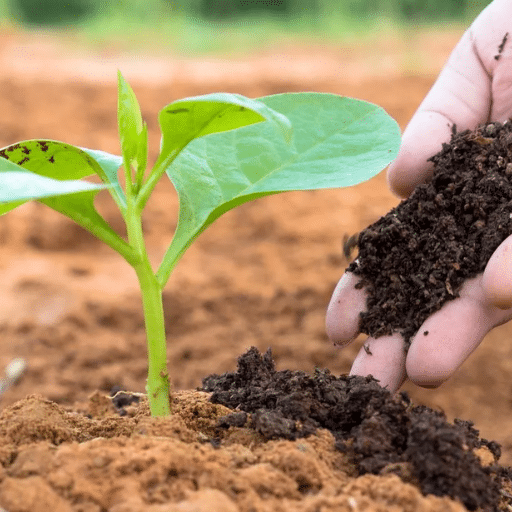
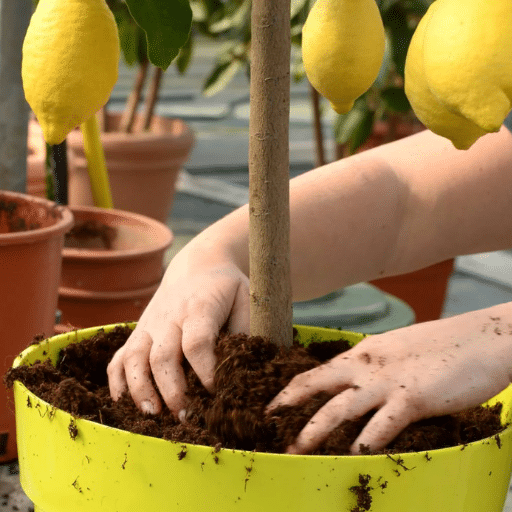
Apply 2-4 inches of compost or well-rotted manure around the drip line in early spring. Keep it several inches from the trunk to avoid collar rot. For commercial citrus blocks, many growers top-dress with 5-10 tonnes per hectare of composted organic matter every two to three years.
2. Blood Meal – Fast Nitrogen for Flush Growth
Blood meal is the highest-nitrogen organic input available, with an NPK near 13-0-0. The proteins are relatively water-soluble, so soil microbes break them down quickly. Expect visible greening within 1-3 weeks under normal temperatures.
Blood meal is ideal for young citrus trees that need canopy establishment. It also works as a rescue shot when older leaves show nitrogen deficiency. However, potency brings risk. Over-application causes nitrogen burn, delayed flowering, and soft late-season growth vulnerable to frost. For home growers, side-dress with 1-2 tablespoons per tree. For commercial applications, 100-200 lbs per acre is a typical spring band.
3. Fish Emulsion and Seaweed Extract – Liquid Micronutrient Power
Fish emulsion, typically rated 5-1-1, is already partially broken down. Nitrogen becomes plant-available within days. Seaweed extract adds cytokinins, auxins, and trace minerals that improve stress tolerance and fruit uniformity. For citrus, this tandem is especially valuable because seaweed delivers the micronutrient package that granular organics often lack.
Use fish emulsion and seaweed for foliar feeding, transplant recovery, and post-bloom fruit set support. A standard dilution is 1-2 tablespoons per gallon of water, applied every 2-4 weeks during the growing season. For foliar sprays, use a lighter dilution and apply early morning or late evening to avoid leaf scorch. The global organic fertilizer market is seeing particularly strong growth in liquid organic segments because of this precision-application advantage.
4. Bone Meal – Phosphorus for Flowering and Root Development
Bone meal provides phosphorus in the 3-15-0 range, depending on processing. Phosphorus drives root elongation, bud differentiation, and energy transfer during flowering and fruiting. It is especially important for newly planted trees establishing root systems and for mature trees entering heavy production years.
Mix bone meal into the top 3-4 inches of soil at planting time. For established trees, scratch it into the drip line in late winter before the first spring flush. Because phosphorus moves slowly in soil, placement near active roots matters more than total quantity. For a deeper look at ratio planning across fruit crops, see NPK for Fruit Trees: A Complete Guide to Ratios, Timing, and Application.
5. Humic Acid and Amino Acid Fertilizers – Bioavailable Nutrition
Humic acid fertilizers are often overlooked in home gardening guides, yet they are one of the most powerful tools for citrus nutrition. Humic substances chelate micronutrients, keeping iron, zinc, and manganese soluble and available even in marginal pH conditions. Amino acid fertilizers deliver nitrogen in pre-digested form that roots absorb directly, bypassing the microbial decomposition delay.
For citrus growers dealing with alkaline soils or sandy soils with low organic matter, humic acid can be the difference between chronic chlorosis and deep green canopies. Apply humic acid as a soil drench or foliar spray at 1-2 lbs per acre every 4-6 weeks during the growing season.
6. Epsom Salt (Magnesium Sulfate) – Preventing Chlorosis
Magnesium is the central atom in every chlorophyll molecule. Without it, leaves cannot photosynthesize efficiently. Epsom salt for citrus trees is one of the most cost-effective organic interventions available. It dissolves quickly, moves through soil with irrigation, and corrects the classic interveinal chlorosis that plagues so many citrus plantings.
For home growers, dissolve 1 tablespoon per gallon and drench the root zone monthly during the growing season. For commercial blocks, 10-20 lbs per acre as a side-dress or fertigation injection typically resolves deficiency within one flush cycle. Always confirm deficiency with a soil or leaf tissue test before applying, as excess magnesium can interfere with calcium uptake.
Quick Comparison: Organic Fertilizers for Citrus Trees
| Source | Typical NPK | Micronutrients | Release Speed | Best For | Burn Risk |
|---|---|---|---|---|---|
| Compost / Aged Manure | 1-1-1 to 2-1-2 | Low | Very slow (months) | Soil health, foundation | Very low |
| Blood Meal | 13-0-0 | None | Fast (1-3 weeks) | Young trees, nitrogen rescue | Moderate |
| Fish Emulsion / Seaweed | 5-1-1 / variable | High (Fe, Zn, Mn) | Fast (days to weeks) | Foliar feed, micronutrient boost | Low |
| Bone Meal | 3-15-0 | Low | Slow (weeks to months) | Rooting, flowering, fruiting | Very low |
| Humic Acid / Amino Acid | Variable | High (chelated) | Fast to moderate | Soil conditioning, pH buffer | Very low |
| Epsom Salt (Magnesium Sulfate) | 0-0-0 + Mg | Mg, S | Fast (days) | Chlorosis correction | Very low |
Understanding NPK and Micronutrients for Citrus
The best organic fertilizer for citrus trees changes as the tree matures. A two-year-old potted lemon and a fifteen-year-old commercial Valencia have fundamentally different nutritional needs.
Young Trees (1-3 Years): Canopy Development
Young citrus trees need nitrogen to push leafy growth, build canopy, and establish feeder roots. During this phase, a higher-nitrogen organic program makes sense. Think compost top-dressing plus a modest blood meal application in early spring, followed by fish emulsion every three to four weeks through summer.
Recommended organic approach:
- Spring: Compost mulch + light blood meal side-dress
- Mid-summer: Kelp/fish emulsion foliar if growth stalls
- Avoid late-season nitrogen to prevent frost-tender shoots
Mature Bearing Trees: Balanced Nutrition with Micronutrient Focus
Mature trees shift priority from leaves to flowers, fruit, and roots. Excessive nitrogen at this stage produces lush foliage with poor fruit set. Phosphorus and potassium become the stars. Potassium drives sugar accumulation, skin color, and post-harvest shelf life. And micronutrients, especially iron and zinc, determine whether the tree can actually support a heavy fruit load without deficiency symptoms.
Orchards using optimized NPK plus micronutrient programs consistently outperform generic fertilization:
| Metric | Standard Fertilizer | Optimized NPK + Micronutrients | Improvement |
|---|---|---|---|
| Yield per Hectare | 24.1 tons | 33.3 tons | +38.2% |
| Average Fruit Weight | 168g | 221g | +31.4% |
| Export Grade Classification | 62% | 84% | +22% |
Organic growers can approximate this optimization by blending bone meal (phosphorus), seaweed (potassium and micronutrients), modest feather meal (slow nitrogen), and humic acid (chelated micronutrient delivery) rather than relying on a single balanced product.
Why Citrus Needs More Iron and Zinc Than Most Fruit Trees
Citrus has an exceptionally high demand for iron relative to other fruit species. Iron is essential for chlorophyll synthesis, respiration, and nitrogen fixation support. Zinc is critical for auxin production, the hormone that drives cell elongation and fruit development. Deficiencies in either element show quickly on citrus because of the tree’s continuous growth pattern. Organic growers should prioritize fertilizers that include chelated iron and zinc, or supplement with specific micronutrient drenches.
The Role of Magnesium in Preventing Interveinal Chlorosis
Magnesium deficiency is the most common nutritional disorder in citrus worldwide. It appears first on older leaves as a yellow triangle or wedge between the veins, while the midrib and leaf margins stay green. Left uncorrected, it reduces photosynthetic capacity, lowers fruit sugar content, and weakens winter hardiness. The good news is that it is also one of the easiest deficiencies to correct. A single Epsom salt application often produces visible recovery within one flush cycle.
Ready to see how these organic inputs perform in a real citrus program? Contact our agronomy team for a free formulation consultation →
When and How to Apply Organic Fertilizer to Citrus Trees
Timing is everything with organic fertilizers. Because they rely on microbial breakdown, you must apply them earlier than synthetics. You also need to place them where roots can actually access them. If you want a broader seasonal reference point, read When to Fertilize Fruit Trees: A Seasonal Guide for Every Climate and Growth Stage.
Early Spring (Pre-Flush) Application
This is your main feeding window. Soil temperatures are rising. Microbial activity accelerates. The tree is shifting carbohydrate reserves from roots to shoots and flowers.
Apply compost or aged manure as a ring around the drip line. Add bone meal and scratch it into the top 2-3 inches of soil. If you are using blood meal for young trees, side-dress now. Water thoroughly. For young trees, keep the application ring 12-18 inches from the trunk. For mature trees, extend the ring to the outer edge of the canopy, where feeder roots are most active.
Late Spring / Early Summer Feeding
After the first flush hardens off, citrus trees often push a second vegetative flush. This is when liquid organics shine. Apply fish emulsion or seaweed extract every 2-4 weeks through early summer. For container citrus, this is especially important because confined root volumes deplete nutrients faster than in-ground plantings.
Fall Application Guidelines
In subtropical and tropical climates where citrus grows year-round, a light fall application of compost or slow-release organic matter supports steady growth. In cooler Mediterranean or temperate zones, stop nitrogen applications by early September. Late nitrogen stimulates soft growth that frost-kills and reduces next spring’s flower bud count. A light kelp or humic acid drench in fall supports root health without pushing vulnerable new shoots.
Drip Line and Canopy Edge Placement
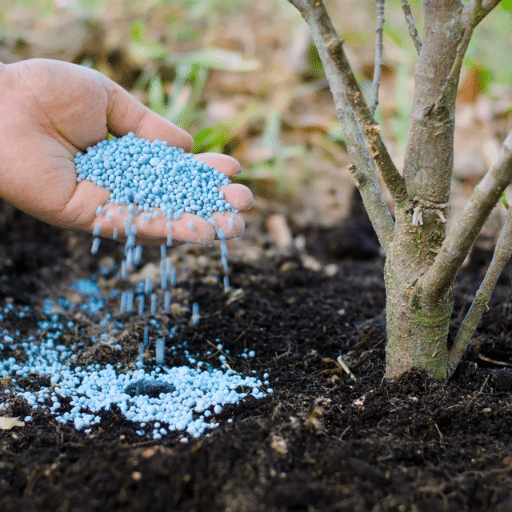
The drip line is the edge of the tree canopy. That is where feeder roots concentrate. Fertilizer placed against the trunk wastes money and risks root collar rot. Fertilizer broadcast too far beyond the canopy misses the roots entirely. For commercial orchards, band application along the drip line is the gold standard. For home growers, imagine a circle on the ground directly under the outer edge of the branches. That is your target zone.
Foliar Feeding for Micronutrient Deficiencies
When soil pH locks out iron, zinc, or manganese, foliar feeding bypasses the root system entirely. Dilute fish emulsion, seaweed extract, or chelated micronutrient solutions according to label instructions. Spray early morning or late evening for maximum leaf absorption and minimal evaporation. Foliar applications every 3-4 weeks during the growing season can keep a citrus tree green and productive even in challenging soils.
Container Citrus Application Rates
Container-grown citrus is one of the fastest-growing segments in home horticulture, up 23% year-over-year in consumer demand. But pots change everything. Confined roots cannot explore for nutrients. Frequent irrigation leaches fertilizers. And synthetic slow-release prills often release too fast in warm container media.
For organic container citrus, use a lighter, more frequent approach:
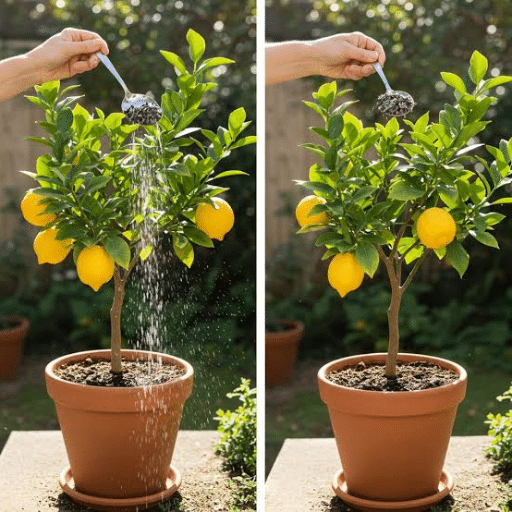
- Apply 1-2 cups of compost as a top-dress every 2-3 months
- Use diluted fish emulsion (1 tbsp per gallon) every 2 weeks during active growth
- Add 1 teaspoon of Epsom salt per gallon monthly if magnesium deficiency appears
- Flush the container with plain water monthly to prevent salt buildup
Commercial vs. Consumer Organic Citrus Fertilizers
Walk through a garden center and you will see organic citrus fertilizers in small bags with pleasant branding and NPKs between 3-2-2 and 6-4-0. Those products are designed for homeowners, not commercial groves.
Why Retail Organic Fertilizers May Fall Short for Commercial Growers
Consumer organic fertilizers prioritize safety, convenience, and low burn risk over maximum nutrient concentration. They often include odor-control treatments, easy-spread granules, and mycorrhizal inoculants. That makes sense for a patio lemon tree. It makes far less sense for a twenty-acre citrus block where cost-per-acre and application efficiency determine profitability.
Bulk Sourcing and Cost-Per-Acre Economics
A 10 lb bag of retail organic citrus fertilizer might cost $25-30. That works out to hundreds of dollars per acre. Commercial bulk blood meal, seaweed extract, or custom organic blends can cut that cost by 60-80%. If you are farming at scale, buying retail bags is economically unsustainable.
The global organic fertilizer market growth is being driven partly by commercial operators who have realized that organic inputs, when sourced in bulk and applied with precision, can match or exceed synthetic program economics while commanding organic price premiums.
Custom NPK Blending with Micronutrient Packages for Citrus
Pure organic inputs rarely deliver complete citrus nutrition on their own. Most commercial programs blend nitrogen sources with phosphorus, potassium, and micronutrient inputs. Common organic pairings for citrus include:
- Feather meal + bone meal + kelp meal + chelated iron
- Compost base + fish emulsion side-dress + Epsom salt drenches
- Blood meal + rock phosphate + greensand + zinc sulfate
Custom blending allows you to create region-specific formulations. A lemon grower in Arizona dealing with high pH needs a different micronutrient package than a grapefruit grower in Florida with sandy, leachable soils. Manufacturers with in-house formulation labs can design blends that match soil conditions, climate, and crop physiology. For readers who want a more hands-on application walkthrough beyond citrus-specific examples, see How to Fertilize Fruit Trees: A Complete Season-by-Season Guide.
At SHANDONG LOYAL, we produce bulk dry fertilizers, retail-ready formulations, and private-label liquid products for e-commerce. Our global logistics network covers Europe, North America, Southeast Asia, Africa, and the Middle East. Whether you need 25 kg bags or bulk rail shipments, we tailor solutions to your specifications.
Common Citrus Fertilizing Mistakes
Organic fertilization is forgiving, but it is not foolproof. Here are the most common errors we see in both backyard patios and commercial blocks.
Over-fertilizing with nitrogen produces lush, leafy growth with poor flower bud set. It also attracts sap-feeding pests. Worse, late nitrogen pushes soft shoots that are vulnerable to winter frost. If your tree looks like a hedge but bears like a shrub, you have too much nitrogen.
Ignoring soil pH is perhaps the single biggest reason citrus fertilizing programs fail. Alkaline soils above 7.0 lock out iron, zinc, and manganese. You can dump chelated iron on the ground all season, but if pH stays high, uptake remains minimal. Test pH annually and amend with sulfur or organic matter if needed.
Using fresh manure instead of aged compost can burn roots, scorch young buds, and introduce pathogens. Fresh manure is high in ammonia and soluble salts. Always use compost or manure that has aged at least six months. It should crumble freely and smell like earth, not ammonia.
Fertilizing in winter dormancy wastes nutrients and can damage roots. Citrus roots slow dramatically when soil temperatures drop below 55 degrees Fahrenheit. Nitrogen applied in winter sits unused, leaches with rain, or concentrates enough to cause salt stress. Wait for soil temperatures to rise and the first spring flush to begin before applying concentrated organics.
Neglecting micronutrients until deficiency symptoms appear is a reactive approach that costs yield. By the time you see yellow leaves, the tree has already been stressed for weeks. Build micronutrients into your base program through kelp, humic acid, or chelated supplements rather than waiting for visual distress.
Frequently Asked Questions
Can I use regular fruit tree fertilizer on citrus trees?
You can, but it is not ideal. Regular fruit tree fertilizers are usually formulated for deciduous species with different nitrogen timing and lower micronutrient content. Citrus trees need more nitrogen, more magnesium, and more iron than the average apple or peach. The best organic fertilizer for citrus trees includes these elevated micronutrients in the formulation. If you use a general fruit tree product, plan to supplement with Epsom salt and chelated iron separately.
Why are my citrus leaves turning yellow?
Yellowing leaves on citrus usually signal one of three problems. Nitrogen deficiency shows as uniform yellowing on older leaves. Iron deficiency shows as interveinal chlorosis on new growth. And magnesium deficiency shows as a yellow wedge between veins on older foliage while the midrib stays green. A soil test and a leaf tissue analysis will tell you exactly which nutrient is missing so you can target your treatment instead of guessing.
Is coffee grounds good for citrus trees?
Used coffee grounds can be a mild nitrogen supplement and soil acidifier, which citrus trees generally appreciate. However, they are not a complete fertilizer. Their NPK is very low, typically around 2-0.3-0.2, and they can compact into a water-repelling mat if applied too thickly. If you use coffee grounds, mix them lightly into compost rather than dumping them in a thick ring around the trunk. They are a nice addition, not a replacement for a real fertilizing program.
How often should I fertilize potted lemon trees?
Potted lemon trees need more frequent, lighter feeding than in-ground trees because confined roots cannot explore for nutrients and frequent watering leaches the pot. During active growth, apply diluted liquid organic fertilizer such as fish emulsion every 2 weeks. Add a light compost top-dress every 2-3 months. Reduce to monthly feeding in winter if the tree slows down. Always watch for salt buildup, which shows as brown leaf tips, and flush the pot with plain water monthly.
Can I make my own organic citrus fertilizer?
Yes, many home growers successfully make compost tea, vermicompost extract, or fermented weed teas for citrus. Homemade fertilizers can provide nitrogen and some micronutrients. The challenge is consistency. You cannot reliably control NPK ratios, and homemade brews sometimes carry pathogens or uneven nutrient loads. For a few patio trees, homemade fertilizer is a fun and effective hobby. For commercial operations or serious home orchards, manufactured organic fertilizers with certified NPK guarantees and micronutrient packages deliver more predictable results.
What is the best time of year to fertilize citrus trees?
The best time to apply organic fertilizer to citrus trees is early spring, just before the first major growth flush. In most climates, this means February through April, depending on your region. A second lighter application in late spring or early summer supports the mid-season flush. In subtropical zones where citrus grows year-round, split applications into quarterly light feedings. Avoid concentrated nitrogen after early September in cooler zones to prevent frost-tender late growth.
Conclusion
The best organic fertilizer for citrus trees is not a single product in a shiny bag. It is a thoughtful program that matches nutrient inputs to tree age, soil pH, climate, and growth stage. Compost and aged manure build the soil foundation. Blood meal delivers fast nitrogen when young trees need canopy. Fish emulsion and seaweed extract provide liquid micronutrient power at critical bloom and fruit-set windows. Bone meal drives the phosphorus that roots and flowers demand. Humic acid keeps iron and zinc available even in challenging soils. And Epsom salt corrects the magnesium chlorosis that plagues so many citrus plantings.
For commercial growers and distributors, the bigger picture matters just as much as the NPK numbers. Retail organic products are optimized for convenience, not cost-per-acre. Bulk, manufacturer-direct sourcing unlocks the economics that make organic citrus production viable at scale. Custom blending and certification support turn commodity inputs into competitive advantages.
If you are ready to source certified organic fertilizers for your citrus trees, or develop a custom formulation for your grove or retail brand, SHANDONG LOYAL has the manufacturing capacity, global logistics, and agronomic expertise to deliver. Contact us today for a consultation tailored to your crop program or distribution goals.