
Only 17% of Indonesian farmers have adopted organic fertilizers. Yet 71% of them still overuse chemical inputs. The gap between these two points exists because organic fertilizers have more hidden problems than gardening blogs show to their readers.
You have probably read that organic fertilizers provide advantages for soil health and environmental protection. That statement contains accurate information. The commercial farmers need to see the entire situation because their input choices will determine their business results. Your business profits depend on the five factors of yield stability, labor costs, freight expenses, and nutrient consistency.
This guide will analyze scientific evidence which shows the negative effects of organic fertilizers in commercial farming operations. The research will show you which farming areas have low adoption rates and which factors impact productivity results. A better approach will achieve both sustainability goals and financial return on investment according to research findings.
Why Organic Fertilizers Fall Short in Commercial Agriculture

Organic fertilizers present the best solution to enhance the performance of backyard gardens and small-scale agricultural areas. The materials establish organic content in soil while enabling microbial organisms to thrive and preventing the accumulation of harmful salt deposits. But scale changes everything. At a commercial farm operation you manage vast land areas that range between hundreds to thousands of hectares. The system needs to deliver nutrients in a consistent manner while also allowing for cost-effective application and budget management. The use of organic fertilizers creates unpredictable results which affect all three components of the system. The use of organics in large-scale operations creates a gap between their potential benefits and actual performance.
The main problem exists because machines need precise control over farming systems which organic fertilizers do not provide. The nutrient release process requires specific soil temperature and moisture levels together with active microbial organisms. The factors which influence those parameters show different patterns throughout different areas of a single field and across the entire agricultural operation.
Pak Sutrisno expected his rice farm in Central Java to experience better soil conditions through organic farming methods which would provide him with continuous crop output after he started using only organic inputs in 2022. However, he witnessed an 18% decline in his first harvest. The organic manure he applied had lower nitrogen concentration than labeled. The nutrients became available after his plants reached the critical tillering stage. He lost income. His workers needed to work double time to transport heavy manure throughout the waterlogged fields. He resumed using chemical supplements during the next growing season.
The research field contains numerous cases that demonstrate the same pattern which exists in Pak Sutrisno’s situation. The research demonstrates that organic fertilizers have disadvantages which extend beyond theoretical boundaries. The evidence appears in agricultural output data and workforce records and shipping documents.
7 Science-Backed Disadvantages of Organic Fertilizers

Commercial farmers show delays because they encounter multiple particular challenges of their work. The following points present evidence through scholarly research and industry findings.
1. Slow Nutrient Release Can Miss Critical Growth Windows
Microbes decompose organic fertilizers to release nutrients throughout their entire decomposition process. That sounds ideal. But in practice, decomposition can take weeks or months.
Your crop requires immediate nitrogen because it has entered its rapid growth stage but organic inputs cannot provide that nitrogen. This particular issue affects rice and corn and vegetables because they have precise times for when they can absorb nutrients.
The plants experience stunted growth during essential growth periods which leads to a nutrient surge that occurs too late for them to utilize completely.
2. Lower and Variable NPK Concentration
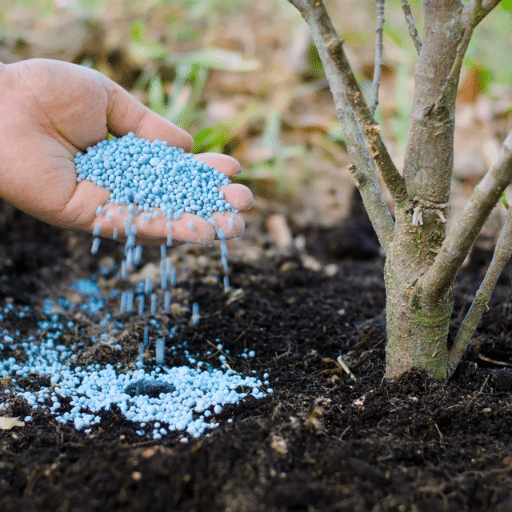
Manufacturers create synthetic fertilizers with specific NPK ratios which they maintain throughout the production process. Organic fertilizers do not have this feature. A supplier of composted poultry manure provides a product which contains 2% nitrogen in one batch. The next batch could contain 1.2%. The product shows that all of its contents need precise delivery which becomes impossible to achieve because of this situation.
Research from the University of California, Davis confirms that organic fertilizers produce inconsistent results depending on the source material. Different types of manure contain different amounts of nutrients.
All organic fertilizers contain fewer nutrients than synthetic fertilizers so you need to apply larger quantities for synthetic equivalency. The procedure results in increased costs for material handling and transportation and employee work.
3. Higher Freight and Labor Costs
Moving heavy organic materials requires higher expenses than companies who ship their products through standard freight operations. According to research in Indonesia organic fertilizer freight costs approximately double the costs of chemical fertilizer.
The math is simple. A hectare of corn might need 200 kilograms of synthetic urea. The organic equivalent could require several tons of compost or manure. The increase in weight requires additional trucks which results in greater fuel consumption and longer operational periods.
The process of distributing that material on the farm requires substantial manpower. The current machines used for deep organic fertilizer application face a problem because they fail to create deep enough trenches.
4. Difficult to Calibrate for Precision Agriculture
The process of executing successful precision agriculture requires farmers to deliver optimal nutrient levels which needs to be delivered at specific locations. The use of organic fertilizers creates numerous difficulties for agricultural operations to succeed. The inconsistent nutrient levels in your spreader material make it impossible to achieve the same calibration accuracy which you would achieve with synthetic granules. The application of fertilizer leads to two opposite results because one area receives insufficient nutrients while another area receives excessive nutrients.
The overuse of organic materials creates negative consequences. The decomposition process of high-carbon organic matter leads to nitrogen immobilization which makes the nitrogen unavailable for plant use during vital growth phases.
5 Pathogen Weed Seed and Pest Risks
Untreated or improperly composted animal manure can introduce E. coli fecal coliforms salmonella and other pathogens into your fields. The material can contain weed seeds which will remain unbroken through the composting process if temperatures remain below necessary levels.
Rodents and flies and insects are drawn to compost piles and manure storage spaces. The presence of these pests creates extra challenges for managing crop health and food safety. The risk becomes significant for farms which operate in markets that enforce strict sanitary requirements.
6 Heavy Metal and Salinity Contamination Risks
The purity of organic fertilizers varies between different products. The production of commercial organic fertilizers from poultry waste and food processing waste and sewage sludge results in products which contain elevated levels of potentially toxic elements.
A comprehensive 2025 review in Science of the Total Environment showed that pig manure contains more copper and zinc than cattle and sheep manure. The soil becomes contaminated with heavy metals which results in permanent fertility loss.
The situation includes a salinity problem. A 2022 study in Biology tested food waste-derived organic fertilizer on lettuce. The organic treatment which scientists used to make up for reduced nutrient density created higher sodium levels in lettuce shoots. The sodium levels created an ionic imbalance which resulted in cellular damage and necrosis.
7. Weather-Dependent Performance
The release of nutrients from organic fertilizers occurs through dependence on both soil temperature and soil moisture. Microbial activity reaches its lowest point during cold spring soil conditions. Nutrients become trapped inside organic matter at the time when young plants require them most essential. The opposite issue becomes present during warm wet autumn weather conditions. The quick decomposition process produces nitrogen which escapes into the environment before plants have a chance to utilize it. The process results in nutrient loss and input waste and environmental runoff risks.
The unpredictable nature of agricultural operations disrupts both budgeting and crop planning processes. The process of scheduling nutrient availability remains less certain than when using synthetic products that display labeled information.
Want to see how certified, precision-formulated products solve these calibration and consistency problems? Explore how our customized fertilizer blends deliver exact NPK ratios tailored to your crop and soil conditions.
What the Research Says: Productivity and Adoption Data

The research studies of multiple Asian researchers proved that organic fertilizers possess actual disadvantages which exist beyond personal testimonials.
Indonesia: Low Adoption and Productivity Impact
A 2023 study published in Sustainability surveyed Indonesian farmers and found that only 17% had adopted organic fertilizers. The study found that 71% of participants used chemical fertilizers. The study identified practical requirements and cost limitations as the main obstacles.
The Agraris journal published a separate Propensity Score Matching analysis which proved that organic fertilizer usage harmed both production output and asset accumulation of rice farming households. The researchers identified two challenges which require farmers to apply more organic materials and handle all organic materials through manual labor.
China: Crop-Specific Adoption Gaps
The choice-experiment study conducted in Guangxi China showed that 61% of banana farmers used organic fertilizers. Only 41% of rice farmers used organic fertilizers. Every household that participated in the survey used chemical fertilizer together with organic materials which they applied to their crops.
The results show that organic farming methods fail to satisfy the complete needs of farmers who cultivate essential staple crops.
Orchard Farming: Mechanization Challenges
The International Journal of Agricultural and Biological Engineering published a 2020 study which investigated organic fertilizer distribution methods in Xinjiang orchards. Researchers established that deep application needs manual labor for its execution. The existing trenching machines can only achieve shallow depths, while consuming too much energy and their weight makes it hard to use them in agricultural fields.
Wang Wei operates an 80-hectare apple orchard in Xinjiang. He needed to recruit 15 extra employees during the springtime to manually distribute organic base fertilizer. The labor cost erased his expected savings from switching away from synthetic inputs. After three seasons, he spent money on a hybrid farming method which combined organic compost for autumn soil enhancement and chemical top-dressing during bud break.
Is There a Better Approach? Integrated Nutrient Management
The emerging consensus among agricultural scientists is clear. The optimal agricultural outcomes are achieved through Integrated Nutrient Management which scientists refer to as INM. This method uses organic base materials together with planned chemical treatments to deliver its outcomes.
The process involves creating soil health improvements which will sustain agricultural productivity. Soil organic matter enhances soil structure and water retention capabilities and supports microbial organisms. The process of critical growth window contact occurs when your crop requires specific nutrients. through synthetic fertilizers which provide exact nutritional requirements.
INM operates as a full-fledged agricultural system. The system enables users to understand agricultural input limitations because it presents both input types. The system enables you to gain organic soil-health advantages without putting your crop yields at risk.
The implementation of INM requires soil testing as its fundamental starting point. The organic matter testing process starts by determining the existing organic matter content which leads to compost or manure application during the off-season to improve soil structure. The planting process and crucial growth periods require you to add specifically calculated synthetic nutrients. The process results in improved soil conditions which lead to more reliable crop yields.
Ready to design an input strategy that balances sustainability with predictable yields? Contact our agricultural specialists for a free consultation on a customized INM plan for your farm.
How SHANDONG LOYAL Addresses These Challenges

The company SHANDONG LOYAL CHEMICAL CO., LTD. offers customized solutions instead of providing standard products. We provide certified fertilizers which we customize to meet specific needs that arise from using organic-only methods.
Certified Products for Safety Assurance
Our fertilizers meet REACH, SGS, and BV certification standards. The product provides uniform nutrient composition while eliminating pathogen threats and preventing hidden heavy metal pollution. The product shows you the precise materials that will be added to your soil.
Tailored NPK Formulations for Precision
Our custom fertilizer blends provide more accurate nutrient delivery than bulk organic manure which contains inconsistent nutrient content. You receive your calibration results in exact measurements. The process eliminates any possibility of incorrect assumptions. The process prevents any unexpected situations which would result in nutrient loss.
Reliable Global Supply Chain
Our company maintains a worldwide network which supplies certified products to customers in an efficient manner. The system provides better cost efficiency for each unit of nutrient while ensuring timely product delivery through creation of equipment which modern machinery can use.
Maria Gonzalez operates a vegetable export business in Spain. She solved her persistent problem by using a customized SHANDONG LOYAL blend. The organic compost supplier which she had previously used delivered nitrogen levels that fluctuated. This inconsistency led to her retail buyers rejecting her products. Our NPK formulation, which we customized according to her soil analysis and agricultural schedule, minimized her input waste by 22 percent while maintaining her quality standards throughout the complete growing season.
Conclusion
Organic fertilizers provide essential benefits to sustainable farming practices. The materials enhance soil organic content while they help maintain soil health for extended periods. The commercial use of organic fertilizers brings actual disadvantages which exist as established facts.
The combination of slow nutrient release with unpredictable NPK levels and increased transportation and labor expenses and difficulties in equipment calibration and potential exposure to pathogens and heavy metal presence and weather-dependent operational capacity creates challenges which gardeners do not usually encounter.
The research from Indonesia, China, and agricultural engineering studies worldwide tells the same story. The exclusive use of organic methods creates yield shortfalls which result in operational delays and financial difficulties.
Integrated Nutrient Management serves as the better solution which produces better results. The process requires you to use organic methods for soil development and then use precise chemical treatments for soil improvement. The company provides scientific expertise to deliver precise and certified input materials which you can trust to meet your requirements.
Start building a more predictable, profitable input strategy today. Contact SHANDONG LOYAL CHEMICAL CO., LTD. for a free consultation on customized fertilizers tailored to your soil, your crop, and your goals.