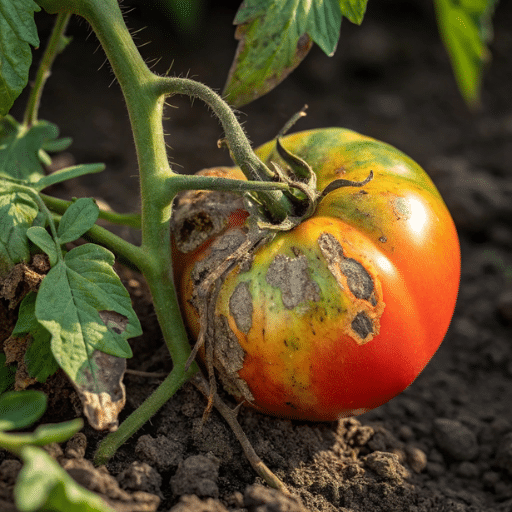
Walk into any orchard at midsummer and the signs are impossible to miss. Some trees carry a full canopy of deep green leaves. Others look pale, spotted, or scorched around the edges. More often than not, the grower assumes the problem is disease, drought, or pests. They reach for fungicides, adjust irrigation, or spray insecticides. Weeks later, nothing has changed. The real culprit was hiding in plain sight: a nutrient deficiency that no chemical spray can fix.
If you have ever stood under a fruit tree and wondered why the leaves were turning yellow while the neighbor’s trees looked vigorous, you already understand the frustration. Yellow leaves on fruit trees are one of the most common visible signs of nutrient deficiency in fruit trees, but they can mean many different things depending on the pattern. The signs of nutrient deficiency in fruit trees are subtle at first. They masquerade as other problems. But once you learn to read the visual language of leaves, branches, and fruit, diagnosis becomes straightforward. You can correct the imbalance before it costs you a season’s harvest.
This guide will teach you exactly that. You will learn the diagnostic framework professionals use, identify the visual signatures of ten common deficiencies, and discover how to confirm your diagnosis with soil and tissue testing. By the end, you will know how to spot nitrogen starvation, iron chlorosis, zinc rosette, and boron damage before they cripple your trees. You will also understand how to choose the right corrective fertilizers, including certified organic options, to restore tree health and protect your investment.
Why Fruit Trees Show Nutrient Deficiencies

Fruit trees demand a precise balance of sixteen essential nutrients. When even one falls below the threshold needed for growth, the tree redirects what little it has to new shoots and fruit. Older tissue suffers first. Leaves discolor. Shoots stunt. Fruit quality drops. Left unchecked, the tree enters a downward spiral of declining vigor and productivity.
Soil pH is often the hidden gatekeeper. A nutrient can exist in adequate quantities in the soil yet remain locked away from the roots. Iron, zinc, manganese, and boron become increasingly unavailable as pH climbs above 7.0. In calcareous soils common across the Mediterranean, Southeast Asia, and parts of North America, iron chlorosis is routine even when soil iron levels test normal. Without addressing pH, dumping more fertilizer on the ground simply wastes money.
Fruit trees also have different needs than ornamental shade trees. A mature apple tree bearing a heavy crop can remove significant potassium and nitrogen from the soil every season. Stone fruits like peaches and plums are notoriously sensitive to zinc deficiency. Citrus trees regularly struggle with iron and manganese in alkaline conditions. Understanding these species-specific vulnerabilities helps you watch for the right signs of nutrient deficiency in fruit trees at the right time. The Oregon State University Extension guide to nutrient disorders in tree fruits remains a definitive visual reference for growers worldwide.
The Diagnostic Framework: Mobile vs. Immobile Nutrients
Here is the single most useful concept for diagnosing nutrient problems in fruit trees. Nutrients fall into two categories based on how easily the plant moves them from old tissue to new growth.
Mobile nutrients include nitrogen, phosphorus, potassium, and magnesium. The plant can relocate these from older leaves to fuel new shoots. When supplies run low, symptoms appear first on the older, lower leaves.
Immobile nutrients include calcium, iron, zinc, manganese, boron, and copper. Once deposited in tissue, the plant cannot move them. When supply drops, new growth at the tips of branches shows symptoms first while older leaves may still look perfectly healthy.
This distinction transforms diagnosis from guesswork into a logical process. Are the older leaves yellowing? Suspect nitrogen, potassium, or magnesium. Are the youngest leaves pale while the older canopy stays green? Think iron, zinc, or manganese. This one observation narrows your search from sixteen possible nutrients to three or four in seconds.
When Marcus checked his citrus grove near Valencia last spring, he noticed the newest flush of growth was pale yellow between the veins. The mature canopy below looked fine. He had been watering more, assuming drought stress. But drought would have shown wilting across the whole tree, not interveinal yellowing on new growth alone. The pattern pointed directly to iron deficiency triggered by the high-pH calcareous soil. A soil test confirmed pH at 8.1. Switching to an Fe-EDDHA chelate and adjusting his irrigation water quality restored full green color within six weeks. Marcus saved his bloom season by reading the leaf age signal correctly.
Want to stop guessing and start diagnosing with confidence? Our certified fertilizers, including chelated micronutrients for iron, zinc, and boron correction, are formulated to perform in high-pH and challenging soils. Explore our tailored solutions to match your tissue analysis results.
Macronutrient Deficiency Signs in Fruit Trees

Macronutrients are needed in the largest quantities. Their deficiencies produce the most visible and widespread fruit tree nutrient deficiency symptoms in orchards worldwide. Before you can recognize these patterns, it helps to understand the basics of NPK for fruit trees, which provides the foundation for reading the signs below.
Nitrogen (N) Deficiency: The General Pale
Nitrogen drives chlorophyll production, protein synthesis, and vegetative growth. When it is scarce, the tree cannot build new green tissue efficiently. Nitrogen deficiency in fruit trees typically shows as older leaves turning uniformly pale green to yellow. The yellowing starts at the leaf tip and moves toward the base. In severe cases, entire leaves become light yellow and drop prematurely. Shoots are shorter than normal with thin, weak diameters. Fruit sets poorly and remains small.
Peach trees show a distinctive reddish cast on nitrogen-deficient leaves, sometimes accompanied by shot-hole symptoms that mimic fungal disease. Apple and pear trees simply look pale and sparse. Citrus trees produce thin, upright shoots with pale foliage. Because nitrogen is mobile, the pattern always begins on the oldest leaves and progresses upward. This upward march is the key identifier.
Nitrogen over-application creates its own problems, including excessive vegetative growth at the expense of flowering. According to horticultural studies, over-application can reduce fruit set by 20% to 40%. The goal is balanced, timed feeding rather than indiscriminate broadcasting.
Phosphorus (P) Deficiency: The Purplish Hue
Phosphorus powers root development, energy transfer, and fruit set. Unlike nitrogen, phosphorus deficiency rarely causes yellow leaves. Instead, look for dark green or bluish-green upper leaf surfaces with bronze, reddish, or purple discoloration on the undersides. Older leaves are affected first because phosphorus is mobile within the plant.
Shoots remain thin and weak. Root systems develop poorly, making the tree more susceptible to drought. Flowering is delayed, and fruit set drops noticeably. Phosphorus deficiency is less common than nitrogen or potassium problems because many orchard soils retain adequate phosphorus. It appears more frequently in very sandy soils, heavily leached ground, or where soil pH falls below 5.5.
Potassium (K) Deficiency: Marginal Scorches
Potassium regulates water movement, enzyme activation, and fruit quality. Potassium deficiency in fruit trees shows up as yellowing or browning at the leaf margins, especially on older leaves. The scorching moves inward from the edges toward the midrib. In pears, particularly the Comice variety, purplish browning of spur leaf edges is common. Leaves may crinkle and roll upward. Shoot tips can die back in advanced cases.
Fruit suffers directly. Potassium is critical for cell water uptake and fruit sizing. Proper potassium fertilization can improve fruit sugar content by 15% to 30% in many stone fruit varieties. Deficient fruit is smaller, colors poorly, and stores for shorter periods. Because potassium is mobile, always check the oldest leaves first.
Calcium (Ca) Deficiency: Bitter Pit and Terminal Dieback
Calcium is immobile. Symptoms appear on new growth first. Young leaves show chlorosis and necrotic tips. Terminal buds may die back. Shoot tips distort and weaken. The most famous fruit symptom is bitter pit in apples: small sunken spots on the fruit skin with dry, discolored flesh underneath. Cork spot and cracking also signal calcium problems.
Importantly, calcium deficiency is rarely caused by low calcium in the soil. It is usually a transport problem. Irregular watering, excess potassium, or high salinity block calcium uptake. A soil test showing adequate calcium levels does not rule out a deficiency in the fruit.
Magnesium (Mg) Deficiency: The Christmas Tree Pattern
Magnesium is the central atom in chlorophyll. When it is scarce, chlorophyll breaks down. Older leaves develop interveinal chlorosis: yellow blotches between the veins while the veins themselves stay green. In apples, the remaining green tissue sometimes forms an inverted V shape along the midrib, creating a Christmas tree pattern. Seriously deficient apple trees may lose more than half their leaves by harvest.
Magnesium deficiency in fruit trees is common in sandy soils and where heavy potassium fertilization has created a nutrient imbalance. Because magnesium is mobile, the oldest leaves always show symptoms first.
Sulfur (S) Deficiency: Yellow Young Growth
Sulfur deficiency looks similar to nitrogen deficiency but with one critical difference. Sulfur is relatively immobile, so symptoms appear on younger leaves rather than older ones. The yellowing is often more intense and uniform than nitrogen chlorosis. Sulfur is a component of proteins and enzymes, so deficient trees show general poor growth and delayed maturity.
Micronutrient Deficiency Signs in Fruit Trees
Micronutrients are needed in trace amounts, but their absence produces dramatic symptoms. These deficiencies are increasingly common in intensively farmed orchards where macronutrient fertilization has been prioritized over trace element balance.
Iron (Fe) Deficiency: Interveinal Chlorosis on New Leaves
Iron is essential for chlorophyll synthesis. Because it is immobile, deficiency appears first on the youngest leaves at the shoot tips. The classic sign is interveinal chlorosis: yellowing between the leaf veins while the veins remain distinctly green. In severe cases, new leaves turn almost white or ivory with necrotic edges.
Iron deficiency in fruit trees is one of the most common micronutrient problems globally. It affects up to 30% of orchards in calcareous soil regions. High soil pH, waterlogged conditions, and high bicarbonate levels in irrigation water all trigger iron chlorosis. Standard leaf tissue analysis can be misleading because iron accumulates near the veins, so deficient leaves may test normally. Flower or bark analysis sometimes provides a more accurate picture.
Zinc (Zn) Deficiency: Rosette and Little Leaf
Zinc activates enzymes and synthesizes auxin, the hormone that drives shoot elongation. Deficient trees produce small, narrow leaves that cluster at shoot tips in dense tufts called rosettes. Internodes shorten dramatically, giving shoots a bunched appearance. This “little leaf” symptom is unmistakable once you have seen it.
Zinc deficiency in fruit trees is one of the most widespread micronutrient problems in deciduous orchards, particularly apples and peaches. High soil phosphorus can induce or worsen zinc deficiency by creating uptake antagonism. Foliar zinc sulfate applications in late dormancy or early spring are the standard correction method.
When Jennifer inspected her apple orchard in Washington the spring after a heavy bloom, she noticed scattered trees with tufts of tiny, mottled leaves at the branch tips. The rest of the canopy looked normal. Tissue analysis revealed a combined zinc and boron deficiency. She applied a dormant spray of zinc sulfate followed by a Solubor application at pink bud stage. Fruit set improved by 18% the following season. Jennifer now includes micronutrient monitoring in her annual tissue testing program.
Boron (B) Deficiency: Corky Fruit and Blossom Blast
Boron is critical for cell wall formation, pollen germination, and sugar transport. It is immobile, so symptoms show in new growth and fruit rather than older foliage. Terminal buds may fail to open. Shoots thicken and develop shortened internodes. Leaves become small, thick, and brittle with enlarged corky veins.
The most distinctive boron symptoms appear in the fruit. Apples and pears develop internal cork: dry, brown, corky tissue inside otherwise normal-looking fruit. Apricots crack. Pears suffer blossom blast, where flower buds wither and die after bloom. Boron deficiency can reduce fruit set by 20% to 40% in affected orchards due to poor pollen viability.
The line between boron deficiency in fruit trees and toxicity is narrow. Always confirm with tissue testing before applying boron fertilizers.
Manganese (Mn) Deficiency: Checkered Chlorosis
Manganese deficiency produces interveinal chlorosis similar to iron deficiency, but the pattern is subtly different. The veins often remain greener and more sharply defined, creating a checkered or netted appearance. On acidic soils with pH below 5.0, manganese toxicity becomes the problem instead, causing bark disorders like apple measles on certain cultivars.
Copper (Cu) Deficiency: Wither Tip and Twig Dieback
Copper deficiency causes “wither tip” in fruit trees. Shoots grow normally early in the season, then terminal leaves yellow, wither, and drop by midsummer. Twig dieback follows. Copper is also important for disease resistance, so deficient trees may show increased susceptibility to bacterial and fungal infections.
Nutrient Deficiency by Fruit Tree Type

Different fruit trees have different vulnerabilities. Knowing the common deficiencies for your crop helps you inspect with purpose.
Apple and Pear Trees
Apples are particularly prone to calcium deficiency, which causes bitter pit, cork spot, and water core. Magnesium deficiency is also common, especially on sandy rootstocks. Boron problems produce internal cork and cracked fruit. Zinc deficiency causes the classic little leaf and rosette symptoms. Iron chlorosis appears on high-pH soils. Once you have pinpointed which of these is troubling your trees, our guide to the best organic fertilizer for apple trees walks you through the right corrective feeding choices for healthier harvests.
Stone Fruits: Peach, Plum, and Cherry
Peaches are notoriously sensitive to nitrogen deficiency, often showing reddish leaf discoloration rather than simple yellowing. Zinc deficiency is extremely common in peach orchards worldwide. Potassium deficiency produces marginal scorching that can be mistaken for bacterial spot. Plum trees share many of the same sensitivities. If peaches are your focus, see our complete guide to the best organic fertilizer for peach trees for a feeding plan built around sweet, abundant harvests.
Citrus Trees
Citrus trees regularly suffer iron, zinc, and manganese deficiencies, especially in calcareous or alkaline soils. The symptoms often appear together, producing a complex interveinal chlorosis on new growth. High-phosphorus fertilization can trigger zinc deficiency. Citrus is also sensitive to boron, which causes fruit deformation and internal breakdown. For species-specific organic feeding recommendations, see our guide to the best organic fertilizer for citrus trees.
Nut Trees: Walnut, Pecan, and Almond
Nut trees have specific micronutrient needs. Zinc deficiency is common in pecan orchards. Walnut trees can show manganese deficiency in high-pH soils. Almonds are sensitive to boron, which affects kernel quality when levels are either too low or too high.
Confirming Your Diagnosis: Beyond Visual Symptoms
Visual symptoms provide strong clues, but they can mislead. Diseases, pest damage, herbicide injury, and drought stress all produce patterns that look like nutrient deficiencies. The 2025/2026 New Jersey Commercial Tree Fruit Production Guide emphasizes combining visual observation with laboratory testing for reliable diagnosis.
Soil Testing: What It Reveals and What It Hides
A standard soil test reveals pH, phosphorus, potassium, magnesium, and calcium levels. It also measures organic matter and salinity. This information is invaluable for building a fertilization program. However, soil tests do not reliably predict micronutrient availability. Iron, zinc, and manganese may test adequate in the soil yet remain unavailable to roots because of high pH or compaction. Soil testing is the foundation, but it is not the final word.
Leaf Tissue Analysis: The Gold Standard
Leaf tissue analysis measures the actual nutrient concentration inside the plant. It is the quickest and most reliable confirmation method. Sampling protocols vary by crop, but generally you collect leaves from the mid-shoot position at a specific time of year. For apples, the standard is mid-shoot leaves from the current season’s growth, sampled between late July and mid-August.
Critical ranges differ by species. For citrus, tissue zinc below 16 ppm indicates deficiency. Iron below 36 ppm and boron below 21 ppm are also considered deficient in citrus tissue. Your local extension service or agricultural laboratory can provide species-specific threshold tables.
When Visual Symptoms Mislead
Several conditions mimic nutrient deficiencies. Huanglongbing, or citrus greening, produces yellowing that can look like iron or zinc deficiency. Winter injury causes dieback that resembles boron or calcium problems. Herbicide drift produces distorted growth similar to zinc deficiency. Arsenic toxicity in older orchards creates shot-hole symptoms identical to severe nitrogen deficiency. Always verify before treating.
Correcting Nutrient Deficiencies in Fruit Trees

Once you have identified the deficient nutrient, the next step is choosing the right product and application method. Our guide on how to fertilize fruit trees covers the foundational techniques that make corrective feeding effective.
Choosing the Right Fertilizer Form
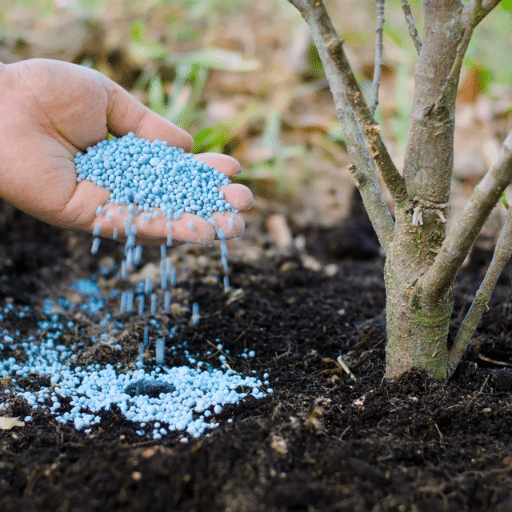
Granular fertilizers broadcast around the drip line work well for nitrogen, phosphorus, and potassium. They release slowly and feed the root zone over weeks or months. Water-soluble NPK formulations are ideal for fertigation systems, delivering precise nutrients directly to the root zone with irrigation water. Foliar sprays provide rapid correction for micronutrient deficiencies. Iron, zinc, boron, and manganese all respond well to foliar application because they bypass soil availability problems entirely.
Organic growers have effective options too. Iron chelates derived from lignosulfonates or amino acids can correct chlorosis without synthetic chemicals. Zinc sulfate and borax are approved for organic use in many jurisdictions. Humic and fulvic acid carriers improve micronutrient uptake and are compatible with organic certification standards.
Application Timing: When Corrective Feeding Works Best
Timing matters. Nitrogen should be applied in early spring before bud break or in split applications through the growing season. Avoid late-season nitrogen, which can delay dormancy and increase winter injury risk. Phosphorus and potassium can be applied in early spring or after harvest. Micronutrient foliar sprays are most effective when applied during active leaf growth, typically from pre-bloom through early summer. For a complete seasonal calendar, see our guide on when to fertilize fruit trees.
For commercial orchards, correction rates scale by tree age, canopy size, and planting density. A mature apple tree may require 0.5 to 1.0 pound of actual nitrogen per year. Potassium needs range from 1.0 to 2.0 pounds per mature tree. Zinc sulfate foliar sprays typically use 2 to 4 pounds per 100 gallons of water. Always base rates on tissue analysis and local extension recommendations.
Need a custom blend formulated to your exact tissue analysis? SHANDONG LOYAL CHEMICAL specializes in customized fertilizers designed for specific soil conditions and crop requirements. Whether you need a chelated micronutrient mix for high-pH soils or a controlled-release NPK blend for sustained tree nutrition, we tailor formulations to your orchard’s unique profile.
Preventing Nutrient Deficiencies Long-Term
Correction is important, but prevention is more profitable. The most successful orchardists build systems that maintain nutrient balance year after year.
Building Soil Health with Organic Matter
Soil organic matter is the long-term buffer against nutrient imbalance. Choosing the best organic fertilizer for fruit trees made from amino acids, humic acid, and seaweed improves soil structure, water retention, and microbial activity. These materials release nutrients slowly, reducing the risk of leaching and burn. Organic fertilizing programs have been shown to improve soil organic matter by 0.5% to 1% annually, building fertility that supports tree health for decades. If you are establishing a new orchard, getting the foundation right matters even more, so review our root-first guide to organic fertilizer for young fruit trees to set seedlings up for strong, deficiency-free growth.
The Role of pH Management in Nutrient Availability
Managing soil pH is arguably the most cost-effective nutrient strategy available. Most fruit trees perform best at pH 6.0 to 6.5. In this range, the full spectrum of nutrients remains available. Lime acid soils to raise pH. Use sulfur or acidifying fertilizers to lower pH on alkaline ground. In severely calcareous soils where pH adjustment is impractical, rely on chelated micronutrients that remain available regardless of pH.
Why Certified Fertilizers Ensure Consistent Results
Not all fertilizers deliver what the label promises. Variations in purity, solubility, and chelation quality mean that two products with identical NPK numbers can perform very differently in the field. Certified fertilizers that meet REACH, SGS, and BV standards undergo rigorous quality control. For commercial orchards where a single deficiency can cost thousands of dollars in lost yield, that consistency matters.
In a commercial citrus operation in Southeast Asia, managers had been applying generic NPK 15-15-15 for years. Tissue tests showed persistent iron and zinc deficiencies despite adequate soil levels. The problem was poor-quality micronutrient sources with low chelation stability. Switching to a REACH-certified customized 20-10-10 blend with fully chelated iron and zinc eliminated the deficiencies within one growing season. Yield increased 22%, and fruit uniformity improved enough to command a premium grade.
Conclusion

Recognizing the signs of nutrient deficiency in fruit trees does not have to be a mystery. The leaves tell you exactly what is wrong if you know how to listen. Start by noting whether symptoms appear on older or new growth. That single observation divides mobile deficiencies from immobile ones and points you toward the right nutrient. Look for the classic signatures: uniform yellowing for nitrogen, purple hues for phosphorus, marginal scorch for potassium, interveinal chlorosis on young leaves for iron, rosettes for zinc, and corky fruit for boron.
Confirm your visual diagnosis with soil testing and leaf tissue analysis. Apply corrections at the right time using the right method: granular for macronutrients, foliar for micronutrients, and fertigation for precision feeding. Build long-term prevention through pH management, organic matter additions, and consistent use of certified, high-quality fertilizers.
The difference between a struggling orchard and a thriving one often comes down to how well the grower reads the early warning signs. Your trees are sending signals every day. With the knowledge in this guide, you are now equipped to interpret them and respond with precision.
Ready to correct deficiencies and optimize your orchard’s nutrition program? Contact SHANDONG LOYAL CHEMICAL CO., LTD. for certified, customized fertilizer solutions tailored to your soil tests and tissue analysis. From chelated micronutrients for high-pH soils to controlled-release NPK blends for sustained fruit tree health, we deliver the quality and consistency your orchard depends on. Reach out today for a consultation and discover how tailored fertilizers can transform your next harvest.