Marcus planted his first bare-root apple tree in early spring. He was eager. He dug the hole, dropped a generous handful of blood meal into the bottom, and filled it back in. By midsummer, the tree had pushed out a lush canopy of dark green leaves. It looked healthy. But by autumn, the trunk had barely thickened, and the root ball was still the same size it had been in April. Marcus had fed the leaves, not the roots. That is the single most common mistake growers make with young fruit trees.
Most guides treat young trees like mature ones. They push nitrogen-heavy feeding schedules designed for canopy growth and fruit production. But a tree in its first three years is not trying to fruit. It is trying to survive, anchor, and build a root system that will support decades of harvests. The right organic fertilizer for young fruit trees takes a root-first approach. It prioritizes phosphorus and potassium for root mass in years one and two. It transitions to balanced nitrogen only when the tree is ready to support structural growth.
In this guide, you will learn exactly which organic amendments work best for establishment-phase trees, how to time applications for each growing season, and why soil biology matters more than NPK numbers alone. We will also cover the commercial side. Whether you are a backyard grower with two trees or a nursery manager with two thousand, the principles are the same. Only the scale changes.
Want to see which organic fertilizers we recommend for orchard establishment? Explore our certified organic fertilizer solutions.
Why Young Fruit Trees Need a Different Organic Strategy

Root Establishment Comes Before Canopy Growth
A young fruit tree is an investment in the future. In its first growing season, 60-80% of the tree’s energy goes below ground. Roots explore the soil, form symbiotic relationships with fungi, and search for water and nutrients. If you flood the root zone with nitrogen, the tree redirects that energy upward. Leaves flourish. Roots stall. The result is a top-heavy sapling that struggles in drought, leans in wind, and takes years longer to become productive.
The UNH Cooperative Extension recommends that young apple trees grow at least 12 inches per year during establishment. If growth is slower, fertilizer rates should increase by 50% in subsequent years. But that fertilizer must be the right kind. High-phosphorus organics encourage the root development that drives that growth from below, not just the shoot growth you can see.
The Burn Risk
Young roots are tender. They lack the density and protective chemistry of mature root systems. High-nitrogen organics like fresh manure, blood meal, or undiluted fish emulsion can cause fertilizer burn in juvenile specimens. Symptoms include leaf edge browning, wilting despite adequate soil moisture, and stunted terminal growth. Organic nutrients release at different rates depending on soil temperature, moisture, and microbial activity. In warm, wet conditions, a seemingly safe application can flush nutrients too quickly for a limited root zone to handle.
How Organic Nutrient Release Differs from Synthetic for Juvenile Trees
Synthetic fertilizers deliver nutrients in soluble forms that roots absorb immediately. This precision is useful for mature trees with extensive root systems. For young trees, it is risky. Organic fertilizers release nutrients through microbial decomposition. This process is slower, more buffered, and closely tied to soil conditions that favor root growth. A young tree gets a steady, low-level feed rather than a shock. That steadiness is exactly what an establishing root system needs.
The Best Organic Fertilizers for Young Fruit Trees
Not all organic amendments are equal when it comes to establishment-phase nutrition. Some excel at building roots. Others feed soil biology. A few provide gentle, liquid nutrition for limited root zones. The best programs combine several sources rather than relying on one.
1. Bone Meal — Phosphorus for Root Development
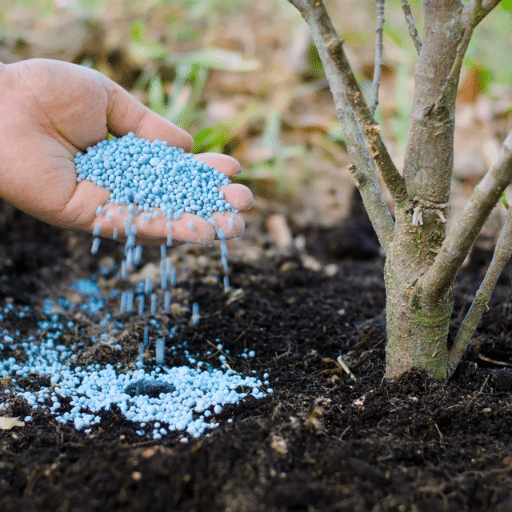
Bone meal is one of the oldest and most reliable organic sources of phosphorus. With a typical NPK around 3-15-0, it delivers the nutrient most critical for root elongation and cell division. Phosphorus also supports early flower and fruit development, though you will not see that benefit until years three to five. Apply bone meal at planting time by mixing it into the soil at the bottom and sides of the planting hole, never in direct contact with roots. A quarter to half cup per tree is sufficient for most backyard plantings.
2. Feather Meal — Slow-Release Nitrogen for Structural Growth
Feather meal offers a nitrogen source that breaks down slowly over 4-6 months. Its typical NPK of 12-0-0 makes it too strong for year one on its own, but valuable in years two and three when structural wood growth becomes the priority. Because it releases gradually, it avoids the surge-and-crash cycle that can stress young trees. Mix feather meal into compost or top-dress it in early spring for a season-long feed. For more on nitrogen sources, see our guide to the best organic nitrogen fertilizer options.
3. Compost and Aged Manure — Soil Biology and Micronutrients
Compost is the foundation of any organic fruit tree program. It does not just feed the tree. It feeds the soil. Well-aged compost introduces beneficial bacteria, fungi, and organic matter that improve water retention, aeration, and nutrient availability. Aged manure, fully composted to eliminate pathogens and weed seeds, adds a broader mineral profile. Apply a 2-3 inch ring of compost around the tree, starting 18 inches from the trunk and extending to the dripline. Keep it off the bark to prevent rot and pest attraction.
4. Fish Emulsion and Liquid Kelp — Gentle Liquid Feeding for Limited Root Zones
Liquid organics are ideal for young trees because you control the dose. Fish emulsion provides nitrogen, phosphorus, and trace minerals in a form roots can absorb quickly. Kelp extract delivers growth hormones, micronutrients, and stress-relief compounds. For newly planted trees, dilute fish emulsion to half the label strength and apply every 3-4 weeks during the growing season. This is especially valuable for containerized young trees where leaching can strip nutrients from the potting mix.
5. Mycorrhizal Inoculants — Building the Soil Food Web
Mycorrhizal fungi form symbiotic relationships with tree roots. The fungi extend the effective root surface area by as much as 700%, improving water and nutrient uptake in exchange for carbohydrates from the tree. For young trees with small root systems, this partnership can mean the difference between survival and decline. Apply mycorrhizal powder directly to roots at planting, or water it into the root zone of already-planted trees. The fungi persist for years, so a single application at planting is often enough.
| Amendment | NPK | Release Speed | Best Age | Burn Risk | Cost Tier |
|---|---|---|---|---|---|
| Bone Meal | 3-15-0 | Slow (2-4 months) | Year 0-1 | Very Low | Low |
| Feather Meal | 12-0-0 | Very slow (4-6 months) | Years 2-3 | Low | Low |
| Compost | Varies | Slow (3-6 months) | All ages | Very Low | Low |
| Fish Emulsion | 5-1-1 | Fast (1-2 weeks) | Years 1-2 | Medium (if undiluted) | Medium |
| Kelp Extract | 0-0-1 | Fast (days) | All ages | Very Low | Medium |
| Mycorrhizae | N/A | Immediate (symbiosis) | Year 0-1 | None | Medium |
Need a bulk organic program for a nursery or orchard? Contact our team for a custom establishment blend tailored to your soil and crop needs.
NPK Strategy by Establishment Stage

Understanding NPK ratios is essential, but timing matters just as much as chemistry. Young fruit trees need different nutrition profiles at each stage of establishment. For a deeper dive into NPK requirements, read our article on NPK requirements for fruit trees at different stages.
Year 0 — Planting Day: No Fertilizer in the Hole
This surprises many growers. The standard advice is to avoid adding concentrated fertilizer to the planting hole. Fresh roots are sensitive. Direct contact with salts or concentrated organic matter can dehydrate root hairs and set back establishment by weeks or months. Instead, focus on soil structure. Mix compost into the backfill at a ratio of about one-third compost to two-thirds native soil. This creates a transition zone where roots can explore without shock. If you use bone meal, keep it 6-8 inches below and to the side of the root ball, never touching it directly.
Year 1 — First Growing Season: Low Nitrogen, High Phosphorus
In year one, the goal is root mass, not leaf mass. A target NPK in the range of 3-5-5 or 5-3-4 supports this priority. The UNH Extension recommends applying 1 pound of organic 5-3-4 per tree, spread in a ring 18-24 inches from the trunk, about three weeks after planting. This three-week waiting period allows the soil to settle and roots to begin acclimating before nutrients arrive. Split the application into two doses: one in early spring and one in late spring. Avoid any nitrogen after midsummer. Late-season nitrogen pushes soft growth that is vulnerable to winter cold.
Years 2-3 — Establishment: Balanced Transition
By year two, the tree should have a fibrous root system capable of supporting more top growth. Transition to a balanced organic fertilizer with an NPK closer to 6-2-4 or 8-2-4. Apply 2 pounds per inch of trunk diameter, measured 12 inches above ground. Again, split the total into spring and early summer applications. According to the UNH Extension, young apple trees should grow 12 inches or more per year during this phase. If your tree is not hitting that mark, increase the rate by 50% the following season.
Species-Specific Notes
Apple and pear trees are relatively forgiving and respond well to standard organic programs. Stone fruits like peach and plum are more sensitive to excess nitrogen and prefer lighter feeding. Citrus trees, often grown in containers, need more frequent but diluted liquid feeds due to leaching. Always match your program to the species, not just the age.
When and How to Apply Organic Fertilizer to Young Trees
The 3-Week Rule
Wait three weeks after planting before the first fertilizer application. Newly disturbed soil settles, air pockets collapse, and roots begin sending out exploratory hairs. Applying nutrients too early can create osmotic stress that damages these delicate structures. Water thoroughly for the first three weeks, then begin your feeding program.
Early Spring Split Application
The first feed of the year should happen just as buds begin to swell but before they open. This is when the tree shifts from dormancy to active growth and root uptake increases. Apply half your annual organic fertilizer in a broad ring around the tree, starting 18 inches from the trunk and extending to the dripline. The second half goes down 6-8 weeks later, typically in late spring. For more seasonal guidance, see our guide on when to fertilize fruit trees for optimal results.
Application Placement: 18-24 Inches from Trunk to Dripline
Young tree roots spread horizontally more than they dive deep. The active root zone for a one-year-old tree is typically a ring 18-24 inches from the trunk, expanding outward each year. Placing fertilizer directly against the trunk wastes nutrients and can burn bark. Broadcasting it at the dripline edge is too far for limited roots to reach. The 18-24 inch zone is the sweet spot for most first and second year trees.
Liquid Organic Feeding Schedules
For container trees or those in poor soils, supplement granular organics with diluted liquid feeds. Apply half-strength fish emulsion or kelp every 3-4 weeks from bud break until midsummer. Stop all liquid feeding by August 1 in northern climates, or 8-10 weeks before your first expected frost. This hardens off growth and prepares the tree for dormancy.
Stop Nitrogen After Mid-Summer
This is the rule most often broken by enthusiastic growers. Late-season nitrogen produces soft, succulent growth that does not have time to harden before cold weather arrives. The result is frost damage, dieback, and sometimes complete loss of the year’s progress. Switch to phosphorus and potassium-only amendments after July 1 in most temperate zones. Compost teas, bone meal side-dressings, and kelp extracts are safe late-season options.
Warning: Do not exceed 5 pounds of 5-3-4 organic fertilizer per year for young trees, per UNH Extension guidance. More is not better. Excess nutrients can accumulate in soil, disrupt microbial balance, and increase burn risk.
Protecting Young Trees: Pests, Wildlife, and Organic Safety

Why Blood Meal and Bone Meal Attract Rodents
Animal-based organic fertilizers smell like food to wildlife. Blood meal, bone meal, and fish emulsion are especially attractive to rodents, raccoons, and digging insects. For young trees with tender bark, this is more than a nuisance. Girdling, where rodents chew the bark completely around the trunk, can kill a tree in a single night. Sub-surface feeding reduces this risk. Mix granular organics into the top 2-3 inches of soil rather than leaving them on the surface. Cover the root zone with mulch to mask odors and deter diggers.
Companion Planting and Repellent Strategies
Planting alliums like garlic or chives around the base of young fruit trees can repel some burrowing pests. Mint and oregano may help deter insects, though they can become invasive. A physical barrier is often more reliable. Hardware cloth wrapped around the trunk and buried 2-3 inches below the soil line stops voles and mice from accessing the bark. Remove it before the trunk outgrows the diameter of the cage.
Avoiding Salt Buildup in Containerized Trees
Container growing changes everything. Organic liquid fertilizers leave behind mineral salts as water evaporates. Over time, these salts concentrate in the potting mix and burn roots. Flush containers every 4-6 weeks by watering until it runs freely from the drainage holes. Use a potting mix with 20-30% perlite or coarse sand to improve drainage. Never let a container tree sit in standing water.
Signs of Organic Over-Fertilizing in Juvenile Specimens
Even organic programs can go too far. Watch for these warning signs:
- Leaf tip browning on newest growth, spreading inward
- Wilting despite moist soil, indicating root damage
- Stunted terminal buds or failure to push new growth
- White crust on soil surface, signaling salt accumulation
- Dark, overly lush leaves with weak stems, indicating nitrogen excess
If you see these symptoms, stop feeding immediately. Flush the root zone with plain water and resume at half strength once the tree recovers.
Commercial vs. Consumer Organic Programs for Nurseries and Orchards
Why Retail Bags Are Not Built for Scale
A home grower with five trees can buy bags of organic fertilizer at the garden center and do fine. A nursery with five thousand trees cannot. Retail organic products carry markups of 200-400% over bulk material costs. Packaging, branding, and distribution add expense that has nothing to do with nutrient value. At scale, those costs erode margins and limit the quality of program you can afford to run.
Bulk Organic Sourcing Economics
Bulk organic amendments like composted poultry manure, bone meal, and feather meal are available by the ton from agricultural suppliers. Prices vary by region, but bulk sourcing typically reduces per-tree costs by 60-70% compared to retail bags. The challenge is consistency. Bulk organics vary in nutrient content, moisture, and maturity. A reliable supplier with batch testing is essential for commercial operations.
Custom NPK Blending for Establishment-Year Protocols
This is where manufacturer partnerships create real value. Instead of buying pre-blended products designed for general gardening, commercial growers can work with fertilizer producers to create establishment-specific blends. A custom 3-5-5 for year one, transitioning to 6-2-4 for years two and three, ensures every tree gets precisely what it needs at each growth stage. No waste. No guesswork.
At SHANDONG LOYAL CHEMICAL CO., LTD., we formulate custom organic blends based on soil tests, crop targets, and climate conditions. Our REACH, SGS, and BV certified production facilities allow us to produce consistent, high-purity organic fertilizers at commercial scale. Whether you need a container-friendly liquid program or a bulk granular blend for field planting, we can tailor the formulation to your operation.
Managing a nursery or orchard transition to organic? Request a consultation for custom fertilizer blending based on your soil data and tree varieties.
Modern Organic Amendments for Young Trees
Traditional compost and bone meal are solid foundations, but modern organic agriculture offers amendments that can accelerate establishment and improve resilience.
Biochar for Root-Zone Water Retention
Biochar is a stable form of carbon produced by heating organic material in low-oxygen conditions. Added to the root zone at planting, it acts like a sponge, holding water and nutrients where roots can access them. It also provides habitat for beneficial microbes. Research shows that biochar-amended soils can improve water retention by 10-20%, a significant advantage for young trees in sandy or drought-prone soils. Mix 5-10% biochar by volume into the planting backfill.
Vermicompost for Gentle Early-Season Feeding
Vermicompost, or worm castings, is finer and more microbially active than standard compost. It releases nutrients gently and contains growth-promoting compounds not found in thermophilic compost. For young trees, a side-dressing of vermicompost in early spring provides a low-risk nutrient boost that will not burn tender roots. It is more expensive than bulk compost, but the biological activity it adds can be worth the investment for high-value specimens.
Humic and Fulvic Acids for Nutrient Chelation
Humic and fulvic acids are organic compounds that bind to mineral nutrients and make them more available to plant roots. In soils with high pH or low organic matter, these acids can unlock phosphorus and micronutrients that would otherwise remain locked in the soil matrix. SHANDONG LOYAL produces humic acid fertilizers derived from natural leonardite, suitable for incorporation into organic establishment programs. A single application at planting can improve nutrient uptake efficiency for the entire first season.
Kelp Meal vs. Liquid Kelp for Stress Reduction
Kelp provides cytokinins and auxins, plant hormones that regulate growth and stress response. Kelp meal is a slow-release granular form ideal for spring soil application. Liquid kelp extract is faster-acting and better for foliar feeding or root drenching during stress events like transplant shock, heat waves, or drought. For young trees, liquid kelp at transplant and again at the first sign of heat stress can reduce transplant shock recovery time by days or weeks.
Frequently Asked Questions

Should I Put Fertilizer in the Hole When Planting a Fruit Tree?
No. Concentrated fertilizer, even organic, can damage tender roots on planting day. Mix compost into the backfill for soil structure, but keep concentrated amendments like bone meal several inches away from direct root contact. Wait three weeks after planting before the first nutrient application.
How Often Should I Fertilize a 1-Year-Old Fruit Tree?
Split the annual organic fertilizer amount into two applications: one at bud break in early spring, and one 6-8 weeks later. Supplement with diluted liquid feeds every 3-4 weeks if the tree is in a container or poor soil. Stop all nitrogen by midsummer to prevent frost-tender late growth.
What Is the Best NPK Ratio for a Young Fruit Tree?
In year one, prioritize phosphorus with a ratio near 3-5-5 or 5-3-4. In years two and three, transition to a more balanced 6-2-4 or 8-2-4 as the root system matures and structural growth becomes the priority. Always match the ratio to the tree’s developmental stage, not just its species.
Can I Use Compost Alone for My Young Fruit Tree?
High-quality, well-aged compost can support a young tree through its first season, especially if the native soil is reasonably fertile. However, compost alone may not provide enough phosphorus for optimal root development. Supplementing with bone meal or a low-nitrogen organic fertilizer ensures the tree gets the nutrients it needs for strong establishment.
Is Fish Emulsion Safe for Newly Planted Trees?
Yes, if diluted properly. Use fish emulsion at half the manufacturer’s recommended strength for trees in their first year. Apply it as a soil drench, not a foliar spray, to avoid leaf burn. Never apply undiluted fish emulsion to a young tree. The salt concentration can damage roots.
Why Are My Young Fruit Tree Leaves Turning Yellow After Fertilizing?
Yellowing after fertilization usually indicates one of three problems: nitrogen deficiency if the yellowing is on older leaves, overwatering if the yellowing is uniform and accompanied by drop, or fertilizer burn if the yellowing starts at leaf tips and spreads inward. If burn is the cause, flush the soil with plain water and reduce future application rates by half.
Conclusion
Young fruit trees are not small versions of mature trees. They are establishing organisms with different nutritional priorities, different vulnerabilities, and different timelines. The organic fertilizer for young fruit trees that works best is the one that feeds roots first, leaves second, and fruit not at all until the tree is ready.
Start with phosphorus-heavy organics like bone meal and compost in year one. Transition to balanced NPK programs in years two and three. Time applications to the tree’s seasonal rhythms, not the calendar. Protect against pests attracted to animal-based fertilizers. And consider modern amendments like biochar, humic acids, and mycorrhizal inoculants that can give your trees an establishment advantage no traditional program can match.
Whether you are tending a backyard orchard or managing a commercial nursery, the root-first philosophy pays dividends for decades. Strong roots mean strong trees. Strong trees mean abundant harvests. To learn more about Best Organic Fruit Tree Fertilizer and How to Fertilize Fruit Trees, please click to refer to our accompanying guide.
At SHANDONG LOYAL CHEMICAL CO., LTD., we manufacture certified organic fertilizers designed for every stage of tree development. From amino acid and seaweed-based liquids to custom-blended granular programs, our REACH, SGS, and BV certified products support growers in over 50 countries. Contact us today to discuss a custom organic establishment blend for your orchard or nursery.