Last autumn, Maria walked through her Valencia orange grove and counted exactly 47 fruits across 200 trees. She had followed the same fertilizing routine for three years, yet her harvests kept shrinking. The problem wasn’t the trees. It was the fertilizer.
If you’ve ever wondered exactly how to fertilize fruit trees for bigger, healthier harvests, you’re not alone. Most growers — from backyard hobbyists to commercial orchard operators — either underfeed their trees or dump on nutrients without a clear plan. Both approaches lead to the same disappointing results: weak growth, poor fruit set, and trees that struggle rather than thrive.
You already know that healthy trees need food. What this guide delivers is a simple, season-by-season approach to feeding your fruit trees the right nutrients at the right time. We’ll cover soil testing, choosing the correct NPK ratio, application methods, and the common mistakes that even experienced growers make. By the end, you’ll have a practical fertilizing plan you can adapt to any climate or fruit type.
Why Fertilizing Matters More Than You Think
Fruit trees are not ornamental plants. They are production systems that pull enormous amounts of nutrients from the soil every single year. A mature apple tree can remove over 40 pounds of nitrogen, phosphorus, and potassium from the ground annually just to produce a standard crop. If you don’t replace what the tree takes out, soil fertility collapses. When soil fertility drops, so does your harvest.
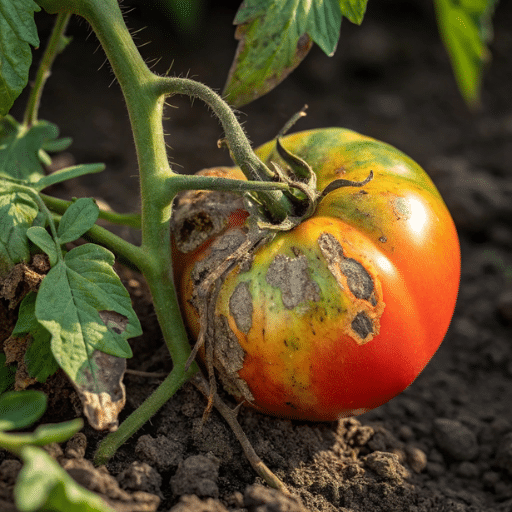
The signs show up gradually. Leaves turn pale or yellow between the veins. New shoot growth slows to a crawl. Fruit becomes smaller, less sweet, and prone to premature drop. In severe cases, the tree enters a survival mode where it abandons fruit production entirely to preserve its own life. These are not mysterious curses. They are textbook symptoms of nutrient deficiency.
James Chen learned this the hard way on his five-acre apple orchard in Ontario. For two seasons, he watched his Honeycrisp trees produce beautiful green canopies but almost no fruit. “The trees looked healthy,” he told me. “I couldn’t figure out why they weren’t bearing.” A soil test revealed the answer: his phosphorus levels were critically low, and his nitrogen was so high that the trees were pouring all their energy into leafy growth instead of fruit bud formation. Once he corrected the balance, his third-season harvest tripled.
This is why understanding how to fertilize fruit trees is fundamental to orchard success. It is not about dumping generic plant food around the trunk and hoping for the best. It is about matching precisely what the tree needs to what the soil can provide — and closing that gap with the right inputs at the right moments.
Want to see which organic fertilizers work best for specific fruit trees? Explore our complete guide to the best organic fruit tree fertilizers.
Step 1: Test Your Soil Before You Fertilize
The single most important step in any fruit tree fertilizing program is also the one most growers skip. Soil testing tells you exactly what you’re working with, and without that information, you’re fertilizing blind. You might be adding nitrogen when your soil already has plenty. Or you might be completely ignoring a zinc deficiency that is quietly killing your fruit set.
According to Penn State Extension research, proper soil testing can reduce fertilizer costs by 30 to 50 percent while improving yields. That is because precise application eliminates waste and targets real deficiencies instead of guessed ones.
Collecting a soil sample is straightforward. Take a clean trowel and dig small samples from six to eight spots around the tree’s drip line, not right next to the trunk. The drip line is the area directly below the outermost branches, where the feeder roots are most active. Mix those samples in a clean bucket, remove any debris, and send about one cup to a certified soil testing lab.
Ask for a complete analysis that includes:
- Soil pH
- Macronutrients (nitrogen, phosphorus, potassium)
- Micronutrients (zinc, iron, manganese, boron, copper)
- Organic matter percentage
Most fruit trees prefer a soil pH between 6.0 and 7.0, though blueberries and some citrus varieties tolerate more acidic conditions. If your pH is off, the tree cannot absorb nutrients properly even if they are present in the soil. In that case, you may need to amend with lime or sulfur before any fertilizer will work.
Retest every two to three years, or annually if you are correcting a known deficiency. Soil chemistry changes slowly, but fertilizing habits, rainfall, and crop load all shift the balance over time.
Step 2: Choose the Right Fertilizer for Your Fruit Trees
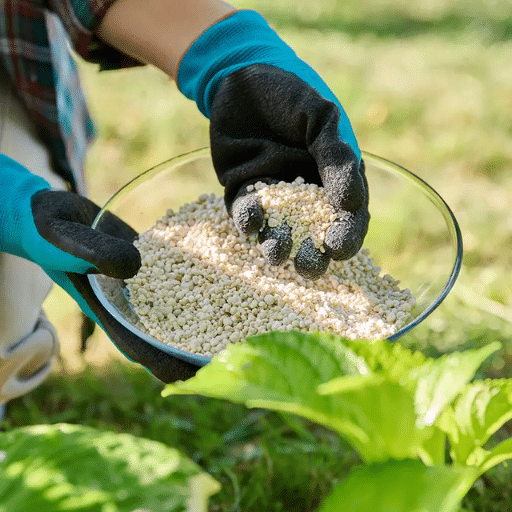
Once you have your soil test results, you can select a fertilizer that actually solves your tree’s problems. This is where many growers get overwhelmed by options. Let’s break it down simply.
Understanding NPK Ratios
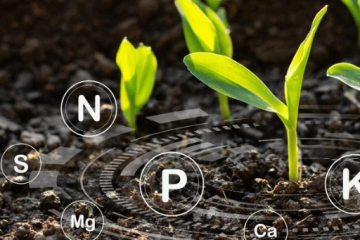
Every fertilizer label displays three numbers, like 10-10-10 or 6-2-4. These represent the percentages of nitrogen (N), phosphorus (P), and potassium (K) in the product.
- Nitrogen drives leafy growth and vegetative vigor.
- Phosphorus supports root development, flowering, and fruit set.
- Potassium regulates water movement, disease resistance, and fruit quality.
Young, non-bearing fruit trees need a balanced or slightly nitrogen-forward fertilizer, such as 10-10-10 or 16-16-16. The goal is to build a strong framework of branches and roots. Once the tree reaches bearing age — typically three to five years after planting — shift to a formulation lower in nitrogen and higher in phosphorus and potassium, such as 6-2-4 or 5-10-10. Excess nitrogen on mature trees produces lush, leafy canopies at the expense of fruit.
According to the USDA Natural Resources Conservation Service, over-application of nitrogen can reduce fruit quality by 15 to 25 percent in some orchard systems. The trees look vigorous, but they channel energy into wood and leaves instead of blossoms and fruit.
Organic vs. Synthetic: Making the Sustainable Choice
Both organic and synthetic fertilizers can feed fruit trees effectively. The difference lies in how they interact with soil biology over time.
Synthetic fertilizers deliver nutrients immediately. They are predictable and fast-acting. However, they do little to build soil organic matter or support the microbial life that makes nutrients naturally available.
Organic fertilizers, including compost, manure, blood meal, bone meal, and seaweed-based products, release nutrients more slowly. They feed the tree and the soil simultaneously. Over time, organic fertilizing programs improve soil organic matter by 0.5 to 1 percent annually. That increase translates directly into better water retention, stronger root development, and more resilient trees.
For growers focused on long-term orchard health, organic fertilizers offer clear advantages. They align with sustainable farming practices and reduce the risk of fertilizer burn or salt buildup in the root zone.
Micronutrients That Matter
Macronutrients get most of the attention, but micronutrient deficiencies cause some of the most frustrating fruit tree problems. Zinc deficiency produces small, misshapen leaves and poor fruit set. Boron deficiency leads to cracked fruit and corky internal tissue. Iron deficiency causes yellowing between leaf veins while the veins stay green.
If your soil test flags a micronutrient gap, address it with targeted amendments or foliar sprays. A general NPK fertilizer will not fix these issues.
Certifications to Look For
Not all fertilizers are created equal. Products certified to REACH, SGS, and BV standards have been tested for purity, composition, and environmental safety. These certifications matter whether you are fertilizing a backyard lemon tree or managing a hundred-acre commercial orchard. They guarantee that what is on the label is actually in the bag.
Step 3: Know When to Fertilize Fruit Trees
Timing is just as important as formula. Feed a fruit tree at the wrong moment, and you risk encouraging tender new growth that freezes in winter or burns out before harvest.
Early Spring: The Critical Window
The most important fertilizing window for nearly all fruit trees is early spring, just before buds begin to swell. At this stage, the tree is emerging from dormancy and preparing to push flowers and new shoots. Nutrients applied now fuel that spring flush and support the energy demands of fruit development.
Apply your main fertilizer when soil temperatures consistently reach 55 degrees Fahrenheit (13 degrees Celsius) or higher. In temperate climates, this typically falls between late February and early April, depending on your region. In subtropical or tropical zones, adjust to the start of your rainy season or the period of strongest vegetative growth.
Post-Harvest Feeding for Perennial Health
After harvest, many growers make the mistake of walking away until next spring. This is a missed opportunity. A lighter application of phosphorus and potassium in late autumn helps trees replenish stored carbohydrates and harden off properly for winter.
Avoid applying nitrogen late in the season. Nitrogen stimulates soft, succulent new growth that cannot withstand frost. In cold-winter regions, late-season nitrogen is one of the fastest ways to damage otherwise healthy trees.
A Simple Fruit Tree Fertilizer Schedule
Use this seasonal calendar as your starting point:
- Early Spring (before bud swell): Apply main balanced or tailored NPK fertilizer.
- Bloom to Petal Fall: Avoid soil fertilizing. Use foliar micronutrients only if deficiency symptoms appear.
- Early Summer: Light potassium boost for heavy-bearing trees if soil test supports it.
- Post-Harvest (autumn): Apply phosphorus and potassium to support root reserves and winter hardiness.
- Winter Dormancy: No fertilizer. Add compost or mulch if desired.
What Not to Do
Never fertilize during drought stress or when the tree is in full bloom. During drought, roots cannot take up nutrients, and salts may accumulate in the soil. During bloom, the tree has already committed its energy reserves, and fertilizer will not help fruit set at that stage.
If you are unsure about your local timing, consult your regional agricultural extension service. They maintain detailed calendars for specific fruit types and growing zones.
For a deeper dive into seasonal timing, read our guide on when to fertilize fruit trees.
Step 4: Apply Fertilizer Correctly
Even the perfect fertilizer applied at the wrong rate or in the wrong place will underperform — or worse, damage the tree.
Calculating the Right Amount
Fruit trees do not need as much fertilizer as many growers assume. A common rule for young trees is one ounce of actual nitrogen per year of tree age, up to a maximum of about eight ounces for mature trees. However, this varies by species, soil type, and tree vigor.
Always base your rate on the soil test recommendations and the specific product label. More is not better. Excess fertilizer burns roots, pollutes groundwater, and wastes money.
The Root Zone Method
Fruit tree feeder roots concentrate in the top 12 to 18 inches of soil and extend outward to the drip line. Fertilizer placed against the trunk does almost nothing useful. It needs to reach the feeder roots.
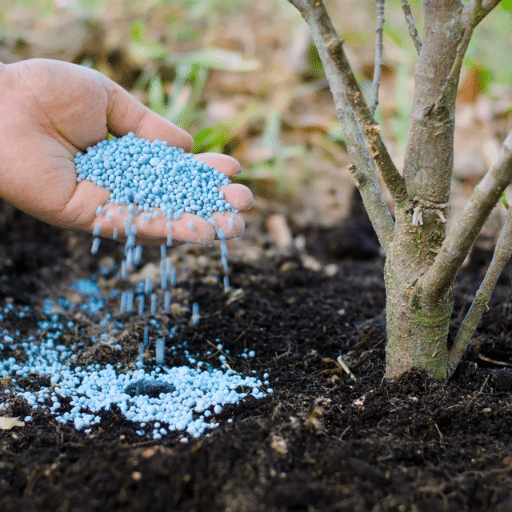
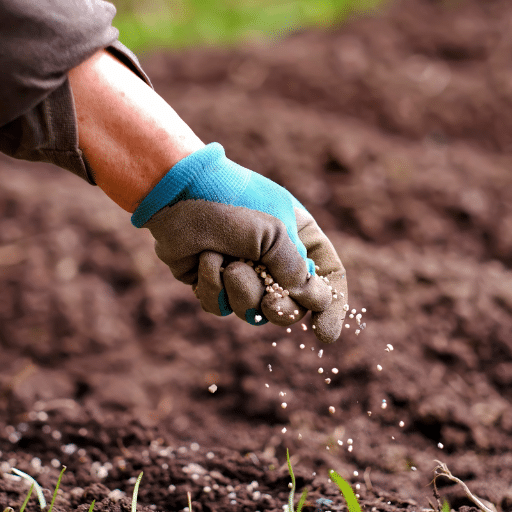
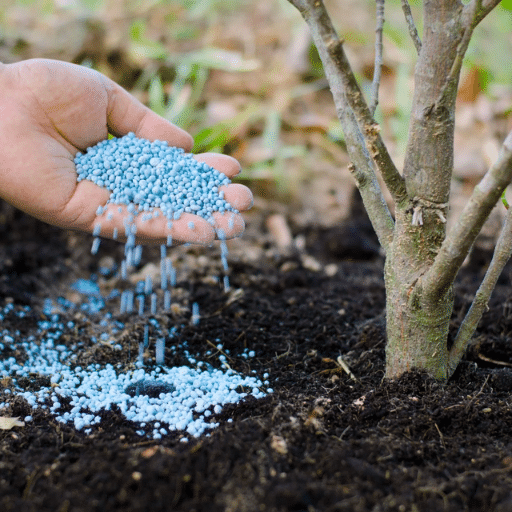
The most effective method is to broadcast granular fertilizer evenly under the canopy, starting about a foot from the trunk and extending to the drip line. Alternatively, dig small holes six to eight inches deep in a ring around the drip line and distribute the fertilizer among them. This targeted approach puts nutrients exactly where the roots can access them.
After application, water thoroughly. Water dissolves the fertilizer and carries it into the root zone. Without irrigation or rainfall, granular fertilizer sits on the soil surface and releases nutrients too slowly to help.
Foliar Feeding for Quick Fixes
When a tree shows acute micronutrient deficiency symptoms during the growing season, soil amendments work too slowly. Foliar feeding — spraying diluted nutrients directly onto the leaves — delivers correction within days rather than weeks.
Zinc and boron are the most common micronutrients applied via foliar spray in fruit orchards. Use a product formulated specifically for foliar application, and spray in the early morning or evening to avoid leaf burn.
Ahmed runs a 40-acre stone fruit operation in Turkey’s Aegean region. For years, he applied all his fertilizer in a single heavy dose each spring. His peach yields were acceptable but never outstanding, and his trees suffered inconsistent fruit sizing. After switching to a split application schedule — half in early spring and half after petal fall — and moving his application points outward to the true drip line, his pack-out rate of premium-sized fruit jumped by 22 percent in one season. “I was basically feeding the wrong roots in the wrong way,” he said. “The change was immediate.”
Fertilizing by Fruit Tree Type
Not all fruit trees share the same appetite. Stone fruits, pome fruits, citrus, and nut trees each have distinct nutritional personalities. Use this table as a quick reference:
| Tree Type | Young Tree NPK | Mature Tree NPK | Key Micronutrient |
|---|---|---|---|
| Apple and Pear | 10-10-10 | 5-10-10 or 6-2-4 | Potassium |
| Peach, Plum, Cherry | 10-10-10 | 8-8-8 or reduced nitrogen | Zinc |
| Citrus | 12-6-6 or 8-8-8 | 8-4-8 | Iron, Zinc, Manganese |
| Walnut, Pecan, Almond | 10-10-10 | 10-10-10 or 8-8-8 | Zinc |
Apple and Pear Trees (Pome Fruit)
Apples and pears are moderate feeders with a strong need for potassium as they approach bearing age. Excess nitrogen causes fire blight susceptibility and reduces fruit color. A typical program for mature apple trees uses a low-nitrogen, high-potassium fertilizer in spring, followed by a potassium boost post-harvest.
Peach, Plum, and Cherry Trees (Stone Fruit)
Stone fruits are heavier nitrogen users than pome fruits, especially during their early years. However, mature stone fruit trees still require careful nitrogen management to avoid delayed fruit maturity and poor winter hardiness. Zinc deficiency is particularly common in peach orchards and should be monitored closely.
Citrus Trees
Citrus trees are evergreen and have a nearly year-round nutrient demand. They require more nitrogen than deciduous trees and are highly sensitive to micronutrient deficiencies, especially iron, zinc, and manganese. Split applications work best — lighter, more frequent feedings rather than one heavy dose. In sandy or acidic soils, magnesium deficiency often appears as yellow blotches on older leaves.
Nut Trees (Walnut, Pecan, Almond)
Nut trees are deep-rooted and generally require less frequent fertilizing than fruit trees. However, they have an exceptionally high demand for zinc. Pecan trees in particular often show severe zinc deficiency if not supplemented. Because of their deep root systems, surface-applied fertilizer may take longer to reach active roots. Deep placement or fertigation through irrigation systems often works better than surface broadcasting.
Common Fertilizing Mistakes to Avoid
Even experienced growers slip into bad habits. Here are the errors we see most often, and how to prevent them.
Over-fertilizing tops the list. Too much nitrogen burns roots, produces excessive vegetative growth, and invites disease. If your tree looks like a jungle but bears no fruit, you are probably overfeeding.
Fertilizing at the wrong time causes nearly as much damage. Late-season nitrogen, bloom-time applications, and mid-summer feedings in hot climates all create problems rather than solve them.
Ignoring soil pH makes every other effort worthless. A tree growing in soil with a pH of 5.0 cannot absorb calcium or magnesium efficiently, no matter how much you add. Fix the pH first.
Using the same formula year after year ignores the fact that trees change. A young tree needs different nutrients than a mature one. A heavy crop year depletes the soil more than a light year. Adjust your program based on tree age, crop load, and soil test results.
Applying too close to the trunk wastes fertilizer and risks collar rot. Keep all applications at least 12 inches from the trunk and concentrate on the drip line.
Building Long-Term Soil Health
The best fruit tree fertilizing programs do more than feed trees. They build soil that feeds itself.
Mulching is one of the simplest and most effective practices. A four to six inch layer of organic mulch — wood chips, straw, or compost — around the base of the tree moderates soil temperature, retains moisture, and slowly releases nutrients as it decomposes. Over several seasons, mulch adds organic matter and supports the fungal and bacterial networks that make nutrients bioavailable.
Cover crops between orchard rows protect soil from erosion, fix atmospheric nitrogen, and add biomass when mowed and left to decompose. Legumes like clover and vetch are particularly valuable in orchards because they supply nitrogen naturally.
Compost applications, even light ones, improve soil structure and introduce beneficial microbes. Unlike raw manure, finished compost will not burn roots or introduce excessive salts.
These practices align with sustainable agriculture principles. They reduce dependence on external inputs, improve water infiltration, and create orchards that become more productive — not less — as they age.
At SHANDONG LOYAL CHEMICAL, we believe that the most productive orchards start with healthy soil. Our organic fertilizers are designed to enhance soil biology while delivering the nutrients your trees need. With certifications including REACH and SGS, you can trust our products to support both your harvest and your land.
Ready to build a fertilizing program that strengthens your soil and your harvests? Explore our full range of organic and tailored fertilizers trusted by growers worldwide.
Conclusion
Learning how to fertilize fruit trees is not complicated, but it does require paying attention to details that many growers overlook. Start with a soil test. Choose a fertilizer that matches your tree’s age, species, and the gaps in your soil. Apply it at the right time — early spring for the main feeding, with lighter post-harvest support. Place it where the feeder roots actually live, not against the trunk. And stop trying to solve every problem with more nitrogen.
The growers who get the best harvests year after year are not necessarily the ones who spend the most on fertilizer. They are the ones who spend it wisely. They test their soil, time their applications, and choose products that build long-term fertility rather than delivering a quick chemical jolt.
Whether you tend six backyard trees or manage six hundred acres, the principles remain the same. Healthy soil produces healthy trees. Healthy trees produce abundant, high-quality fruit.
Start optimizing your orchard nutrition today. Browse our certified fertilizer solutions or contact our team to discuss a tailored fertilizing plan for your specific fruit varieties and soil conditions.