A mature apple tree can produce 300 to 500 pounds of fruit in a single season, but only when its roots reach soil that is alive, balanced, and continuously rebuilt. Unlike annual crops, you cannot replant a 15-year-old orchard in better dirt. The fertilizer you choose today is the soil your trees will live in for the next two decades.
If you have stood in a garden aisle, scrolled through a wholesale catalogue, or compared spec sheets from competing suppliers, you already know how confusing the choices can be. Bags labeled “natural,” “all-purpose,” and “organic” all promise healthier trees, yet the formulations vary wildly in nitrogen content, certification status, and soil-building value. This guide cuts through the marketing language. You will learn how to read an organic fertilizer label like an agronomist, match formulations to your specific fruit trees, and identify a manufacturer worth trusting with your orchard. By the end, picking the best organic fruit tree fertilizer becomes a structured decision, not a guess.
Quick Answer: What Is the Best Organic Fruit Tree Fertilizer?

The best organic fruit tree fertilizer combines a balanced macronutrient profile (moderate nitrogen, adequate phosphorus, higher potassium during fruiting years), micronutrients tuned to your tree type, and biological inputs like humic acid or amino acids that feed soil microbes. Look for products certified to recognized standards such as REACH, SGS, BV, or OMRI.
Top organic input categories for fruit trees:
- Compost and aged manure (broad nutrition and soil structure)
- Blood meal, feather meal, and bone meal (targeted N and P)
- Fish emulsion and kelp meal (micronutrients and plant hormones)
- Humic acid and fulvic acid (soil structure and nutrient mobility)
- Amino acid fertilizers (direct uptake and stress tolerance)
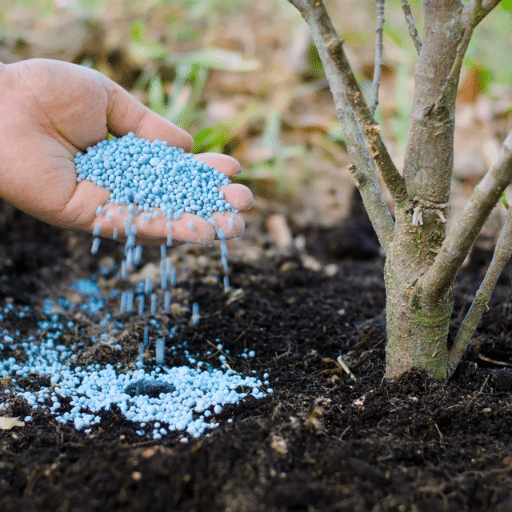
- Granular organic NPK blends (convenience for mature orchards)
- Microbial inoculants (mycorrhizae and beneficial bacteria)
Want a formulation built for your soil and tree type rather than a generic bag? Request an orchard formulation consultation and our agronomy team will match a blend to your needs.
What Makes a Fruit Tree Fertilizer Truly “Organic”?
Not every bag with a leaf on the front meets the same standard. “Natural” is a marketing word; “organic” should describe a verified production process. Knowing the difference protects your trees, your soil, and your investment.
Organic vs. Natural vs. Synthetic
Synthetic fertilizers are manufactured chemically, usually delivering soluble nutrients that plants absorb quickly. Organic fertilizers come from plant, animal, or mineral sources processed without prohibited chemicals. The word “natural” has no regulatory meaning and can apply to either category, which is why label literacy matters.
For long-lived fruit trees, organic inputs offer a major advantage: they feed the soil, not just the tree. Over time, the soil becomes more productive, retains water better, and supports the microbial life that converts nutrients into plant-available forms.
Certifications That Matter
Certifications take vague promises and turn them into verifiable facts. The most credible standards for orchard buyers include:
- REACH: European regulation confirming chemical safety and traceability
- SGS: Independent global inspection and testing of product composition
- BV (Bureau Veritas): Quality, safety, and compliance verification for export markets
- OMRI: Listing service confirming organic input eligibility in many regions
Loyal Fertilizer products are produced to REACH, SGS, and BV standards, giving commercial orchards and distributors the documentation they need for export, retail, and audit requirements.
Common Organic Nutrient Sources
Most organic fruit tree fertilizers blend three categories of inputs:
- Plant-based: alfalfa meal, kelp, seaweed, soybean meal
- Animal-based: blood meal, bone meal, feather meal, fish emulsion
- Mineral-based: rock phosphate, greensand, gypsum, dolomite
The strongest formulations combine all three so trees receive a full spectrum of macronutrients, micronutrients, and trace minerals.
Understanding NPK and Micronutrients for Fruit Trees

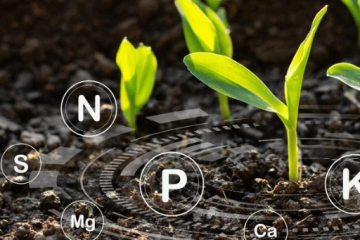
The numbers on a fertilizer bag (for example, 10-5-10) represent the percentages of nitrogen (N), phosphorus (P), and potassium (K). Fruit trees use these three elements differently across the seasons, and the wrong ratio can mean lush leaves but disappointing fruit.
Nitrogen Drives Vegetative Growth
Nitrogen powers shoot extension, leaf expansion, and the deep green color of a healthy canopy. Young, non-bearing trees benefit from more nitrogen. Mature, fruit-bearing trees need a steady, moderate supply: too much nitrogen produces soft, vegetative growth that delays fruiting and invites disease.
Phosphorus Builds Roots and Flowers
Phosphorus supports root development, flowering, and early fruit set. Soil tests often reveal phosphorus levels are adequate in long-managed orchards, so additional phosphorus should follow a soil test, not a guess.
Potassium Improves Fruit Quality
Potassium increases fruit size, sugar content, color, and cold hardiness. During years with heavy fruit loads, potassium demand rises sharply. Many of the best organic fruit tree fertilizer blends use a ratio with potassium equal to or higher than nitrogen.
Micronutrients Worth Tracking
Macronutrients get the spotlight, but deficiencies in the following micronutrients quietly limit yields:
- Calcium: prevents bitter pit in apples and blossom-end issues in stone fruit
- Magnesium: supports chlorophyll and photosynthesis
- Zinc and boron: critical for flower development and fruit set
- Iron: prevents chlorosis, especially in alkaline soils
A 10-10-10 synthetic blend rarely covers these trace elements. A well-formulated organic program does.
The Best Organic Fertilizer Categories for Fruit Trees
The phrase “best organic fruit tree fertilizer” rarely points to a single product. It points to a system: a base of soil-building compost or manure, targeted macronutrient inputs, and biological boosters that activate microbial life. Here is how the leading categories compare.
Compost and Aged Manure: The Soil Foundation
Compost adds organic matter, improves water retention, and slowly releases a broad range of nutrients. Aged manure (never fresh, which can burn roots and carry pathogens) brings nitrogen plus microbial diversity. Apply 1 to 3 inches around the drip line annually, then top with mulch.
Blood Meal, Feather Meal, and Bone Meal
These slaughterhouse-derived inputs deliver concentrated macronutrients. Blood meal and feather meal supply nitrogen, with feather meal releasing more slowly. Bone meal delivers phosphorus and calcium and is especially useful when planting new trees.
Fish Emulsion and Kelp Meal
Fish emulsion provides quick-acting nitrogen and trace minerals; kelp meal contributes potassium, micronutrients, and natural plant growth hormones such as cytokinins. Together, they make a powerful foliar or root-drench supplement during fruit development.
Humic Acid and Fulvic Acid
Humic and fulvic acids are not nutrients themselves; they are soil conditioners that chelate minerals, stabilize pH, and stimulate microbial life. Mixed with granular NPK or applied through fertigation, they can boost nutrient uptake efficiency by 20 to 40 percent. Learn more about how humic acid fertilizers function as soil conditioners.
Amino Acid Fertilizers
Amino acid blends deliver nitrogen in a form trees can absorb directly, bypassing slower mineralization steps. They are especially helpful during stress events (heat, drought, flowering, fruit load) when trees need fast support without the nutrient burn risk of synthetic urea.
Granular Organic NPK Blends
For commercial orchards that need consistent application across hundreds of trees, granular blends offer the easiest path. The best granular blends are pelletized for even spreading, list every input ingredient, and carry recognizable certifications.
Microbial Inoculants
Mycorrhizal fungi and beneficial bacteria extend the effective root surface area by 10 to 100 times. Inoculating at planting (or annually around the drip line) improves phosphorus uptake by 20 to 40 percent according to soil-microbiology research. They pair well with humic acid programs.
Ready to test a layered organic program for your orchard? Explore Loyal’s certified organic fertilizer line for formulations built around humic acid, amino acid, and microbial-friendly inputs.
Best Organic Fertilizer by Fruit Tree Type

Fruit trees share basic needs, but each type has preferences. Tuning your program by tree type often pays for itself in yield within two seasons.
Apple and Pear Trees
Pome fruit responds well to a balanced N-K profile with steady calcium to prevent bitter pit. A 5-3-8 organic blend with added calcium (gypsum or limestone, depending on pH) suits mature apples. Avoid late-season nitrogen, which can delay dormancy and increase winter damage.
Citrus Trees
Citrus is a heavy feeder, particularly for nitrogen, potassium, and magnesium. An organic 8-3-9 blend with chelated micronutrients (iron, zinc, manganese) works well. Citrus also benefits from foliar amino acid sprays during flowering and fruit set.
Stone Fruit (Peach, Plum, Cherry, Apricot)
Stone fruit needs moderate nitrogen, abundant potassium, and good calcium availability for fruit firmness. A 6-3-10 organic blend with bone meal at planting works well. Watch for boron deficiency, which causes deformed pits and dropped fruit.
Nut Trees (Almond, Walnut, Pecan)
Nut trees are nitrogen-hungry and zinc-sensitive. A 10-4-8 organic blend with chelated zinc, applied in split doses (early spring, post-bloom) outperforms a single annual application. Bulk pricing matters for the per-acre economics in nut orchards.
Tropical and Subtropical Fruit (Mango, Avocado, Banana)
Tropical fruit grows in warmer, more leached soils that lose nutrients faster. Frequent, smaller applications outperform one large dose. Look for blends rich in potassium, magnesium, and humic acid to combat leaching.
Mike’s story: When Mike took over his family’s 40-acre Florida citrus grove in early 2024, his standard 16-4-8 synthetic program was producing average fruit and a soil test that showed declining organic matter for the fourth year in a row. After switching to a custom organic 8-3-9 blend with 15 percent humic acid and quarterly amino acid foliar sprays, his soil organic matter rose from 1.4 percent to 2.1 percent over two seasons. His yield jumped 18 percent, and his irrigation water use dropped by roughly 12 percent because the soil now held water better. The fertilizer cost more per bag, but his per-acre input cost decreased once water savings and fewer micronutrient corrections were factored in.
When and How to Apply Organic Fruit Tree Fertilizer
Timing matters as much as formulation. Trees draw heavily on stored reserves during bud break and bloom, so feeding the soil before those moments is what fuels yield.
Dormant-Season Application
Apply compost, aged manure, and slow-release organic blends in late fall or late winter. The soil microbial community will mineralize nutrients gradually, making them available when roots wake up. This is also the best time to address pH or major nutrient deficiencies revealed by a soil test.
Spring Pre-Bloom Feeding
Six to four weeks before bud break, apply your main granular organic NPK blend. This supports flowering, leaf-out, and early fruit set. Mature trees typically need 1 to 1.5 pounds of actual nitrogen per year, applied in split doses.
Post-Bloom and Fruit Development
After fruit set, focus on potassium and micronutrients to support cell division and sizing. This is the right window for kelp meal, fish emulsion, or amino acid foliar sprays. Avoid heavy nitrogen, which can cause excessive vegetative growth at the expense of fruit quality.
Late-Season Considerations
Stop nitrogen applications six to eight weeks before the first expected frost. Late nitrogen pushes new growth that will not harden off, leading to winter dieback. A light compost or kelp application after harvest helps rebuild soil reserves for the next cycle.
Application Methods
- Broadcast: Spread granular fertilizer evenly from the trunk out to the drip line
- Banded: Concentrate fertilizer in a narrow ring just inside the drip line
- Fertigation: Deliver soluble organic inputs through drip irrigation
- Foliar: Spray liquid amino acid, kelp, or fish emulsion directly on leaves
For detailed step-by-step guidance, see our deeper article on how to apply organic fertilizer effectively.
How to Choose an Organic Fertilizer Manufacturer

The product matters; the manufacturer matters more. A weakly regulated supplier can ship a bag labeled organic that contains contaminants, inconsistent NPK from batch to batch, or pathogens from improperly composted inputs.
Certifications and Compliance Documents
Ask for current REACH, SGS, BV, and (where relevant) OMRI documentation. Reputable suppliers provide a Certificate of Analysis (COA) for each batch, listing N-P-K verification, heavy metal levels, and pathogen testing.
Custom-Blending Capabilities
Generic blends are convenient. Custom blends, formulated to match a specific orchard’s soil test and tree type, perform better. A serious manufacturer should accept soil-test inputs and propose a formulation, not just resell a stock product.
Batch Traceability and Quality Control
Each shipment should carry a batch number that traces back to source ingredients, production date, and QA test results. This protects orchards from contamination claims and meets export and food-safety requirements.
Supply Reliability for Commercial Orchards
Skipping a fertilizer cycle costs growers far more than the bag itself. Confirm that your supplier holds inventory, has redundant logistics, and can deliver on a guaranteed schedule. With a network spanning Europe, North America, Southeast Asia, the Middle East, and Africa, Loyal Fertilizer maintains supply continuity even when regional logistics tighten.
Diana’s story: Diana manages procurement for a 220-acre organic apple cooperative in Washington State. In 2025, her previous supplier missed two consecutive spring deliveries because of port congestion. Trees went into bloom under-fed, and the season’s yield came in 14 percent below the five-year average. After switching to a manufacturer with documented multi-region logistics and a guaranteed 21-day delivery window, her 2026 spring application landed on time, and early projections show yields trending back to the long-term mean. The lesson was simple: certification and price matter, but supply reliability is the foundation under both.
Common Mistakes That Hurt Yields
Even great fertilizer can fail when applied carelessly. Avoid these five mistakes.
Over-Applying Nitrogen
More nitrogen does not equal more fruit. Excess nitrogen produces vegetative growth, delays fruit ripening, and increases susceptibility to fire blight and aphids. Stick to recommended rates and split applications.
Ignoring Soil pH
Fruit trees absorb nutrients best in slightly acidic soils (pH 6.0 to 6.8 for most species; 5.5 to 6.5 for blueberries; 6.0 to 7.5 for stone fruit). Below or above this range, even well-formulated organic fertilizer becomes less available. Adjust pH with lime or sulfur based on a soil test.
Skipping the Soil Test
A 25-dollar soil test prevents hundreds of dollars in misapplied fertilizer. Test every two to three years for established orchards and annually for new plantings.
Buying on Price Alone
The cheapest bag often contains fillers, low-quality inputs, or unverifiable claims. Compare guaranteed analysis, certifications, and per-pound cost of actual nutrients, not just the sticker price.
Applying at the Wrong Time
Fertilizing trees in mid-summer or late fall can do more harm than good. Follow the dormant, pre-bloom, post-bloom, and post-harvest windows described above for the best organic fruit tree fertilizer results.
Frequently Asked Questions

What is the best organic fruit tree fertilizer for beginners?
Start with a granular organic NPK blend in the 5-5-5 to 8-3-9 range that includes humic acid and micronutrients. It is forgiving, easy to apply, and gives mature trees a balanced feed without requiring you to layer multiple products.
How often should I fertilize my fruit trees with organic fertilizer?
Most fruit trees benefit from two to three applications per year: a pre-bloom application in early spring, a post-bloom application after fruit set, and a light fall compost or kelp top-dress. Adjust based on tree age, soil test results, and crop load.
Can I use organic fertilizer on newly planted fruit trees?
Yes. Mix compost and bone meal into the planting hole, then top-dress with a balanced organic blend after the tree shows new growth. Avoid high-nitrogen products in the first 6 to 8 weeks while the root system establishes.
Is organic fertilizer better than synthetic for fruit trees?
For long-term soil health and orchard productivity, organic inputs typically outperform synthetics. They build soil organic matter, support microbial life, and reduce nutrient leaching. The trade-off is that organic fertilizers release more slowly, so they reward planning. For a full breakdown, see our organic vs synthetic fertilizer comparison.
How do I know if my fertilizer is truly organic?
Look for third-party certifications (REACH, SGS, BV, OMRI), a Certificate of Analysis with each batch, and a complete ingredient list. If a supplier cannot provide these documents, treat the “organic” label with skepticism.
Conclusion: Choosing the Best Organic Fruit Tree Fertilizer
Choosing the best organic fruit tree fertilizer is not about finding a single magic bag. It is about building a system that matches your trees, your soil, and your operating scale. Balance macronutrients to the growth stage of your trees. Add micronutrients and biological inputs to keep soil microbes active. Time applications around dormant, pre-bloom, post-bloom, and post-harvest windows. And source from a manufacturer that proves its claims with certifications, batch traceability, and reliable global supply.
Done well, an organic fertilizer program is an investment that compounds. Soil organic matter rises year after year. Water retention improves. Trees become more resilient. Yields stabilize or climb. And your operation builds the kind of soil that will still be productive two decades from now.
If you are ready to move from generic bags to a formulation built for your orchard, our agronomy team can match a REACH, SGS, and BV-certified blend to your soil profile and tree type. Request a custom organic formulation consultation today and start the next harvest on better ground.