
Maria Chen watched her three-year-old peach trees explode with lush green shoots in April. The canopy looked magnificent. But by June, the branches were nearly bare of fruit.
Her agronomist traced the problem to a single number on the fertilizer bag: the first digit was too high. She had been feeding 20-10-10, a nitrogen-heavy blend designed for leafy growth, straight through bloom and fruit set. The trees responded exactly as the formula intended. They grew leaves instead of peaches.
This story plays out in orchards and backyards more often than most growers realize. NPK for fruit trees is not a one-size-fits-all calculation. The right ratio changes with the season, the species, the soil, and the tree’s age.
A young citrus tree building its frame needs a completely different profile than a mature apple tree loading up for harvest. Understanding these numbers, and when to shift them, is what separates a good grower from a great one.
In this guide, you will learn exactly what NPK means for fruit tree health, which ratios to use at each growth stage, how to match formulas to specific tree types, and the application methods that get nutrients into the root zone where they belong. Whether you manage a commercial orchard or a backyard grove, the principles are the same. Feed the tree what it needs, when it needs it.
Need help selecting the right NPK blend for your orchard? Contact our agronomy team for a free soil analysis review and customized fertilizer recommendation.
What Is NPK and Why Does It Matter for Fruit Trees?

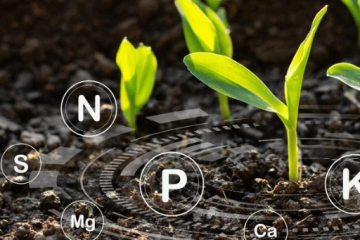
NPK stands for nitrogen (N), phosphorus (P), and potassium (K). These three macronutrients form the foundation of virtually every fertilizer program on earth. The numbers on a fertilizer bag, such as 10-10-10 or 5-10-10, represent the percentage by weight of each nutrient in the formula. A 50-pound bag of 10-10-10 contains 5 pounds of nitrogen, 5 pounds of phosphorus, and 5 pounds of potassium.
For fruit trees, the balance between these three nutrients determines everything from root depth to fruit sweetness. Get the balance right, and your trees produce consistent, high-quality harvests year after year. Get it wrong, and you invite problems that no amount of spraying or pruning can fix.
Nitrogen (N): Fueling Leaf Growth and Canopy Development
Nitrogen drives vegetative growth. It is the building block of chlorophyll, amino acids, and proteins. Without adequate nitrogen, fruit trees produce pale, stunted leaves and weak new shoots. Young trees in particular need plenty of nitrogen to build the framework that will support future harvests.
However, too much nitrogen creates its own set of problems. Excessive vegetative growth shades out fruiting wood, delays maturity, and attracts pests like aphids and leafhoppers. In late summer, high nitrogen pushes soft growth that will not harden off before frost. The key is timing: front-load nitrogen in early spring, then taper off before fruit development begins.
Phosphorus (P): Powering Root Systems and Fruit Set
Phosphorus is the energy currency of the plant. It fuels root development, flower formation, and the early cell division that determines fruit set. Trees low in phosphorus produce fewer flowers, smaller fruit, and weak root systems that struggle to anchor the plant or access water during dry spells.
Unlike nitrogen, phosphorus does not move freely through soil. It binds to clay particles and organic matter, becoming unavailable in high-pH soils. This immobility makes placement critical. Banding phosphorus near the root zone at planting, or incorporating it into the topsoil around established trees, ensures the tree can actually reach it.
Potassium (K): Maximizing Fruit Quality, Size, and Storage Life
Potassium regulates water movement, enzyme activation, and carbohydrate transport within the plant. For fruit trees, it is the quality nutrient. Adequate potassium improves fruit size, color, sugar content, and post-harvest storage life. It also strengthens cell walls, reducing susceptibility to bruising and disease.
Apples, stone fruit, and berries are especially hungry for potassium during the fruit development window. A deficiency shows up as small fruit, pale color, and poor flavor. In severe cases, leaves develop marginal scorching and the tree becomes more vulnerable to drought stress. Potassium demand often peaks in mid to late summer, right when many growers have stopped fertilizing.
The Role of Secondary and Micronutrients
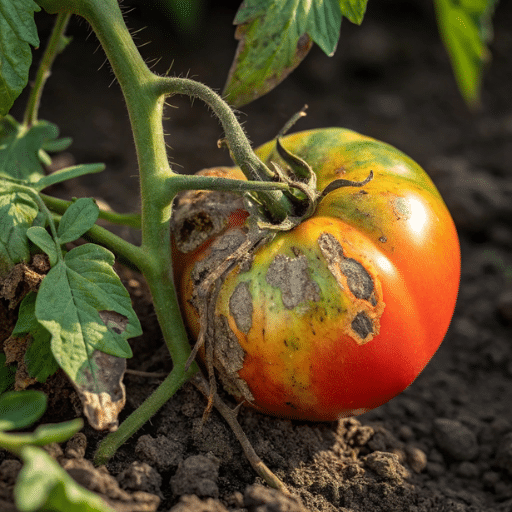
NPK gets the headlines, but calcium, magnesium, sulfur, zinc, boron, and iron often determine whether a crop succeeds or fails. Calcium prevents bitter pit in apples and blossom-end rot in tomatoes and stone fruit. Magnesium is the core of the chlorophyll molecule. Boron influences pollination and fruit development at microscopic levels.
High-quality NPK fertilizers for fruit trees increasingly include these micronutrients in chelated forms that remain available across a range of soil pH levels. When evaluating a fertilizer program, look beyond the three big numbers. A formula like 4-18-38 plus calcium and magnesium addresses fruit quality in ways that 10-10-10 simply cannot.
Best NPK Ratios for Fruit Trees by Growth Stage
The NPK needs of a fruit tree shift dramatically across its lifetime. Applying the same formula every season is one of the most common mistakes growers make. Here is how the ideal profile changes from planting through maturity.
| Growth Stage | Primary Goal | Recommended NPK Range | Application Notes |
|---|---|---|---|
| Young, non-fruiting (Years 1–3) | Canopy and root establishment | 12-6-6 to 20-10-10 | Higher nitrogen for vegetative growth; split into 2-3 doses |
| Transition to bearing (Years 3–5) | Balance growth and fruiting | 10-10-10 to 12-12-12 | Begin reducing nitrogen; increase phosphorus for flower bud initiation |
| Mature, pre-bloom | Flower and root energy | 10-10-10 or 5-10-10 | Moderate nitrogen; focus on phosphorus for bloom strength |
| Mature, fruit set and development | Fruit size and quality | 5-10-10 to 6-25-19 | Low nitrogen, high phosphorus and potassium; add calcium |
| Mature, post-harvest | Reserve replenishment | 5-5-5 to 10-10-10 | Light balanced feeding to restore tree reserves before dormancy |
Young, Non-Fruiting Trees: Build the Framework First
Trees in their first three years are not trying to fruit. They are trying to survive, root deeply, and push enough canopy to capture sunlight. During this phase, nitrogen is king. Ratios like 12-6-6, 16-8-8, or even 20-10-10 direct energy into shoot elongation and leaf production.
Apply higher-nitrogen formulas in early spring and again in late spring if growth appears sluggish. Avoid pushing nitrogen after midsummer. Young trees need time to harden off before winter, and late flushes of growth are both vulnerable to frost and counterproductive to cold acclimation.
Mature Trees: Shift from Leaves to Fruit
Once a tree begins bearing, the nutritional priority changes. Excessive nitrogen during bloom and fruit set creates vegetative competition at exactly the wrong time. Mature trees perform best with lower nitrogen and higher phosphorus and potassium during the reproductive phase.
A common professional strategy is to start the season with a balanced or slightly nitrogen-heavy formula, then switch to a high-phosphorus, high-potassium blend at first flower or shortly after fruit set. This “pivot” strategy channels resources from vegetative growth into fruit production at the precise moment the tree needs it. For more on how to time these transitions, see our detailed guide on when to fertilize fruit trees throughout the growing season.
NPK Recommendations by Fruit Tree Type
Different fruit species have evolved under different nutritional pressures. Citrus trees native to subtropical forests have different needs than apples evolved in temperate woodlands. Matching your NPK program to the species is the next level of precision.
| Tree Type | Preferred NPK Range (Active Growth) | Preferred NPK Range (Fruiting) | Special Considerations |
|---|---|---|---|
| Citrus (orange, lemon, grapefruit) | 6-4-6 to 8-4-8 | 4-4-8 to 6-3-9 | Higher nitrogen year-round; sensitive to zinc and iron deficiencies |
| Apple and pear | 5-5-5 to 10-10-10 | 5-10-10 to 5-15-15 | High potassium for fruit quality; calcium critical for storage |
| Stone fruit (peach, plum, cherry) | 10-10-10 to 12-12-12 | 5-10-10 to 6-25-19 | Boron and zinc essential for pollination and pit development |
| Tropical fruits (mango, avocado) | 6-3-6 to 8-4-8 | 4-4-8 to 6-2-12 | Avoid high phosphorus; sensitive to chloride in potash sources |
| Berries (blueberry, blackberry) | 10-10-10 | 10-26-10 | Lower pH preference (4.5-5.5); use ammonium nitrogen sources |
Citrus Trees: Sustained Nitrogen with Micronutrient Support
Citrus trees are heavy nitrogen feeders relative to other fruit trees. They also remain physiologically active for more months of the year in subtropical and tropical climates. A citrus program typically uses formulas with slightly higher first numbers, such as 6-4-6 or 8-4-8, applied in multiple small doses from spring through early fall.
Citrus is also notoriously sensitive to micronutrient deficiencies, particularly zinc, iron, and manganese. These deficiencies show up as interveinal chlorosis, stunted new growth, and fruit with thickened rinds. Look for NPK fertilizers that include chelated trace elements, or plan foliar micronutrient sprays as a separate operation.
Apple and Pear Trees: Potassium for Quality and Storage
Pome fruits store for months after harvest, making potassium and calcium particularly valuable. Potassium drives sugar development and skin color. Calcium strengthens cell walls and prevents the storage disorders that ruin long-term apple quality.
Professional apple growers often use a 5-15-15 or similar high-potassium formula during fruit development, followed by calcium chloride or calcium nitrate sprays in the weeks before harvest. The NPK ratio is only part of the story. The secondary nutrients layered on top determine whether fruit arrives at market in premium condition.
Stone Fruits: Balanced Nutrition with Critical Micronutrients
Peaches, plums, and cherries require careful boron and zinc management. These two micronutrients influence pollen viability, fruit set, and proper pit formation. A boron deficiency in peaches produces misshapen fruit with sunken areas around the pit. Zinc deficiency causes small, bunched leaves known as little leaf.
Stone fruit growers should prioritize balanced NPK formulas with included micronutrients, or supplement with targeted foliar applications during bloom and early fruit set. A 10-10-10 base with micronutrient enhancement is often more effective than a high-analysis formula without trace elements.
Soil Testing: The Foundation of Smart NPK Selection

Every recommendation in this guide assumes average soil conditions. Your soil is not average. The only way to know exactly what your trees need is to test the soil, and to test it correctly.
Soil testing reveals pH, existing nutrient levels, organic matter content, and cation exchange capacity. A pH of 8.0 in a calcareous soil locks up phosphorus and iron regardless of how much you apply. A sandy soil with low organic matter leaches nitrogen before the tree can use it. Without this information, NPK selection is educated guesswork at best.
How to Interpret Soil Test Results for NPK
Most agricultural soil tests report phosphorus and potassium in parts per million (ppm) or pounds per acre. For fruit trees, the following general guidelines apply:
- Phosphorus below 20 ppm: Deficient. Apply a phosphorus-heavy formula or banded phosphorus near the root zone.
- Phosphorus 20-40 ppm: Adequate. Maintain with balanced fertilization.
- Phosphorus above 40 ppm: High. Reduce or eliminate phosphorus from your program.
- Potassium below 150 ppm: Deficient. Increase potassium fertilization, especially before fruit development.
- Potassium 150-250 ppm: Adequate. Monitor annually and adjust as trees mature and bearing increases.
- Potassium above 250 ppm: High. Reduce potassium inputs to avoid magnesium antagonism.
Nitrogen is rarely reported accurately in standard soil tests because it moves too quickly through the soil profile. Instead, nitrogen recommendations are based on tree age, canopy size, and expected yield. A mature apple tree bearing 500 pounds of fruit may need 0.5 to 0.75 pounds of actual nitrogen per year, while a young non-bearing tree of the same species needs half that amount or less.
Soil pH and Nutrient Availability
Soil pH controls nutrient availability more directly than most growers realize. At pH 7.5 and above, iron, zinc, manganese, and phosphorus become increasingly unavailable. At pH 5.5 and below, magnesium, calcium, and molybdenum availability drops. Fruit trees generally prefer a pH between 6.0 and 7.0, though blueberries are a notable exception at 4.5 to 5.5.
Before adjusting your NPK program, adjust your pH if it falls outside the optimal range for your tree species. Liming acidic soils unlocks phosphorus that was already present but unavailable. Sulfur applications to alkaline soils can improve iron and zinc uptake without adding more fertilizer.
Tom’s turnaround: Tom Kowalski inherited a 40-acre pear orchard in Oregon’s Hood River Valley with soil tests showing 45 ppm phosphorus and 280 ppm potassium. For years, the previous owner had applied 10-10-10 annually because “that’s what fruit trees get.”
Tom switched to a nitrogen-only calcium ammonium nitrate program with foliar zinc and boron, eliminating phosphorus and potassium entirely. Within two seasons, his fertilizer costs dropped 35 percent. Fruit size and color improved because he had removed the excess potassium that was antagonizing magnesium uptake. The soil test paid for itself in the first year.
How to Apply NPK Fertilizer to Fruit Trees
Choosing the right NPK ratio is only half the battle. Getting it into the soil where roots can access it, at the right time and in the right amount, determines whether your investment produces results.
Granular Application: Broadcasting at the Drip Line
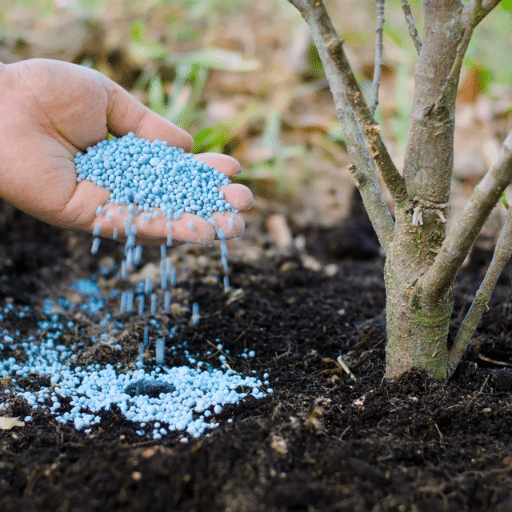
For most home orchards and small commercial operations, granular NPK fertilizer is broadcast evenly under the tree canopy, starting about 12 inches from the trunk and extending to the drip line. The drip line is the area directly beneath the outer edge of the branches, where feeder roots are most concentrated.
Avoid piling fertilizer against the trunk. Tree roots do not absorb nutrients effectively at the base of the trunk, and concentrated salts can damage bark and root tissue. After broadcasting, water thoroughly to dissolve granules and move nutrients into the root zone. In dry climates, irrigation after application is essential. In rainy climates, timing application before a moderate rain event achieves the same result.
Fertigation: Precision NPK Through Irrigation
Fertigation, the injection of water-soluble fertilizer into irrigation water, is the standard in modern commercial orchards. It allows growers to apply small, frequent doses of NPK exactly when the tree needs them, reducing waste and improving uptake efficiency.
Water-soluble NPK fertilizers with solubility rates above 95 percent are ideal for drip and micro-sprinkler systems. A typical fertigation schedule might deliver 0.5 to 1.0 pound of nitrogen per acre per week during active growth, adjusted based on leaf tissue tests and weather conditions.
Foliar Feeding: Rapid Response for Deficiencies
Foliar application bypasses the soil entirely, spraying diluted nutrient solutions directly onto leaves. Uptake is fast, often producing visible improvement within 7 to 10 days. This makes foliar feeding ideal for correcting mid-season deficiencies that soil applications cannot address quickly enough.
Common foliar NPK applications include potassium nitrate or monopotassium phosphate during fruit development, and urea or calcium nitrate for nitrogen or calcium boosts. Concentrations must be carefully controlled. Exceeding 1 to 2 percent total dissolved solids risks leaf burn, especially in hot, sunny weather.
Application Rates by Tree Age and Size
Use the following general guidelines as a starting point, adjusting based on soil tests, leaf tissue analysis, and observed tree response:
| Tree Age / Size | Granular NPK per Application | Applications per Year |
|---|---|---|
| Young tree, 1-2 years | 0.25 to 0.5 pounds | 2 to 3 |
| Young tree, 3-4 years | 0.5 to 1.0 pounds | 2 to 3 |
| Mature tree, 5+ years | 1.0 to 2.0 pounds per inch of trunk diameter | 2 to 4 |
| Commercial orchard (per acre) | 30 to 60 pounds actual N; P and K based on soil test | 2 to 4 split applications |
Trunk diameter should be measured at breast height, approximately 4 feet above ground level, using a diameter tape. These rates assume moderate soil fertility and a standard-density planting. High-density plantings or intensive production systems may require adjusted rates.
Timing: The Seasonal NPK Calendar
Nitrogen applications should be concentrated in early spring, from bud swell through petal fall. Phosphorus can be applied in early spring or incorporated in fall for slow availability. Potassium is most critical from fruit set through harvest, with a final post-harvest application to replenish tree reserves.
Avoid heavy nitrogen after midsummer in temperate climates. Late nitrogen stimulates vegetative growth that will not harden before frost, increasing winter injury risk. In subtropical climates where trees do not go fully dormant, the calendar shifts, and lighter, more frequent applications replace the concentrated spring feeding typical of temperate zones.
Organic vs. Synthetic NPK for Fruit Trees

The choice between organic and synthetic NPK is not just philosophical. It affects nutrient availability timing, soil biology, application methods, and long-term soil health.
Synthetic NPK fertilizers dissolve quickly and become plant-available within days or weeks. They offer precision, consistency, and predictable response. For commercial growers managing hundreds of acres, this predictability is valuable. Synthetic formulas also tend to be less expensive per unit of nutrient.
Organic NPK fertilizers release nutrients through microbial mineralization, a slower process that depends on soil temperature, moisture, and biology. In 60-degree soil, organic nitrogen may mineralize at only 1 to 2 percent per week. This means organic programs require earlier application and more patience.
However, organic inputs also build soil structure, increase water-holding capacity, and support the microbial ecosystems that sustain long-term fertility.
Making the Transition from Synthetic to Organic
Orchards switching from synthetic to organic NPK programs should expect a 1 to 2 season transition period. Soil microbial populations need time to adapt to the new carbon-based inputs. During transition, many growers use a split approach: organic compost or slow-release granules as a base, with targeted synthetic foliar feeds for critical windows where rapid response is necessary.
For growers committed to fully organic production, look for certified organic NPK products that combine plant and animal protein sources with natural mineral amendments. Amino acid-based fertilizers and humic acid-enhanced blends offer intermediate solubility, releasing faster than raw compost but slower than synthetic salts. Learn more about building a complete organic program in our guide to the best organic fertilizer for fruit trees.
Common NPK Mistakes Fruit Growers Make
Even experienced growers misapply NPK. Here are the errors that appear most frequently in orchards of every size.
Over-Fertilizing with Nitrogen
Excessive nitrogen is the single most common nutritional mistake in fruit production. It produces dark green, succulent growth that attracts aphids, mites, and fire blight. It delays fruit maturity and reduces winter hardiness.
And it is expensive. Every pound of nitrogen not used by the tree either leaches into groundwater or volatilizes into the atmosphere.
The fix is simple: test your soil, know your tree’s age and yield target, and calculate actual nitrogen needs rather than guessing. If leaf tissue tests show nitrogen levels above 2.5 to 2.8 percent in mid-season apple leaves, you are applying too much.
Ignoring Micronutrient Deficiencies
A grower can apply perfect NPK and still see poor fruit set, deformed fruit, or storage disorders. Zinc, boron, iron, and manganese operate at trace levels, but their absence creates symptoms that look like major nutrient problems. Boron deficiency in stone fruit, for example, produces corky tissue and poor pit development that no amount of nitrogen or potassium will fix.
Include leaf tissue testing in your annual program. Collect samples from mid-summer shoots, submit them to a qualified lab, and compare results against established sufficiency ranges for your species. Address deficiencies with targeted foliar sprays or micronutrient-enhanced fertilizers.
Poor Timing and Placement
Fertilizer applied at the wrong time is fertilizer wasted. Early spring nitrogen fuels vegetative growth. Late summer nitrogen fuels winter injury.
Phosphorus spread on the surface of compacted or high-pH soils stays locked up where roots cannot reach it. Potassium applied after harvest still benefits the tree, but potassium applied during fruit development benefits the crop.
Ava’s learning curve: Ava Rodriguez manages a 15-acre avocado grove in Ventura County, California. For her first two seasons, she applied a balanced 10-10-10 synthetic blend four times a year on a strict calendar schedule. Her trees looked healthy, but fruit size was consistently below the premium grade that earns top export prices.
In her third season, she switched to a 6-3-9 formula with added calcium and magnesium, applied through fertigation in weekly pulses timed to fruit development stages. She also added a foliar boron spray at early bloom. Her pack-out of premium-sized fruit jumped from 42 percent to 67 percent.
The difference was not spending more on fertilizer. It was spending smarter on the right NPK at the right moments.
Choosing a Quality NPK Fertilizer Supplier

Not all NPK fertilizers are created equal. Beyond the three numbers on the bag, quality depends on raw material sourcing, manufacturing precision, physical properties like solubility and granule hardness, and the presence of contaminants like heavy metals or chloride.
What Certifications to Look For
For growers supplying export markets or operating under organic certification, fertilizer quality documentation is essential. The three most important certifications to verify are:
- REACH compliance: Ensures the product meets European Union safety standards for chemical substances, including heavy metal limits and environmental impact assessments.
- SGS certification: Independent third-party testing that verifies nutrient content claims, physical properties, and freedom from harmful contaminants.
- Bureau Veritas (BV) certification: Additional quality assurance and supply chain verification, particularly important for international shipments.
These certifications are not merely paperwork. They represent testing protocols that catch substandard products before they reach your orchard. A fertilizer labeled 15-15-15 that actually contains 12-11-14 because of poor quality control costs you money and deprives your trees of expected nutrition.
Custom Blending for Orchard-Specific Needs
Off-the-shelf NPK formulas work for average conditions, but no orchard is average. Soil tests may reveal a phosphorus surplus and a potassium deficit that no standard blend addresses. High-pH soils may require acid-forming fertilizers or chelated micronutrients that basic formulas omit. Organic certification may restrict the nitrogen sources you can use.
Custom NPK blending solves these problems by matching the formula precisely to your soil test, your tree species, and your management system. A custom blend might be 8-2-14 with chelated iron and zinc for alkaline citrus soils, or 5-8-12 with humic acid enhancement for organic apple production. The ability to specify exact ratios, nutrient sources, and additive packages turns a generic input into a precision tool.
Ready to move beyond off-the-shelf fertilizers? Request a custom NPK blend formulated specifically for your soil test results, tree varieties, and production goals. Our agronomists design certified fertilizer programs for orchards across Europe, North America, Southeast Asia, and beyond.
Bulk Supply and Global Distribution
Commercial orchards consume fertilizer by the ton, not the pound. Supply chain reliability matters as much as product quality. A delayed shipment during pre-bloom can mean missing the most important nutritional window of the year. Storage conditions affect product integrity; hygroscopic fertilizers that absorb moisture during ocean shipping cake and clog spreaders and fertigation injectors.
When selecting a supplier, evaluate logistics capability alongside agronomic expertise. Can they deliver bulk orders on your timeline? Do they provide secure, weather-resistant packaging for long-distance transport? Can they document every batch with certificates of analysis? For large-scale operations, these operational factors determine whether a nutritional program succeeds on paper or succeeds in the field.
Conclusion
NPK for fruit trees is not about memorizing a single magic ratio. It is about understanding how three essential nutrients interact with tree biology, soil chemistry, and seasonal timing to produce the outcome every grower wants: healthy trees, abundant fruit, and sustainable long-term productivity.
The key takeaways are straightforward. Match your NPK ratio to the tree’s growth stage, shifting from nitrogen-heavy formulas during establishment to phosphorus and potassium emphasis during fruiting.
Adjust for species; citrus needs sustained nitrogen, apples need potassium for storage quality, and stone fruits cannot thrive without boron and zinc. Test your soil before you buy fertilizer, and let the results guide your formula selection rather than habit or guesswork.
Apply at the drip line, not the trunk. Time nitrogen for early spring, potassium for fruit development, and phosphorus for root and flower health.
Whether you are fertilizing five backyard trees or five hundred commercial acres, the principles remain the same. Precision beats excess. Timing beats volume. And quality inputs, backed by testing and certification, beat bargain products that underperform when it matters most.
Your trees are already telling you what they need. The right NPK program is how you listen.
Start building a precision NPK program for your orchard today. Contact SHANDONG LOYAL CHEMICAL CO., LTD. to discuss certified, customized fertilizer solutions tailored to your soil, your climate, and your crop goals.