The orange grove which Elena Ruiz owns in Valencia experienced two years of agricultural challenges. The leaves lost their green color before they should have. The fruit set decreased by approximately 30 percent. The synthetic mixture which she used from her father who operated his orchard for thirty years made her trees look exhausted because the soil became hard and compacted. The agronomist proposed a basic recommendation which required her to substitute fifty percent of her springtime synthetic fertilizer with an organic compost base that included feather meal and kelp extract. Her tree canopy transformed from dull green to vibrant emerald within eighteen months. Brix levels reached higher measurements. The packing house experienced a decrease of 22 percent in fruit rejections which had been established as grading standards.
You have probably read dozens of roundups claiming to reveal the best organic fertilizer for fruit trees. Most of the articles are written by affiliate marketers who lack experience in testing products at formulation labs and conducting orchard trials. Star ratings do not fulfill the requirements which home growers and commercial operators demand. NPK scientific information together with microbial degradation schedules and application rate information for both backyard and hundred-acre agricultural areas must be available through OMRI and REACH and SGS and BV certification processes.
The guide shows you all the required information to achieve your objectives. The guide presents five organic inputs which prove most beneficial for fruit tree cultivation. The guide shows you the appropriate source selection according to tree age and species. The guide presents actual application rates used for both patio citrus and commercial orchards. The global movement toward organic fruit production has become a $2.62 billion market segment within the organic fertilizer industry because it exceeds commercial branding efforts. The focus centers on maintaining soil health which ensures fruit quality that generates premium market prices and long-term yield stability.
Want to explore how certified organic formulations can improve your fruit tree program? Browse our organic fertilizer solutions →
What Makes an Organic Fertilizer “Best” for Fruit Trees?

You should not use every organic bag which is sold as organic. The optimal organic fertilizer for fruit trees functions through three effective processes. The product provides essential nutrients according to the natural growth schedule of the tree. The product enhances soil biology through its active components. The product includes independent testing which verifies all three components of its contents.
NPK Balance for Fruiting vs. Vegetative Growth
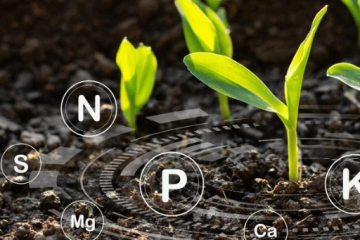
Fruit trees do not need the same nutrition all year. Young trees need nitrogen to push leafy canopy and establish roots. Phosphorus and potassium become essential for mature trees because they enable flowering and fruit development and sugar production and winter protection. The 10-10-10 fertilizer provides a standard solution in which it maintains leaf color yet delivers excessive nitrogen which harms fruit development.
Organic sources let you adjust this balance naturally. Blood meal brings fast nitrogen for spring push. Bone meal supplies phosphorus for bud differentiation. Kelp and compost deliver potassium and micronutrients that improve skin finish and storage life. The best programs layer these inputs rather than relying on a single product.
The Role of Soil Microbes in Nutrient Release
Synthetic fertilizers release their ions without any delay. Organic fertilizers do not. The process requires microbial decomposition for their activation. Soil bacteria convert proteins and amino acids and other organic molecules into ammonium which transforms into nitrate through bacterial processes. The natural biological process establishes a time-release system for the product.
Soil temperature and moisture conditions establish critical environmental factors. Microbial activity decreases significantly when temperatures drop beneath 50 °F. Feather meal that releases in six weeks during summer might take twelve weeks in cool spring soils. Smart growers apply slow-release organics early so decomposition has a head start. They reserve liquid organics like fish emulsion for times when the tree needs a rapid, microbe-independent boost.
Why Certifications Matter
OMRI Listed and USDA Organic labels provide access to garden-center products and organic certification programs. International trade requires companies to obtain both REACH compliance and SGS and BV certifications which demonstrate their compliance with European safety standards and quality assurance requirements.
SHANDONG LOYAL produces its organic fertilizer lines according to REACH and SGS and BV standards. We provide support for OMRI-listed products which our retail partners and certified organic farming partners can use. Your market needs will determine the specific certification requirements you must obtain. Third-party verification establishes trust which helps businesses expand their distribution networks according to this universal principle.
The 5 Best Organic Fertilizers for Fruit Trees

The highest ranking gardening blogs consistently recommend the same branded granular products. From a manufacturing and agricultural perspective experts believe that the most effective organic fertilizer for fruit trees consists of essential base materials which need to be applied at specific times with exact amounts. The five organic materials show reliable results for worldwide orchard operations.
1. Compost and Aged Manure, The Soil-Building Foundation
Compost functions as an incomplete fertilizer because it lacks essential nutrients. Its NPK value generally remains within the 1-1-1 to 2-1-2 range which makes it a base fertilizer. Compost provides three main benefits which include creating structure and enhancing water retention and promoting microbial diversity. Aged manure provides nitrogen to the plants in a less powerful way than concentrated meals. The base layer forms which enable all following fertilizers to achieve their full potential.
Apply 2–4 inches of compost or well-rotted manure around the drip line in early spring. Keep it several inches from the trunk to avoid collar rot. For commercial orchards, many growers top-dress with 5–10 tonnes per hectare of composted organic matter every two to three years. Research from Nature Hills confirms that arborist wood chips and compost mulch often improve long-term soil health around fruit trees more effectively than frequent synthetic amendments.
2. Blood Meal, Fast-Acting Nitrogen for Spring Growth
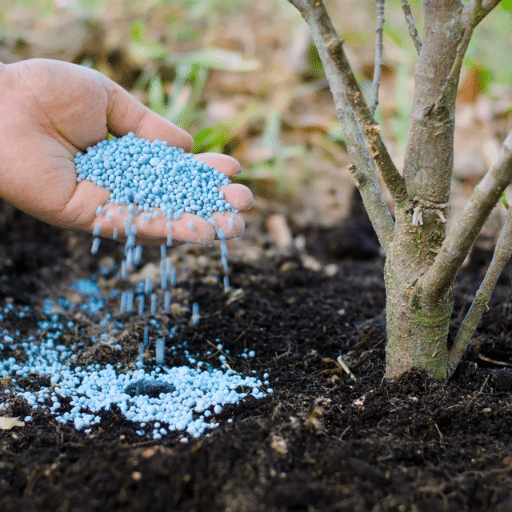
The highest-nitrogen organic input available stands as blood meal which contains 13-0-0NPK. The product derives from animal blood which undergoes drying and flash heating. Soil microbes can quickly degrade the proteins because of their high water solubility. The process will result in visible green growth within 1 to 3 weeks under normal temperature conditions.
Blood meal serves as the perfect fertilizer for young trees which have not yet produced fruit and need to create their tree canopy. The product acts as a rescue shot which becomes necessary when plants display nitrogen deficiency through their lower leaves. The product becomes dangerous because its strong effects produce hazardous outcomes. Excessive application leads to nitrogen burn which results in postponed flowering and creates soft growth that becomes susceptible to frost during the late season. Home growers should apply 1 to 2 tablespoons of the product to each tree through side-dressing. The standard spring band application rate for commercial use requires 100 to 200 pounds per acre.
3. Feather Meal, Slow-Release Nitrogen for Long-Season Support
Feather meal provides nitrogen which exists in keratin a durable fibrous protein that has an 12-0-0 nitrogen content. The soil microbes need to break down the enzyme through which plants will take in nitrogen. The system generates a natural time-release pattern which provides steady crop nutrition during a period of three to four months.
Feather meal serves as the top organic nitrogen fertilizer which supports fruit trees throughout their entire growing season. The product has an extremely low risk of causing burning. The product proves especially useful for stone fruits and apples which require ongoing nutritional support without receiving late-season nitrogen that interrupts their bud development. The product should be applied to the area 2 to 4 weeks before bud swell to allow its decomposition process to start. The typical commercial application rate for orchard blocks extends from 750 to 1,000 pounds per acre.
4. Fish Emulsion and Kelp, Liquid Micronutrient Boosts
Fish emulsion, which has a standard rating of 5-1-1, contains nitrogen in its current state. The nitrogen becomes plant-available within days. Kelp extract provides cytokinins and auxins together with trace minerals which enhance plants’ ability to handle stress while producing uniform fruit. The two substances work together to create an effective liquid solution which helps essential plant growth periods.
Use fish emulsion and kelp for foliar feeding, transplant recovery, and post-bloom fruit set support. A standard dilution is 1–2 tablespoons per gallon of water, applied every 2–4 weeks during the growing season. For foliar sprays, use a lighter dilution and apply early morning or late evening to avoid leaf scorch. The global organic fertilizer market, now valued at approximately USD 14.2 billion in 2025, is seeing particularly strong growth in liquid organic segments because of this precision-application advantage.
5. Bone Meal, Phosphorus for Root Development and Flowering
Bone meal provides phosphorus in the 3-15-0 range, depending on processing. The development of roots and buds and the production of energy during flowering and fruiting depend on phosphorus. The newly planted trees require this element to build their root systems while mature trees need it during their peak production periods.
At planting time, bone meal should be mixed into the top 3-4 inches of soil. For established trees, the material should be scratched into the drip line during late winter before the buds start to swell. The active root zone requires phosphorus placement because the element moves through soil at a slow speed which makes total quantity less important than proper placement need.
Quick Comparison: Organic Fertilizers for Fruit Trees
|
Source |
Typical NPK |
Release Speed |
Best For |
Burn Risk |
|---|---|---|---|---|
|
Compost / Aged Manure |
1-1-1 to 2-1-2 |
Very slow (months) |
Soil health, foundation |
Very low |
|
Blood Meal |
13-0-0 |
Fast (1–3 weeks) |
Young trees, nitrogen rescue |
Moderate |
|
Feather Meal |
12-0-0 |
Very slow (3–4 months) |
Sustained canopy, stone fruits |
Very low |
|
Fish Emulsion / Kelp |
5-1-1 / variable |
Fast (days to weeks) |
Foliar feed, bloom/fruit set |
Low |
|
Bone Meal |
3-15-0 |
Slow (weeks to months) |
Rooting, flowering, fruiting |
Very low |
NPK Requirements by Fruit Tree Growth Stage

The optimal organic fertilizer for fruit trees changes with the growth progression of the trees. The nutritional requirements of a two-year-old sapling differ fundamentally from those of a fifteen-year-old bearing tree.
Young / Non-Fruiting Trees (0–3 Years)
Nitrogen serves as the essential nutrient which supports young trees through their complete leaf development process and canopy formation while their feeder root system establishment takes place. The organization needs to execute an organic program which utilizes higher nitrogen content during this phase. The early spring period requires compost top-dressing and a small blood meal or feather meal application to be used.
Recommended organic approach:
- Spring: Compost mulch + light blood meal side-dress
- Mid-summer: Kelp/fish emulsion foliar if growth stalls
- Growers should refrain from using nitrogen during the late season because it causes their plants to develop shoots which become vulnerable to frost damage.
Mature / Fruit-Bearing Trees (6+ Years)
The development process of mature trees starts with leaf production which leads to their eventual production of flowers and fruits and development of roots. The excessive nitrogen supply at this point creates excessive leaf growth which results in decreased fruit production. The two elements phosphorus and potassium become the primary elements of focus. Potassium is the key element which controls sugar development and skin pigmentation and the duration of product freshness after harvesting.
The 2025 fertilizer industry report demonstrated that orchards which applied precision-formulated NPK showed superior results compared to orchards which used standard fertilizer programs.
|
Metric |
Standard Fertilizer |
Optimized NPK |
Improvement |
|---|---|---|---|
|
Brix Level (Sweetness) |
12.3 |
16.8 |
+36.5% |
|
Average Fruit Weight |
158g |
211g |
+33.5% |
|
Yield per Hectare |
19.2 tons |
27.4 tons |
+42.7% |
Organic farmers can achieve optimization through mixing bone meal which provides phosphorus and kelp which supplies potassium and micronutrients and small amounts of feather meal which delivers controlled nitrogen.
Species-Specific Notes
Citrus trees require higher nitrogen levels together with magnesium and zinc when compared to deciduous trees. Many organic citrus growers supplement with Epsom salts only if soil tests confirm magnesium deficiency paired with kelp for trace minerals.
Apple and pear trees require balanced spring nutrition while they show negative reactions to any additional nitrogen application after that period. A single feather meal application at dormancy break often carries them through the season without forcing soft fall growth.
Stone fruits (peach, plum, cherry) need careful nitrogen management. Excess nitrogen consumption leads to bacterial canker development and decreases winter hardiness. The safest organic method consists of compost base combined with bone meal and minimal nitrogen application.
Ready to see how these organic inputs perform in a real fruit tree program? Contact our agronomy team for a free formulation consultation →
When and How to Apply Organic Fertilizer to Fruit Trees
Timing is everything with organic fertilizers. Because they rely on microbial breakdown, you must apply them earlier than synthetics. You also need to place them where roots can actually access them.
Early Spring (Pre-Bloom) Application
The effectiveness of organic fertilizers depends on their timing. You need to apply these fertilizers before the actual time because their effectiveness depends on microbial breakdown. The application needs to happen in areas where roots can reach the materials.
Early Spring (Pre-Bloom) Application
This serves as your primary window for feeding purposes. The soil temperatures show an upward trend. The microbial activity reaches its peak performance. The tree moves its stored carbohydrates from the root system to its shoots and flowers.
Create a compost or aged manure application by spreading it as a ring base which extends from the drip line. You need to add feather meal or bone meal and then you should mix it with the top 2–3 inches of soil. The area needs complete water saturation. The application ring for young trees needs to stay 12–18 inches away from their trunk. The mature tree needs the ring to extend until it reaches the boundary of its canopy because this area contains most of its feeding roots.
Post-Harvest Recovery Feeding
The tree needs to establish root reserves after harvest so it can enter its dormant state. A light compost top-dress or kelp/fish emulsion foliar in late autumn supports this recovery without pushing new growth. After mid-summer you should not use blood meal or other high-nitrogen meals. Late nitrogen application leads to soft shoots which get killed by frost and decrease the number of flower buds in spring which were supposed to bloom.
Application Placement, Drip Line vs. Trunk
The drip line serves as the boundary which marks the outermost point of your tree’s canopy. At this location feeder roots show their highest density. The trunk area needs to be avoided for fertilizer application because it results in financial loss and triggers root collar rot. The roots do not receive any fertilizer because it has been spread too far from the canopy area.
The preferred method for commercial orchards is to apply fertilizer in bands along the drip line. The home growers should create a circle which extends from the outer branch edge directly downward to the ground. This circle functions as your designated target area.
Commercial Application Rates
|
Input |
Young Tree (per tree) |
Mature Tree (per tree) |
Commercial Orchard (per acre) |
|---|---|---|---|
|
Compost / Aged Manure |
1–2 buckets |
3–5 buckets |
5–10 tonnes |
|
Blood Meal |
1–2 tablespoons |
0.25–0.5 lbs |
100–200 lbs |
|
Feather Meal |
2–4 tablespoons |
0.5–1 lb |
750–1,000 lbs |
|
Fish Emulsion (diluted) |
1–2 gallons |
3–5 gallons |
Varies by spray volume |
|
Bone Meal |
2–4 tablespoons |
0.5–1 lb |
400–600 lbs |
Soil testing must determine all agricultural applications according to this essential requirement. The 2025 industry analysis revealed that 67% of orchard managers use generic fertilizers without conducting soil tests which leads to a potential yield loss of 22–38%. Organic inputs provide flexibility to the user yet they do not serve as magical solutions. You need to understand your soil conditions before you start broadcasting.
Commercial vs. Consumer Organic Fertilizers

When you stroll through a garden center, you will discover small packages of organic fruit tree fertilizers that feature attractive designs and contain NPK ratios between 3-2-2 and 6-4-0. The products serve residential customers who maintain their own gardens instead of serving professional orchard operators.
Why Retail Products Prioritize Convenience
Consumer organic fertilizers prioritize safety, convenience, and low burn risk over maximum nutrient concentration. The products contain multiple components which include odor-control treatments and easy-spread granules and mycorrhizal inoculants. The solution works perfectly for a homegrown lemon tree. The solution becomes impractical when applied to a large fifty-acre citrus orchard.
Bulk Sourcing Economics for Orchards and Distributors
Retail organic fertilizer 10 lb bags sell between $25 and $30. The total cost amounts to several hundred dollars for each cultivated acre. The commercial bulk market for blood meal and feather meal and custom organic blends enables savings of 60 to 80 percent. Retail bag purchases create financial hardships for farmers who operate their businesses at larger agricultural scales.
The global nitrogenous fertilizer market was valued at approximately USD 67.4 billion in 2025. Organic nitrogen represents a growing niche within that total. For distributors, retailers, and private-label entrepreneurs, working with a global manufacturer provides supply security, consistent quality, and formulation expertise that regional commodity traders cannot match.
Custom NPK Blending for Fruit Tree Operations
Plants need more than organic inputs to achieve their full nutritional requirements. Most commercial programs combine nitrogen sources with both phosphorus and potassium materials. Common organic pairings include:
- Feather meal + bone meal + kelp meal
- Blood meal + rock phosphate + greensand
- Compost base + fish emulsion side-dress
Through custom blending, you can develop either regional solutions or specific solutions for different crops. The micronutrient needs of a Southeast Asian mango farmer differ from those of a Central European apple farmer. Manufacturers with in-house formulation labs can design blends that match soil conditions, climate, and crop physiology.
At SHANDONG LOYAL we manufacture bulk dry fertilizers and retail-ready products and private-label liquid goods for online sales. Our global logistics network covers Europe North America Southeast Asia Africa and the Middle East. We provide customized solutions that meet your requirements for both 25 kg bags and bulk rail shipments.
Common Mistakes When Fertilizing Fruit Trees Organically
The practice of organic fertilization provides easy application but requires precise execution. The following details show the most frequent mistakes which we find in both home orchards and commercial farming areas.
Over-Fertilizing with Nitrogen
The classic mistake is chasing dark green leaves at the expense of fruit. The plant uses excessive nitrogen to produce abundant leaf creation which results in insufficient flower bud development. The plant attracts aphids and other insects which consume plant fluids. The late application of nitrogen results in the development of weak plant shoots which cannot withstand winter frost. The tree will grow as a hedge while it produces fruit similar to a shrub because of excessive nitrogen application.
Using Fresh Manure Instead of Aged Compost
Fresh chicken horse or cow manure contains high levels of ammonia and soluble salts. The substance can burn plant roots and scorch young plant buds while introducing harmful pathogens. Always use compost or manure that has aged at least six months. The material should break into small pieces while maintaining an earth-like scent instead of producing ammonia fumes.
Fertilizing Newly Planted Trees Too Aggressively
The subject represents one of the most important discussions which farmers need to address. Some people believe that first-year trees should not receive any fertilizer. Others recommend a gentle, low-nitrogen organic top-dress. The safest consensus is this: amend the planting hole with compost, not concentrated fertilizer. The tree requires one complete growth season before blood meal and other concentrated materials can be introduced. A light fish emulsion or kelp drench is usually safe if properly diluted.
Ignoring Soil Tests
The importance of this matter requires us to repeat our statement. The majority of orchard managers, which represents 66% of them, do not conduct soil tests. The farmers make a guess about their crops’. The incorrect guess results in a yield loss which amounts to 25 percent of their total harvest. The nutrient analysis from a basic soil test conducted every two to three years provides information about which nutrients your soil lacks and which nutrients your soil already has in excess. The practice represents the most affordable method to enhance your results.
Frequently Asked Questions

Can I use compost alone, or do I still need fertilizer?
Compost can be used by itself but it requires additional fertilizers for optimal results. Compost serves as an effective primary material because it requires additional materials to support extensive fruiting. Compost improves soil structure and microbial activity and moisture retention capacity, but it lacks sufficient nitrogen and potassium content for trees that produce fruit during their active growth period. The majority of successful organic farmers implement a strategy that combines composting with specific fertilizer applications.
Is fish emulsion good for fruit trees?
Fish emulsion functions as an effective organic fertilizer for fruit trees because it provides immediate benefits when applied as a liquid. The product delivers nitrogen which acts quickly together with amino acids and essential trace elements. The product excels at supporting plants during three main stages, which include foliar feeding and transplant recovery and post-bloom fruit formation. The product requires proper dilution while users must stay away from applying it during direct midday sunshine.
Should I fertilize a newly planted fruit tree?
The first step requires you to use compost for soil improvement instead of using concentrated fertilizers. The tree needs to develop its root system during its first year of growth. The application of organic fertilizer or diluted liquid feed should begin after the initial period of tree establishment. The tree should not receive blood meal during its first year of growth because it contains high-nitrogen content.
What are the signs of over-fertilizing fruit trees?
The symptoms include excessive leaf development without fruit production, weak branches that emerge during late summer and freeze easily, and leaf damage that results in burned edges or brown sections, and fruit quality that decreases taste and shelf life. The nitrogen level needs to be decreased and compost and phosphorus-rich materials like bone meal need to be used for better results.
Do citrus trees need different organic fertilizer?
Citrus trees require higher nitrogen levels than deciduous fruit trees together with magnesium and zinc requirements. Organic citrus growers typically apply a nitrogen-rich fertilizer in spring before switching to kelp or a citrus-specific organic blend that contains micronutrients. Testing soil or leaf samples is essential for determining magnesium levels before Epsom salts can be applied.
Conclusion
The best organic fertilizer for fruit trees is not a single product in a shiny bag. The optimal solution requires designing a system that delivers specific nutrients based on tree age tree species existing soil conditions and current tree growth stage. The compost together with aged manure creates the fundamental soil system. Blood meal delivers fast nitrogen when young trees need canopy. Feather meal provides steady, season-long nutrition without burn risk. The combination of fish emulsion and kelp provides precise liquid fertilizer solutions which support vital bloom and fruit-set development. Bone meal provides phosphorus which plants require for their root development and flower production.
Commercial growers and distributors need to value both NPK measurement and comprehensive business operations. Retail organic products are optimized for convenience, not cost-per-acre. Organic fruit production becomes economically viable when businesses purchase their products through direct manufacturer bulk purchasing method. The process of custom blending together with certification support enables businesses to transform standard inputs into market advantages.
SHANDONG LOYAL has the capability to produce certified organic fertilizers for your fruit trees or create a personalized formula for your orchard or retail brand. Contact us today for a consultation tailored to your crop program or distribution goals.