

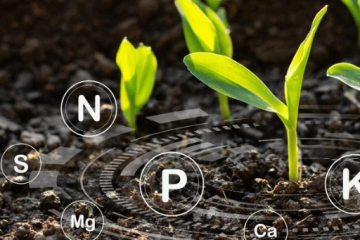
Most of what you’ll read about organic vs. synthetic fertilizer is put together for sales promotion by someone hawking one or the other. Of course this bias will subtly but surely twist their entire advice all over. Since SHANDONG LOYAL CHEMICAL CO., LTD. wears both the hats, playing off one another, we’re now taking a different course: a fair and straightforward comparison.
The fertilizer you select this season will not only affect this year’s harvest but remain in the soil affecting productivity all the way through to ten years from now and toward access to premium export markets while managing your fertilizer cost throughout a span of every season in between. Even so, such growers are left to circuit-train themselves on endless contrasts either between organic-gardening blogs in pursuit of purity and the high pitch buried in jargonistry of academic papers tucked between golden pages.
In this work, therefore, we present prevailing competitions that can be either re-stimulated or left out of dying pesticide-based systems: price comparisons, nutrient release, soil health, environmental issues, response, commonly available vegetable crops, and few other grains between organic and inorganic fertilizers.
If you’re already weighing tailored blends for your operation, contact our team for a free soil-based recommendation before you make your next purchase.
What Is Organic Fertilizer?

However, avoid organic fertilizers low in nitrogen. To achieve higher levels of nitrogen, stick by one hundred percent composted manures mixed with bone- and blood-meal amendments.
While not to say that there is not a way to go with the neutral or slightly acidic side, by adjusting the overall soil pH to around 6.8, ammonia goes to work on decomposing that nitrogen into something more useful.
Common organic products include:
- Composted manure and compost blends
- Humic acid and fulvic acid extracts
- Seaweed and kelp meal
- Bone meal and blood meal
- Amino acid liquid concentrates
- Bio-stimulant powders
Loyal Chemical produces humic acid-based organic fertilizers certified to international purity standards, giving farmers consistent results without the variability of farm-mixed compost. To learn more about organic fertilizers, please read: Organic Fertilizer: The Complete Manufacturer’s Guide to Types, Benefits & Application
What Is Synthetic Fertilizer?
Synthetic fertilizers, also famously known as mineral or chemical fertilizers, are generally made to produce concentrated nutrients that are highly aggressive in forming plant availabilities. Some common kinds of these are urea, ammonium nitrate, calcium ammonium nitrate (CAN), DAP, MAP, potassium chloride alongside, and NPK-compound blends.
The ratio of NPK is much higher in comparison to the organic types. In this form, urea appears with 46-0-0 and CAN with 27-0-0 plus calcium. Crop-specific compartments provide the ability to mix appropriate ratios of NPKs, essential macros to be formulated into feeds at 15-15-15 and 20-10-10, and fed to whichever stands demand for the same.
The nutrients dissolve in water rapidly and are available for plants in days. This rapid fire feeding cycle underpins the feeding of about 50% of the world’s population through a high-yield agriculture system.
Loyal Chemical’s synthetic product line includes calcium ammonium nitrate, coated urea, ammonium sulfate, DAP, MAP, and tailored NPK blends, each certified to REACH, SGS, and BV standards.
Organic vs Synthetic Fertilizer: Side-by-Side Comparison
Here’s a quick reference table covering the factors that matter most when you’re choosing between them.
|
Factor |
Organic Fertilizer |
Synthetic Fertilizer |
|---|---|---|
|
Nutrient source |
Plant, animal, mineral, microbial |
Chemically manufactured |
|
Typical NPK strength |
2-4-2 to 6-3-6 |
15-15-15 to 46-0-0 |
|
Release speed |
Weeks to months |
Days |
|
Cost per kg of nitrogen |
4−4−8 |
1.20−1.20−1.80 |
|
Application frequency |
1-2 times per season |
Multiple split applications |
|
Soil organic matter |
Builds over time |
Neutral or slightly depleting |
|
Microbiome impact |
Feeds microbial life |
Variable; reduced with overuse |
|
Fertilizer-burn risk |
Low |
Moderate to high |
|
Runoff and leaching risk |
Lower |
Higher without best practice |
|
Certification options |
OMRI, EU Organic, USDA Organic |
REACH, SGS, BV |
|
Shelf life |
Months to a year |
2+ years (dry storage) |
|
Best for |
Soil-building, organic markets |
Fast yield, deficiency correction |
Use this table as a starting point. The next sections explain what each factor actually means for your fields and your margins. To learn more about types of organic fertilizers, please read: Types of Organic Fertilizers: A Complete Guide for Gardeners and Commercial Growers
Nutrient Release and Crop Response

One of the evaluative differences between synthetic and natural fertilizers is how quickly the plants receive food.
Synthetic nitrogen in fertilizers such as CAN and urea is converted very rapidly to ammonium and nitrate ions when they come in contact with moist soil. The roots pick them up within hours. This is why a top-dressing of a nitrogen fertilizer from synthetic sources reduces yellowing in a wheat crop with a week, whereas an organic nitrogen source needs a month of side-dress to show a good leaf color.
On the other hand, organic sources of nitrogen will still have the nitrogen bound in proteins, amino acids, and other organic molecules for soil microbes to mineralize for plant usage; the consequential release of nutrients resembles a slow drip that depends on soil temperature, moisture level, and microbial brilliance.
This matters because:
- Short-season crops (lettuce, spinach, radish) benefit from the fast hit of synthetic nutrition.
- Long-season crops (corn, fruit trees, perennial pasture) often thrive on organic’s slow release.
- Stress recovery (drought, transplant shock, deficiency) responds much faster to synthetic inputs.
- Soil building for the long term comes only from organic inputs.
Consider Mei, vegetable grower outside Kunming managing a 4-hectare greenhouse tomato farm. She used to apply urea every tenth day through fertigation. By moving the base nutrition to a humic blend with CAN coming in as targeted shots at flowering and fruit set, fertilizer costs dropped from say $1,840/ha/season to $1,510, giving an 11% increase in marketable yield. But it was not just a change; she kept the exact nutrient needs for each growth phase in mind.
Soil Health and the Soil Microbiome
Soil is not just about dirt. A spoonful of fertile soil contains more microbes than there are humans on Earth itself, all of which establish nutrient circulation, fight diseases, and retain water.
Organic fertilizers feed the soil’s microbial life directly. Compost, humic acid, and amino acid inputs raise soil organic matter (SOM), which improves cation exchange capacity (CEC), water-holding ability, and aggregate structure. A 1% increase in SOM lets a hectare of soil hold an additional 75,000 to 150,000 liters of water, according to data from the USDA Natural Resources Conservation Service.
Synthetic fertilizers do not add organic matter into the soil. But when used in an environmentally responsible manner, they can definitely help in producing higher yields without posing any serious threat to the current soil biology. However, over time heavy synthetic fertilizer usage or reliance upon synthetic fertilizer alone can become a source of diminished microbial biomass, soil acidification, and lower SOM.
Synthetic fertilizers do not ruin soil, if only because intentional care for the soil is required, no matter which fertilizer is chosen for use. Effective soil-protection measures such as cover crops, residue management, and occasional organic amendment enable the maintenance of a soil environment rich in life for a nutrient supply operation.
Looking for a fertilizer that supports soil health while delivering reliable yields? Explore our certified organic and slow-release fertilizer range and request a sample for your next planting season.
Environmental Impact and Sustainability
Both fertilizer types carry environmental responsibilities. Pretending otherwise doesn’t help any farmer.
Synthetic fertilizers face three main concerns:
- Nitrogen leaching into groundwater, particularly with urea and ammonium nitrate
- Eutrophication of rivers and lakes from runoff
- Greenhouse gas emissions from manufacturing and from soil nitrous oxide release
Although crops only utilize 30-50% of synthetic nitrogen applied, as per the judgement of International Fertilizer Association, all that nymphomaniacally goes away by volatilization, leaching, or microbial binding. That is bad for the planet and bad for the fertilizer budget.
Organic fertilizers too aren’t entirely free from negative impacts. For example, before declared safe, composted manure can susceptible pathogens. Possibly much more important, however, is the real contribution of methane emissions from the processing of manure. Greater carbon footprint involvement, in terms of wastage of animal food by-products, lies in sourcing bone meal, blood meal, and fish products.
The best way to describe a truly sustainable fertilizer system would be one applied at the right rate, at the right time, in the right place, with the right product. In short, this is known as the 4R framework taught by the International Plant Nutrition Institute, equally viable for both organic and synthetic inputs.
Cost Economics: The True Per-Hectare Comparison

Synthetic fertilizers cost less per unit of nitrogen, full stop. But unit cost is only one line in your budget.
A simplified 1-hectare vegetable budget comparing three nutrient strategies looks something like this:
|
Cost factor |
Synthetic-Only |
Organic-Only |
Integrated (INM) |
|---|---|---|---|
|
Fertilizer products |
$310 |
$720 |
$480 |
|
Application labor (4 vs 2 vs 3 passes) |
$160 |
$90 |
$130 |
|
Equipment/spreader cost |
$80 |
$50 |
$70 |
|
Yield value (relative baseline) |
100% |
92% |
105% |
|
Soil amendment cost (3-yr avg) |
$120 |
$0 |
$40 |
|
3-year approximate total |
$2,010 |
$2,460 |
$2,160 |
Numbers vary according to geography, climate, and market prices. However, patterns remain consistent in almost all field trials and extensions/scaling-up studies we have visited.
Organic-only systems would cost more in terms of inputs, and they tend to be slightly lower-yielding in the short term. On the other hand, synthetic systems are cheap for a few years but begin to accumulate hidden costs when fertility collapses. Programs combining both technologies tend to deliver the best.
Carlos from northern Mexico, who grows corn on 60 hectares of land, performed a comparison like this after three years with a diminishing response to pure ammonium nitrate. He melted-down his synthetic base and applied a foliar of humic acid at the V6 stage. The third field every year was amended with composted poultry manure. By the second year of the new program, the costs per ton of maize dropped 14 percent, and the organic carbon started trending up for the first time in ten years.
Crop Yield and Quality Outcomes
Yield speed favors synthetic fertilizers. Quality markers often favor organic.
In long-term field trials, including the 40-year Rodale Institute Farming Systems Trial and the FiBL DOK trial in Switzerland, organic systems match conventional yields after a 3-5 year transition period. Drought years often see organic plots outperform synthetic ones, because higher organic matter holds more water.
In the high-value markets, the conditions are that the organic certification unlocks 20-50% price premiums for highly sought after plantations, and products. In order to export to Europe, the end product must conform to the REACH standards and the working principle is whether it is organic or synthetically produced.
Common standards recommend that organically grown Brix (sugar content), quality shelf life, and certain crucial micro-nutrient densities be higher than with other products. Raw yield, methodically calculated against other grains and cereals, is still in favor of well-managed synthetic treatments.
Thereonly partially depends on which market you’re marketing to. The answer is: the commodity wholesale market is largely pro-synthetics in terms of ROI. The reverse holds true-the organic route outshines conventional-when looking at specialty retail, export, or organic markets.
Choosing the Right Fertilizer: A Crop-by-Crop Framework
There’s no universal winner. There’s only what fits your crop, soil, and market.
Cereals and Grains
Besides needed synthetic NPK fertilizers, wheat, corn, and rice react well to it due to their substantial and intense biological needs. Without reducing yields, an integrated regimen with CAN as nitrogen source supplemented with a humate bi-annualy proves most rewarding economically long term.
Vegetables and Leafy Greens
A slower provision of nutrients added to an organic-rich soil is desired for vegetables. Thriving more with the concomitance of compost or humate and episodic synthetic nitrogen applications at flowering and fruit set is the best-fit scenario for most systems.
Fruit Trees and Orchards
Perennials have a heavy guilt to organic applications. One would say alignment is perfect here; where the slow breakdown can continue through a growth period and a way of funding their build-up from 15-30 years. On the other hand, put in important nutrients only if they are really deficient in the fruits considering the kind of plant.
Lawns and Turf
While synthetic fertilizers grow lawns very fast and at a cost, it weakens the soil over the decades. Coated slow-release urea, alternatively, is applied to some organic amendment to improve the lawn’s long-term health.
Greenhouse and Hydroponics
Hydroponic systems ideally are fertigated with water-soluble synthetic nutrients in specific ratios. Greenhouse soil-based growing programs can incorporate organic inputs to benefit soil health, sometimes augmented to a certain extent by fertigation of synthetic mixtures.
Export Quality and Certified Organic Production
For EU, North American, and Japanese organic markets, one needs the use of OMRI- or EU-certified chemicals and organic inputs. A REACH UNECE and SGS certification verify your non-organic exports to European buyers, which will cost you a loss in case of rejections at the borders.
The Third Option: Integrated Nutrient Management (INM)

The “organic vs synthetic” framing is increasingly outdated. Modern agronomy is converging on Integrated Nutrient Management, or INM, which strategically combines both.
A typical INM program might look like this:
- Base layer: Annual application of compost or humic acid blend to build soil organic matter
- Synthetic nitrogen base: Pre-plant or early-season CAN/urea to meet bulk nutrient demand
- Targeted boosts: Foliar amino acid sprays or synthetic micronutrient applications at critical growth stages
- Soil amendments: Periodic lime or gypsum to manage pH and structure
INM maintains the speed and yield of synthetic nutrition, but it adds the soil-building and resilience of organics. The cost lies between organic-only and synthetic-only with economic data most often suggesting that INM beats them both in the long term.
INM is also where Loyal Chemical’s customers see the strongest results. We supply both sides of the equation, so a single conversation with our agronomy team can design a tailored blend program that matches your soil report, crop, and market.
Certifications That Matter (Whichever You Choose)
Certifications are there to protect your yields, your end buyers, and your access to high-end markets. Displace this from your mind when using any fertilizers—do know that this is very important.
- REACH: It is a mandate for any fertilizers coming into the European Union and approves chemical security and traceability.
- SGS and BV: Both have approval by their third-party certifications, and are commonly required by significant distributor relationships and large commercial buyers.
- OMRI and EU Organic: Mandatory for inputs used in organic production that have been graded.
- USDA Organic: Applicable for organic certification in the United States market.
Loyal Chemical’s line conforms to the variety of chemicals that has been certified by the REACH, SGS, and BV certifications, and in selected organic varieties, further certifications have been granted for organic grower’s usage. This is important as the trade-disqualified-in-practice nature of uncertified inputs can disqualify goods from the kinds of high-end markets that have yet to pop up.
Pros and Cons Summary
For quick reference, here are the trade-offs:
Organic fertilizer pros:
- Builds long-term soil health
- Lower runoff and leaching risk
- Improves drought resilience
- Unlocks organic market premiums
- Reduced fertilizer-burn risk
Organic fertilizer cons:
- Higher cost per unit of nutrient
- Slower visible response
- Variable composition (especially farm-mixed)
- Larger application volume
- Longer payback period
Synthetic fertilizer pros:
- Lower cost per unit of nitrogen
- Fast, predictable response
- Precise NPK control
- Compact, easy to transport
- Strong for short-season and stressed crops
Synthetic fertilizer cons:
- No soil-building benefit
- Higher runoff/leaching risk
- Risk of fertilizer burn
- Possible long-term soil degradation if overused
- Doesn’t qualify for organic markets
To learn more about the disadvantages of organic fertilizers, please read: Disadvantages of Organic Fertilizers: A Farmer’s Guide
Conclusion
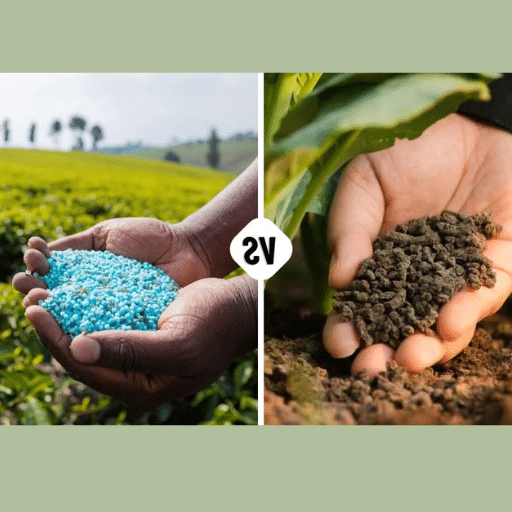
In the dialogue between organics and synthetics, who wins will largely depend upon the right helping tool, in the sense of what is good for the crop, the soil, the markets, and the seasons.
This guide leads us to these key points:
- Fossil nutrient extraction and direct debasement are basic to many commercial crop yields.
- Organic fertilizers better enhance soil health in the long run, reach out to high-value markets, and increase product resilience.
- Grazing on a wide scale defeats the immediate-mechanical essay of a nonintervention nutriment policy over economic terms of 3-to-5 years.
- Certification agencies, a quarter-of-a-million-dollar worth of trade: make sure you set and follow your safe-guarder (REACH, SGS, BV, and OMRI) to supply into your occupied and even out so far as export markets.
- Soil tests and field-specific land use are more important than alignments in the debate.
The most successful growers ceased to argue synthetics vs. organics years ago. They have spent this time trying to unearth wisdom concerning the right mixture that would secure the impacts they seek season by season.
If you want a fertilizer plan built on your actual soil data and target crop, contact SHANDONG LOYAL CHEMICAL CO., LTD. to speak with our agronomy team. We’ll help you design a program that fits your goals, your market, and your budget, using certified products trusted by farmers in more than 50 countries.


