
Maria inserted her first Jobe’s Organics spike into the dirt surrounding her potted Meyer lemon tree and instantly experienced her usual uncertainty. She questioned whether the spike placement was too near to the tree trunk. She asked if four spikes would provide sufficient coverage for her 10-inch pot. After eight years of gardening experience, she still struggled to trust her ability to use the pre-measured fertilizer stick.
Anyone who has ever held a fertilizer spike while standing over a container plant or a fruit tree knows exactly how Maria felt. The product provides users with easy-to-use features. The product requires no mixing and no measuring and no cleaning up after use. The product’s basic design creates significant doubts about its actual operational method which takes place under the ground.
The manufacturer guide provides answers to all raised questions about the product. The guide will show you how Jobe’s organic fertilizer spikes work to distribute nutrients to plants and which plant types require specific usage guidelines and which fertilizer type is most effective for your needs. The guide will reveal information that consumer guides usually omit which explains the actual restrictions of fixed-product spikes while showing how commercial agricultural businesses can obtain custom products in large quantities.
What Jobe’s Organic Fertilizer Spikes Actually Are
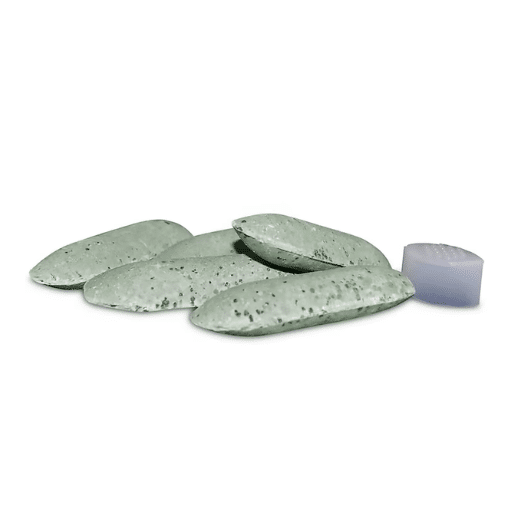
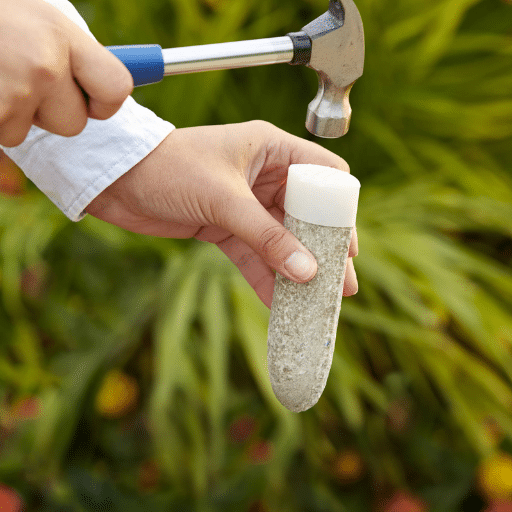
The organic fertilizer spikes from Jobe’s product line consist of compressed cylindrical spikes which contain organic nutrients that users can insert directly into soil. The spikes release nutrients through microbial breakdown and soil moisture by sitting below the root zone, which distinguishes them from surface-applied granular products and foliar liquids. The organic line carries OMRI listing. The Organic Materials Review Institute has confirmed that all components of the product comply with USDA National Organic Program requirements for organic certification. Organic market growers and those who wish to avoid synthetic chemicals benefit from this certification.
The Role of Biozome in Nutrient Delivery
Jobe’s markets their proprietary Biozome blend as a differentiator, and from a formulation standpoint, it genuinely changes how these spikes behave in soil. The Biozome product consists of three distinct biological elements.
Archaea are single-celled microorganisms that accelerate the decomposition of organic matter. The spike matrix experiences faster decomposition through their combined activity which exceeds the potential of bacteria under specific soil conditions that exist when temperatures reach 65 degrees Fahrenheit and higher.
Plant roots become colonized by mycorrhizal fungi which help the fungi to create an extended network for nutrient absorption. This symbiotic relationship increases phosphorus and micronutrient absorption by approximately 30 to 40 percent when compared to root systems that lack inoculation.
Bacillus strains and other beneficial bacteria fix nitrogen from the atmosphere while they solubilize phosphorus and create compounds that promote growth. The microbes serve two roles to the plant because they provide nourishment while they simultaneously develop soil biology throughout multiple growing seasons. Home gardeners who want to establish permanent soil health through their gardening efforts will find this method more beneficial than synthetic products, which create short-term effects.
How Compression Creates Slow Release
A fertilizer spike operates as a manufacturing system which uses compression to create a controlled-release system. Organic material (typically fish bone meal, feather meal, kelp, or composted poultry manure) is mixed with a binding agent, inoculated with microbes, and compressed into a dense cylinder. The spike’s water and microbe penetration speed depends on the compression density level. Tighter compression equals slower release. Jobe’s targets a release window of 4 to 8 weeks for most organic formulations, though actual breakdown speed depends heavily on soil temperature, moisture, and existing microbial activity. The same spike will extend its lifespan to 10 through 12 weeks when used in cool spring soils which have temperatures below 50 degrees Fahrenheit.
Want to understand how organic nutrient sources compare by release speed and NPK content? Read our complete guide to organic nitrogen fertilizers for a detailed breakdown of blood meal, feather meal, and fish-based options.
Jobe’s Organic Spike Product Lineup
The organization provides multiple organic products which have specific uses for different types of plants. The NPK difference test results enable you to select the appropriate spike for each specific plant requirement.
The Fruit and Citrus Tree formulation carries a 3-5-5 NPK ratio. The lower nitrogen level which exists in this product demonstrates a fundamental aspect of fruit tree nutrition because excess nitrogen causes trees to develop more leaves instead of producing flowers and fruit. The higher phosphorus and potassium levels enable roots to grow, flowers to bloom, and fruits to produce better quality. The product serves indoor and container fruit tree purposes, which requires users to apply it again after 4 to 6 weeks of active growing period.
The Tree, Shrub and Evergreen formulation uses a balanced 5-5-5 ratio for in-ground trees, shrubs, and ornamentals. The product provides nutrition for trees which lasts 8 weeks and needs only 2 applications throughout the year.
The All-Purpose formulation at 4-4-4 offers balanced nutrition across vegetative and reproductive growth stages for flowers, vegetables, and general garden use. The product requires users to apply it again after 6 to 8 weeks.
The Tomato formula at 6-2-4 bumps nitrogen to support the heavy feeding demands of indeterminate varieties while keeping phosphorus moderate. The product needs application every 6 weeks during the fruiting season.
The Rose and Flowering Shrub formulation at 3-5-3 emphasizes phosphorus for bloom production. The product needs to be applied every 6 weeks for nonstop flowering.
How to Use Organic Fertilizer Spikes Correctly
Application mistakes are the single biggest reason gardeners see disappointing results with spikes. The product is simple to use, but placement and timing matter enormously.
For Container and Indoor Plants
The process begins with complete soil moisture assessment before inserting the first element. The spike encounters resistance from dry soil, which results in equipment breakdown. The correct location for spikes requires placement along the pot’s outer boundary at the midpoint between the plant stem and the container wall. The design targets feeder roots, which exist near the pot’s outermost edge at the soil surface level.
Operators must push each spike down directly until its top reaches the soil surface level. The practice of leaving the top part uncovered leads to pest attraction while it permits nutrients to escape through volatilization. The insertion process requires a subsequent water application to trigger microbial processes which will start releasing nutrients. The active growth period requires reapplication every 4 to 6 weeks, while wintertime requires reduced application for deciduous plants.
Use this pot-size guide to determine spike quantity.
|
Pot Diameter |
Spikes to Use |
|---|---|
|
4 inches |
2 |
|
6 inches |
3 |
|
8 inches |
4 |
|
10 inches |
5 |
|
12 inches |
6 |
|
14 inches or larger |
7 to 8 |
For In-Ground Trees and Shrubs
The timing of operations in this project carries more significance than other aspects. The ideal time to insert spikes falls during early spring when plants start their growth cycle. The second application scheduled for late spring or early summer will help with the development of both fruits and flowers. Certain tree treatments permit tree owners to apply fertilizer during late autumn which will assist tree roots to develop while their foliage is inactive.
People most frequently fail to understand the proper method of placing Back Spikes because it represents the most vital aspect of tree maintenance. You should never put spikes close to the trunk area. You should place the spikes at the drip line which represents the area that extends from the tree’s outermost branch boundary to its root system. Tree roots will extend outwards from mature trees into areas that reach farther than their tree canopy boundary.
The number of spikes you should use on each tree should match its trunk size and its tree canopy dimensions between 3 to 7 spikes. The spikes need to be distributed at equal distances throughout the wet and soft ground. The spikes will break on hard compacted ground which will cause you to lose your battle against it. You should wet the area completely before you start the process and again after you finish it.
In March 2024 Marcus took over a citrus grove which he treated with his grandfather’s fertilizer method by applying urea through broadcast to tree bases every six weeks. The twelve trees appeared healthy yet their fruit showed Various quality issues while their Brix levels reached an average of 10 2 degrees. His Valencia oranges showed Brix sweetness improvement after he switched to organic spike application at the drip line with 3 5 5 formulation in spring 2025. surface fertilization created a feast-or-famine cycle which targeted root-zone delivery successfully discontinued.
Organic Fertilizer Spikes vs. Granular vs. Liquid
No single fertilizer format is best for every situation. Understanding the trade-offs helps you build a smarter feeding strategy.
Absorption Speed and Nutrient Availability
Organic fertilizer spikes release nutrients at a slow rate. Microbial breakdown process requires a time period between three weeks and three months which depends on both soil temperature and soil biological activity. Spikes will complete their breakdown process in 4 to 5 weeks when soils reach temperatures above 65 degrees Fahrenheit. The same spike will remain active for 10 to 12 weeks in soils that maintain temperatures below 50 degrees. Maintenance feeding requires spikes as the better option while they fail to meet needs for acute deficiency correction.
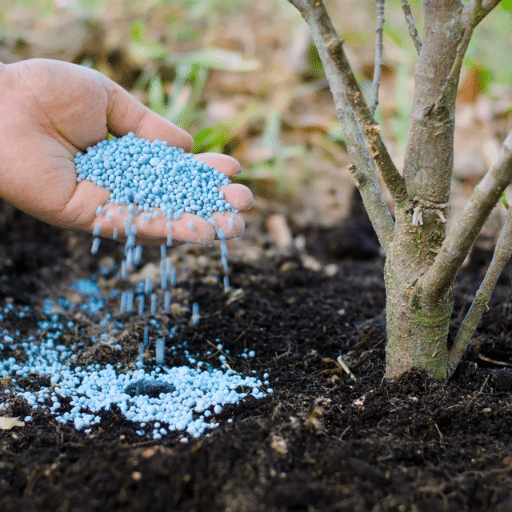
Organic granular fertilizers provide their nutrients to plants at a speed which falls between slow and fast. The water activates surface material breakdown within a few days and soil microbes continue the decomposition process during a period of 4 to 6 weeks. Spikes deliver essential nutrients to plants over an extended period while granular products respond to plant needs at a faster rate.
Organic liquid fertilizers begin to work from one hour to twenty-four hours after application. Nutrient substances dissolve through water which transports them directly to plant root surfaces and leaf tissues through foliar application. Liquids provide effective mid-season corrective feeding for high-demand vegetable crops.
Application Effort and Frequency
Spikes need the least amount of work to maintain their operation. The equipment requires installation after every two to three months for operations to continue. A typical home gardener with 15 container plants can complete fertilizing in under 10 minutes. The convenience which this service provides creates actual value for both busy home gardeners and property owners who live on remote land.
Granular products require spreading and watering in yet users can apply slow-release organic formulas at 4 to 6 week intervals without difficulty. The trade-off is coverage: granular works better for large areas where spike quantity would become impractical.
Liquid fertilizers require more monitoring than other fertilizer types. The process of mixing and measuring and applying requires additional work throughout the growing season because it happens every 7 to 14 days during the peak period. A 20-gallon vegetable garden needs 15 to 20 liquid applications during the season compared to 3 to 4 spike applications. The benefit is precise results which can be obtained with high-speed performance.
Soil Biology and Environmental Impact
The organic spikes produce only a minor effect on soil biological function because their microbial content occupies only a minimal portion of the soil. The use of granular organic products enables plants to access more organic matter across their growing area which will improve soil structure through time. The application of liquid organic fertilizers through microbial teas and humic blends leads to beneficial microorganism introduction into soil during each application process.
The environmental dangers connected to spikes reach their lowest point when assessing their runoff effects. The underground system design enables root systems to reach necessary nutrients. The research on underground slow-release fertilizers shows that clay-loam soils experience less than 5 percent nutrient leaching loss. The application of broadcast granular products results in nitrogen loss between 15 to 30 percent through runoff and volatilization when users do not water them immediately after application.
The efficiency of this process receives importance for areas that require environmental protection or places which enforce strict nutrient runoff controls. Organic spikes deliver more of their nutrient payload to the intended plant and less to nearby waterways.
Cost at Different Scales
The home gardener needs 10 container plants because this number makes spikes an economical solution. The pre-measured format creates zero waste because it prevents users from applying more than necessary. A typical 50-count package of All-Purpose spikes costs approximately 12to12to15 and covers a full growing season for a small garden.
The commercial orchard manager needs to supply 500 trees with their feeding requirements because this situation requires her to conduct economic analysis. Granular or fertigated liquid typically costs 40 to 60 percent less per acre than consumer-packaged spikes. Fixed NPK ratios also become a liability at commercial scale, where soil testing should drive precise nutrient prescriptions.
|
Scale |
Best Format |
Cost per Plant/Tree |
Labor per Season |
|---|---|---|---|
|
10 container plants |
Spikes |
0.25to0.25to0.30 |
10 minutes |
|
50 garden plants |
Granular |
0.10to0.10to0.15 |
1 hour |
|
500 trees (commercial) |
Granular or liquid |
0.05to0.05to0.08 |
4 to 6 hours |
A custom-blended granular program tailored to soil tests can improve yield per hectare by 22 to 38 percent compared to generic fixed-ratio products.
Managing a commercial operation and need tailored nutrition instead of fixed-formula retail products? Explore our custom fertilizer solutions designed for orchards, greenhouses, and large-scale farms.
When Spikes Are Ideal (and When They Are Not)

Ideal Scenarios
Organic fertilizer spikes demonstrate their effectiveness in four different scenarios. Home gardeners require a feeding solution which delivers consistent results without the need for weekly mixing and measuring tasks. The indoor plant material and container collections receive advantages from spikes because they prevent indoor spaces from accumulating granular waste and liquid waste. The organic spike line provides certified organic products which meet OMRI certification standards for edible gardens that need OMRI certification for organic food production. The pre-measured format provides new gardeners with a solution which eliminates all possibilities of over-fertilizing which leads to nutrient burn. Organic spikes will not burn plants when used according to their instructions. Biological breakdown controls the speed at which materials are released. The typical home user cannot exceed the recommended nutrient application because each spike provides a specific nutrient amount.
Real Limitations
The first statement shows that manufacturers who practice honesty show their actual restrictions. The use of spikes should be limited because they do not suit every task. The fixed NPK ratios which scientists established through formulas cannot match the results obtained through soil testing. The soil test recommends a 2-1-3 ratio but your spike provides 4-4-4 which results in your phosphorus application exceeding proper levels by 33 percent. You are also under-applying potassium by 25 percent. For soil-specific precision, only custom-blended granular or liquid fertilizers serve as effective solutions.
The process of uneven distribution creates areas which contain excessive nutrients. A spike fertilizes the soil immediately surrounding it in roughly a 6-inch radius. The roots between spikes on large root zones that extend over 20 feet will not receive enough food. The roots which grow next to spikes will receive excessive amounts of nutrients.
The compacted soil creates two problems which make it hard to insert spikes and leads to their destruction. The sandy soil will lose its nutrients at a faster rate than organic materials decompose to maintain their balance. This process occurs mainly during periods of intense irrigation or heavy rain.
The use of sterile potting mixes prevents microbes from functioning normally. Organic spikes require soil bacteria and fungi to decompose their material. The nutrient release from pure peat or coco coir mixes will take much longer because the mixes have low biological activity. The 4-week target requires up to 8 weeks which can extend further. The environment becomes activated when a small amount of compost tea or liquid microbial product is used to activate the spikes.
Commercial Grower Considerations
The economic and agronomic value of consumer fertilizer spikes disappears when you operate your business through acres instead of containers. The application of custom NPK fertilizer through soil testing results in better financial outcomes than bulk granular application and fertigation systems.
The company SHANDONG LOYAL CHEMICAL CO LTD produces organic fertilizer products for distributors and commercial growers who require exact nutrient specifications in large quantities. Our laboratory develops customized NPK formulations which include essential micronutrients like zinc and boron for fruit trees and produce bulk quantities that decrease unit costs by 50 percent or more when compared to retail packaging.
The Science Behind Slow-Release Formulation
Understanding how spikes are made helps explain their behavior in soil.
Compression and Binding
Organic spike production begins with dried, ground organic materials: fish meal, bone meal, feather meal, kelp, or composted poultry manure. The two materials are combined with clay or starch binders and then subjected to hydraulic pressure which ranges between 500 and 2,000 PSI for forming a specific density. The release process becomes slower when higher compression is applied because dense materials prevent water and microbes from entering the area. A spike compressed at 2,000 PSI might last 10 weeks, while the same formula at 800 PSI might break down in 5 weeks. The binders themselves also contribute to release kinetics. When clay-based binders encounter water, they expand and form micro-channels which enable nutrients to exit the system over time. Starch-based binders break down enzymatically, providing a second release mechanism.
Temperature and Moisture Dependence
Microbial metabolism depends on soil temperature because microbial activity controls the process of spike decomposition. Organic spikes in warm soils above 65 degrees Fahrenheit will decompose within 4 to 5 weeks. In cool spring soils below 50 degrees the same spike might last 10 to 12 weeks.
Moisture has equal importance to soil moisture requirements. Microbial activity in drought-stressed soil decreases to minimal levels while nutrient release from the soil halts almost completely. The protective feature functions because the spike holds back nutrient release which waits until water becomes present. Dry soil spikes that receive no water will perform 40 to 60 percent worse than spikes that receive proper hydration for their application.
Frequently Asked Questions

Are Jobe’s organic fertilizer spikes safe for pets and children?
The organic spikes are safe when used according to their instructions because they use natural components instead of synthetic chemical substances. The correct method for applying fertilizer products requires their placement below soil surfaces while their storage needs to happen in secure locations.
Can fertilizer spikes burn plants?
The plant life will experience damage from fertilizer spikes because they release excessive amounts of nutrients. Organic spikes release nutrients at a controlled pace because microbial breakdown determines their release speed. The delivery system provides nutrients to the plant through gradual distribution which protects the root area from sudden surges. Excessive treatment will damage the plants but users should stick to the recommended package instructions.
How long do organic fertilizer spikes last?
The protective effects of organic fertilizer spikes last for approximately three months. The feeding duration of most organic spikes ranges between 4 to 8 weeks which depends on the existing soil temperature and moisture level and the present state of microbial activity. The tree and shrub formulas provide seasonal effects which require one to two yearly applications for complete effect.
Can I use organic spikes in containers?
The use of organic spikes in containers is completely permitted. Container-specific formulations exist for fruit trees, bedding plants, and houseplants. The spikes should be placed closer to the pot boundary instead of the stem area because this method provides better root access.
Do organic fertilizer spikes improve soil quality?
The Biozome microbial blend together with spike organic matter produces helpful microorganisms which benefit soil development throughout time. The total organic matter added by the small spikes remains limited. The primary method for achieving substantial soil improvement requires compost and bulk organic amendments as supplements.
Can fertilizer spikes kill trees?
The application process determines whether they will succeed or fail. Placing spikes directly against the trunk can damage roots and bark. The application of excessive spikes results in over-fertilization which creates salt stress. The correct procedure requires users to position spikes at the drip line while they must adhere to established application guidelines.
Conclusion
Home gardeners who seek non-synthetic chemical plant nutrition solutions that require little upkeep will find Jobe’s organic fertilizer spikes to be an extremely practical product. The OMRI-listed formulations combined with their beneficial microbial payloads and pre-measured design eliminate all uncertainty while they decrease environmental contamination.
Spikes do not function as a complete solution for all situations. The commercial applications of precision agriculture face two restrictions because their NPK ratios remain constant and their distribution relies on specific soil microbe activity and their distribution pattern. The ability to determine when spikes provide their highest effectiveness while identifying the proper time to use granular or liquid alternatives represents the knowledge which an educated grower possesses.
The same principle applies to container lemon tree feeding and to operating a hundred-hectare orchard because you must select the fertilizer type which matches your current operation size and soil conditions and the unique nutritional needs of your plants.
Ready to explore organic fertilizer solutions tailored to your operation? Browse our certified organic fertilizer range or contact our team for a custom formulation consultation based on your soil analysis.