
From the start of the summer, Kevin sprayed his pepper plants with fish emulsion every two weeks. By August, his tall plants had grown to six feet in size and have numerous leaflets that seem to be of beautiful deep green. He harvested three peppers. In all.
Kevin fed only for foliage in this explosion by nitrogen. He did not recognize that phosphorus and potassium were equally important for fruit. Kevin’s failure is a common error; in July, go through any community garden to see obviously lush tomato vines with no tomatoes, mouth-dropping carrot tops looking triumphant above ground while their forked and twisted roots hammered the puns home epically.
Most guides to the best organic fertilizer for vegetables tend to read like an order form; just list seven popular bagged brands and that is a day. They don’t tell you why lettuce dig twelve feet under the earth to get nitrogen, while tomatoes want phosphorus at flowering, or how the soil’s condition will rewrite each suggestion on the page.
The insight from this guide fills the holes in the garden roundups. You will learn in this reading how a plant’s nutritional requirements change from seedling to harvest and which organic sources work best at particular stages of growth. Instead of guessing, you learn to use the clues that soil data yields to offer appropriate fertilizer to that soil, whether a one raised bed or five hundred acres of row crops. Check soil. Find deficiency. Feed the plant what it needs.
SHANDONG LOYAL CHEMICAL CO., LTD. formulates organic fertilizers in certified laboratories and tests them in experimental vegetable plots before they are available for use on farms. Because of such a manufacturing context, this guide does cover the science of application in bulk and the economics which usually skip in garden blogs.
Want a soil-test-based recommendation without the research? Our agronomy team builds custom organic NPK blends matched to your field data. Request a free consultation today.
Understanding What Vegetables Actually Need

Different vegetables are not just the generic green things gulping down the same diet. They are living factories with unique nutritional requirements that are dictated by what we are asking them to produce.
Leafy greens are producing foliage. This process is such that they require nitrogen more than anything else. Nitrogen feeds chlorophyll production and cell division in the leaves. Without enough nitrogen, spinach plants do not grow, and lettuce heads just sit there without forming.
In the nitrogen-needing early stages of vine and leaf development, fruiting vegetables, such as tomatoes, peppers, and squash, change their nutritional need dramatically. Once the blossoming starts, the plant diverts its energy to the fruit. This is when phosphorus induces flower formation and fruit set, while potassium is responsible for sugar transport and disease defenses.
But, it’s different with vegetables. Root vegetables such as carrots, beets, and potatoes develop their storage organs under the ground. With excess nitrogen in the plant systems, in most crops, all it does is keep them using all their energy resources mainly for leaf development while at the same time disturbing root growth. Phosphorous is therefore needed for cell division and moderate nutrition-otherwise the roots won’t grow.
Releases in organic forms of these nutrients occur through biological breakdown, not chemical dissolution exacted by synthetic fertilizers. For example, a 20-20-20 synthetic fertilizer delivers nutrients, which, in turn, are excreted. A crimson-concentrated blood meal releases 12 percent of nitrogen for weeks as it is slowly decomposed by soil microbes. Bone meal, on the other hand, releases 3 percent phosphorus over a more extended period of time. On the contrary, though, synthetic superphosphates go to their depletive effects with no good intent to slowly build phosphorus reserves in the soil.
This results in a lower NPK grade in natural fertilizers when compared with synthesized numbers. A tomato fertilizer of conventional make can read 18-18-21; the organic fertilizer, 4-6-4. The organic numbers show the whole nutrient content that can be made available to the plant slowly while the synthetic ones show water-soluble nutrients. Simply put, they can’t be compared directly without considering rates of release, soil biology, and when the fertilizer was applied. To learn about the best types of organic fertilizer, please read: Organic Fertilizer: The Complete Manufacturer’s Guide to Types, Benefits & Application
How to Match Organic Fertilizer to Your Soil Test
Before purchasing a single bag of organic manure, have your soil tested. A basic soil test usually costs $15to15to30 and tells you what your garden already has in excess and where the nutrition deficiency lies. Guessing can be costly and often ends up worsening the situation.
In the fall, Lin conducted soil tests in her three-acre tomato-growing site in Southeast Asia. The tests revealed PA at high levels, potash at low levels, and nitrogen was at the lowest end of the acceptable range for the tomato crop. Instead of buying a balanced organic blend, she brought in one from a company that was custom-made to fit her requirements-it had extra potassium and amino acid-extracted nitrogen. Lin’s first-season yield increase reached 18%, and blossom end rot was slashed by 22%, because plants finally got the potassium they needed during fruiting.
Trust me when I say all the principles mentioned apply to projects of any size. Below is the decision-making guideline to whatever solutions shall the consultant lands on in the agronomist’s office:
Step 1: Assess pH and nutrients – a complete soil test can be ordered from a university extension service or an agricultural lab. The best time to do the test is during autumn or early spring before the start of the planting season. For in-ground beds test at 6-inch depth, raised beds at 4-inch depth, and containers at 4-inch depth.
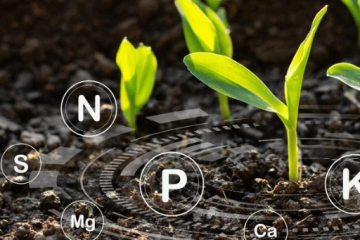
Step 2: Match NPK deficiencies – Assess the levels of N, P, and K. Also have a look at Ca, Mg, and S if you purchase a test that includes micronutrients.
Step 3: Choosing the right organic fertilizer for depletion
- For low nitrogen: blood meal (12-0-0), fish emulsion (5-1-1), feather meal (12-0-0), composted chicken manure (1-1-1)
- For low phosphorus: bone meal (3-15-0), rock phosphate (0-3-0), and fish meal (9-4-0)
- For low potassium: kelp meal (1-0-2), greensand (0-0-3), wood ash (0-1-3)
- For low calcium: gypsum, crushed eggshells, dolomitic lime
- For low magnesium: Epsom salt is magnesium sulfate-10% Mg, 13% S.
Step 4: Factor in crop type and developmental stage. For instance, a low-nitrogen tomato bed may need different approaches in May (seedling stage; light fish emulsion) than in July (fruiting stage; set the nitrogen aside and increase potassium through kelp).
Step 5: Opt for fertilizers on the basis of the physical form to be used. Granular organic fertilizers do well with pre-plant soil incorporation and top-dressing, whereas liquid concentrates could be applied through drip irrigation, a foliar feed, or a container garden. Powdered amendments such as blood meal and bone meal could be incorporated into the soil while planting.
Need help interpreting soil test results? We formulate custom organic NPK blends based on laboratory soil data. Send us your soil test for a tailored recommendation.
Best Organic Fertilizers by Vegetable Category

Leafy Greens: Lettuce, Spinach, Kale, and Swiss Chard
These plants are natural factories for nitrogen and are “nitrogen guzzlers.” With all of their limbs encompassed with nitrogen, they require a substantial, even nitrogen supply from germination to harvest. They also don’t like to wait around and would not mind getting to the target nutrient rapidly by slow-release amendments alone.
The studied informal use of blood meal, a nearly incontrovertible form of organic nitrogen-rich fertilizer, is useful, with an average npk ratio of 12-0-0. If desired, mechanical equipment can be used to work dark blood meal into the first couple of inches of soil before planting. For additional gain throughout the growing season, apply side dressing at three weeks when foliage begins to lose its luster.
Fish emulsion, which has an npk ratio of 5-1-1, serves both as a foliar and drench feed. Half of the water mentioned on the products to this day comes into play with their applications that are to be made every 10 to 14 days. Fish emulsions are relatively safe to use after thirty-eight hours since plants absorb nitrogen quickly, so within a span of a short week you will begin to really notice the hearty greenness in the plant.
Manure, once composted at a level of 0.5-1.5 percent nitrogen, provides the least of maintenance with no burning problems. Apply about 1 to 2 inches of manure on the bed, with intense work done to that layer of earth a few weeks before seeding for maximum benefit. Insist upon prove of connectivity between the two sources of good vegetative growth: the composted manure improves soil structure.
Please add bone meal to avocados leafy greens as a high-potassium element only if your soil test shows a deficiency. This doesn’t help for the foliage growth and might end up tying up iron and zinc micronutrients.
Fruiting Vegetables: Tomatoes, Peppers, Eggplants, Cucumbers, and Squash
These are fertility-hungry crops, with varying demands at various stages in the growing season; a mistake in this respect could lead you to grow leaves rather than fruit.
Pre-plant: Mix 2 to 3 pounds of bone meal per 100 square feet into the soil. The bone meal is good for additional phosphorus, which would be needed for root development. Add composted manure for nitrogen and some organic matter.
Early growth stage (weeks 1 to 4): Every 10 days, dilute every 10 days with fish emulsion for steady nitrogen provision toward vine and leaf development without profuse greenery.
Flower and fruit: (Week 5 onwards) Start phasing out nitrogen, applying liquid seaweed-kelp extract as an additional source of potassium and trace minerals. You should apply it every 10 to 14 days. If your soil tests suggest potassium levels below adequate, insertosome of either greensand or kelp meal into the ground.
Midseasons: By the time fruits are gaining size, liquid seaweed foliar feed with cytokinins will help to enhance fruit quality and stress resistance.
For tomatoes specifically, calcium is king. Blossom-end rot is not a disease, but rather a calcium uptake problem resulting from inconsistent watering and low calcium. If your soil test results indicate a low calcium level, incorporate gypsum into the soil at planting, or better yet, foliar feed with calcium chloride during fruiting. To learn more about organic tomato fertilizer, please read: Organic Tomato Fertilizer: The Complete Guide to Bigger, Healthier Harvests
Root Vegetables: Carrots, Potatoes, Beets, Radishes, and Onions
Root crops are those in which what we eat is under the soil at the roots. You are making plants for root cell division and storage organs to make tubers, not gardens to exhibit leaves.
Bone meal is a commonly called-for soil amendment for root crops. Should be used before planting. Phosphorus, in 3 to 15 pounds of bone meal per 100 sq. ft., stimulates root production.
Rock phosphate gives root crops a slow release of phosphorus through the entire season. Rock phosphate will be effectively broken down over 2-3 years. This feature makes it a particularly well-footed choice for a vegetable garden that rotates root crops.
When blood meal or other high-nitrogen amendments are applied to the already rich soil, there must be a basis for this action in the soil test. Too much nitrogen in the soil is going to cause all kinds of problems: carrots forking, potatoes producing tubers that are far too many and entirely covered with thin skins, and beets growing bushy masses of tops while producing mealy, insipid roots.
Leaf mold mulch 1 to 2 inches thick in early spring. This is the stuff of root crops that can benefit from a little balanced feeding. As an example, kelp meal provides fascinating/micronutrients to feed fabulous root growth, not greenery.
Legumes: Beans and Peas
Beans and peas are the green thumbed people’s oddballs. When they establish a symbiotic relationship between their root nodules and nitrogen-fixing bacteria for effete nitrogen from the air, they drop their heads in shame. Put nitrogen fertilizer on them, and their growth will comprise of leaves without the pods.
At the time of planting, co-inoculate seeds with Rhizobium bacteria. This procedure assures an early commencement of a strong nitrogen-fixing partnership. Most garden supply stores carry legume inoculant at very low prices-under $10!
To have the phosphorus that will usher in the flowers and pods for us, apply bone meal at 1-2 pounds per 100 square feet before planting. If you think the plants are not growing well, side-dress them with compost at flowering.
Never apply nitrogen sources to any legume unless a soil analysis shows a severe deficiency. If your soil test brings a nitrogen-deficiency result, apply half the rate you would do on any other crop.
Brassicas: Broccoli, Cabbage, Cauliflower, and Brussels Sprouts
It must be remembered that these are real nitrogen hogs. Broccoli requires consistent nitrogen supply for 80 to 100 days from transplant to harvest.
Provided that there is enough manure compost with a few pounds containing 2 to 3 of nitrogen and 5 to 10 of phosphate per 100 square feet, then most of the potassium and sulfur is taken care of. Blood meal or fish emulsions at 3 and 6 weeks provide the extra nitrogen blast needed at critical times.
By planting kelp extract during the forming of the head, similarly cabbage and Brussels sprouts can triple their potassium requirements. The micronutrients, even the growth hormones, in seaweed lead to improving head density and preventing hollow stem troubles.
Just as cabbage and brussels sprouts may particularly require potassium for head formation, kelp meal, or liquid kelp need to be side-dressed onto roots or sprayed over plants when the head begins forming.
Growth-Stage Fertilization Timeline
Nutrition is not constant in the diet plants need from the seed till the harvest. Nutrition supply requires smart adjustments for each plant growth period from root outlet to leaf production and fruit or vegetable production.
Pre-planting (2 to 4 weeks prior to sowing): Incorporate slow-release amendments like bone meal, rock phosphate, compost, and greensand. Target the root zone rather than the surface.
Seedling stage (weeks 1 to 3 after germination): On the lighter side. The seedling roots are very tiny and sensitive. A diluted fish emulsion at quarter strength is also good; compost can be applied as a liquid as well. The goal is gentle growth, not forced growth.
Vegetative growth (weeks 4 to 8): The nitrogen should be at the highest level for leafy greens and brassicas. Fruiting vegetables also need nitrogen from this period beginning with week 6, but begin reducing the quantity by week 6 to prevent large leaf growth.
For the flowering and the early fruiting period (weeks 8-12): Focus on phosphorus and potassium in fruit-bearing vegetables. Cut down nitrogen for fruit. Leafy greens and brassicas may still need limited nitrogen, provided they are still growing.
Late fruiting and harvest (weeks 12+): Stop feeding fruiting vegetables 2-3 weeks prior to final harvest. Nitrogen late in the process ruins the flavor and shelf life of fruits. Leafy greens and brassicas may be fed lightly until harvest.
Granular vs. Liquid Organic Fertilizer for Vegetables

Type of organic fertilizer deserves as strong attention as its composition. Granular and liquid forms act differently in the soil, have different schedules of application, and work well in another growing system.
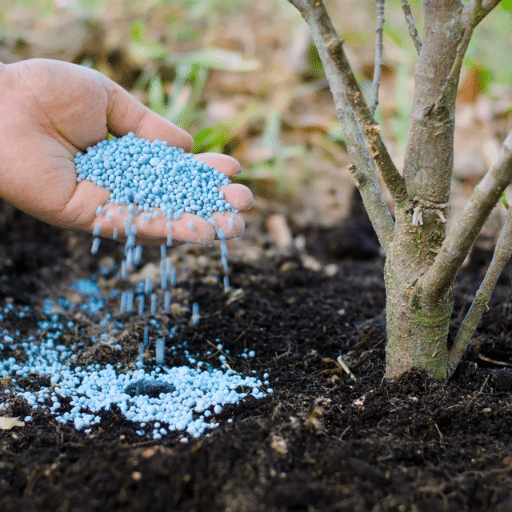
Granular organic fertilizers are often pelleted manure, bone meal, blood meal, and slow-release organic blends. This type of fertilizer breaks down in the soil and gets nutrients available over several weeks or more. Granules are easiest to work with before planting or in the middle of the growing season. Added value because you don’t apply it often; less labor goes into large plats.
Downside is the nutrient-release speed. If a granule fertilizer is applied in May, the nutrient balance may peak around June. That means withheld nutrition for fast-growing crops such as radishes and lettuce.
Liquid organic fertilizers are such as fish emulsion, liquid seaweed, compost tea, and amino acid solutions. These enter the plant tissue when sprayed within the first 24 to 48 hours. Liquids work well for sudden adjustments in the middle of the season, foliar feeding, and container gardens prone to leaching that need feeding almost immediately.
The trade-off is frequency. Container vegetables fed with liquid organic fertilizer need feeding every 7 to 14 days given that nutrients continuously wash out with watering. Drip-irrigated systems with the use of injectors feeding a liquid concentrate can easily automate this.
So which to choose? Granular is for baseline soil building, and pre-plant amendment work. Liquid is for midseason feeding, those quick corrections, and container gardening. Most especially, the most successful vegetable growers use both.
Container and Raised Bed Considerations
Consequently, vegetables grown in containers and in raised beds follow quite different nutritional logic than do those plants grown in in-ground gardens. The soil volume is quite confined; the drainage is faster; and the depletion of available nutrients, especially organic matter, is quicker.
Container beds lose some 30% to 50% of applied nutrient intended for the plants every time they are watered, since these all get leached out. This means that even slow-release granular fertilizers end up washed away unfavorably fast. For these vegetables, liquid organic feeding may need to be applied at intervals of 7 to 14 days during the active period of growth.
Raised beds export faster than the native soil and warm in early spring. The close rooting means nutrients are taken as fast as through swallows, but the pool is empty quite rapidly. Raised beds require topping-up with about 1 to 2 inches of compost at the beginning of each growing season.
Avoid raw manures and unfinished compost for a period of 2-4 months inside the containers. Limited rooting zones also demand finished compost, worm castings, and diluted feeds, as bunched-up roots are easily burnt by that unbuffered nitrogen.
Increased planting beds can accommodate heavier amendments because of the much larger soil volume. Blood meal, Bone meal, and pelleted-organic fertilizers on the top 3 inches of soil are excellent when worked in.
Commercial-Grade Organic Fertilizer for Vegetable Farms

Small-scale advice breaks down in a commercial context. A five-acre tomato operation cannot possibly apply fish emulsion using a watering can. The entire economics, equipment, and logistical scenario changes.
Organic fertilizers, usually used in the retail market, come in small bags with low NPK analysis and high per-pound pricing. A 4-pound bag of organic tomato fertilizer at $18 works for just a raised bed. Consequently, the bag-a-fortune-per-acre problem returns.
Commercial-grade organic inputs generally come in bulk totes, supersacks, and loose bulk loads. There is a higher NPK ratio, they are “manufactured” for equipment application dynamics rather than shelf appeal. Input cost/A reduces a lot, or 40-60%, compared to retail bagged products.
Medium to large application methods:
- Broadcasting: granular organic inputs (e.g., bat guano, bone meal) before any tillage.
- Sidedressing: row crops with pelleted organic products during vegetative growth.
- Drip fertigation: During the dry season, you could even inject liquid organic concentrates into vegetable and sweet potato furrows right into your irrigation lines.
- Foliar spraying for micronutrient boosts during growing season: You would not expect higher response using a diluted seaweed or amino acid solution.
Environmental economics: A market-driven organic veggie agriculture system costs approximately $200–$500 an acre per season determined by the specific crop, a suitable starting point of the soil, and some of the ground-up choices, while conventional systems are quite less costly, around $150–$300 an acre an acre. However, upon harvest, they would actually press on the soil-fertility frontier, cutting down future input needs over the forthcoming season(s).
Really, it is the custom blending for which the farmer gets a return on investment from manufacturers. Instead of buying individual bags of blood and bone meal, as well as kelp, a vegetable farmer could buy a bulk organic NPK blend tailored to his soil test data and crop rotation strategies. This bundling brings about simple sourcing procedures, fewer application passes, and rationalization of nutrient flows.
By outsourcing the organic vegetable fertilizers to us, Hassan, The dealer from Rotterdam, was able to swim up his sourcing from 5 separate suppliers. On a custom-made organic NPK program, his logistics cost declined by 28%-nevertheless, his clients could rest assured that there would be less manner of crop performance instability, as the blend was adapted to the geological characteristics of their region.
Looking for bulk organic vegetable fertilizer with export certification? We manufacture REACH-compliant, SGS-certified organic NPK blends for commercial vegetable operations worldwide. Request a bulk quote and soil-test review.
Frequently Asked Questions
What organic fertilizer is best for tomatoes?
Tomato typography should involve two kinds of marrying fertilization. Bone meal must be applied before planting for phosphorus and root growth. During the early vegetative phase, nitrogen fertilization should be applied lightly, like fish emulsion. Potassium and trace element-containing kelp liquid would be great; apply durable calcium together with gypsum or sprinkle from a foliar spray applicator to prevent a problem like blossom end rot.
In what NPK do I prefer to present the ratio for the organic fertilizer for vegetable gardening?
It must always match the requirements of NPK for the crop and might be a further shift in the case of the growing stage. Leafy greens need a high nitrogen factor (think of a 10-3-3 organic type). Fruit-veggies (should have balance during early growth stage of 4-6-4, moving into late attempts of a low nitrogen situation due to a high phosphorous and potassium below 2-6-6) having essential growth stage of flowering.
Is it possible to use more organic fertilizer than what is necessary for vegetables?
Yes, you can burn seedlings with too much blood meal. Do not use fresh manure as it may spread pathogens and introduce ammonium which might ruin the roots. Compost, too, can lead to the smothering of the young plants if you compost it too heavily. Follow soil test rates in all cases, not intuition.
How should the organic fertilizer be applied to the vegetable garden?
Liquid organic feeds should be applied every 7 to 14 days during active growth. Granular side-dressings can be applied every 4 to 6 weeks. Apply pre-plant slow-release amendments like bone meal or rock phosphate once in one season. Adjust these applications depending on the growing speed of the crop and soil test results.
Is organic better than artificial for vegetables?
This factor relies on what you intend. Organic fertilizers are the better in terms of improving soil structure, increasing microbial diversity, and reducing run off. Synthetic fertilizers are the best when it comes to releasing quickly a large number of nutrients, are pound for pound more cost-effective. Highly-skilled vegetable growers tend to use organic amendments in the direction of soil building, while trying with caution for certain targeted deficiencies.
When should we stop fertilizing the vegetable garden?
Cessation of fertilization is suitable for fruiting vegetables 2 to 3 weeks before anticipated harvest. A surplus of nitrogen, which develops late in development, can affect the flavor and shelf life of fruits. Leafy greens and brassicas can still be fertilized lightly until harvest.
Conclusion
The best organic food for vegetables does not come in any single branded form but rather is a toolbox that best fits the nutrient source to crop, age, and soil situation.
Keep these in mind:
- Run a soil test before you purchase anything. For $20, the soil test eliminates guesswork worth more in wasted fertilizer and poor harvests.
- Match the fertilizer to the plant group-wise. Vegetables bearing leafs belong to nitrogen-needing group, legumes to inoculation, and roots to bare little phosphorus with minimal provision of nitrogen.
- Adjust throughout the season. There cannot be fixed nutrition for the same plant when it is germinating, maturing, flowering, or bearing fruit.
- Form depends on scale and system. Granulated to build starter soil. Liquid for pots, quick fixes, and drip irrigation.
- Think beyond the backyard. Commercial vegetable production demands bulk economies, equipment-compatible granulars, and NPK custom blends.
SHANDONG LOYAL CHEMICAL CO., LTD specializes in catering to the needs of vegetable growers in over 50 countries by manufacturing organic fertilizers. We formulate, REACH-certify, and design organic NPK blends that are SGS-verified and specifically designed off the base of soil data, not guesswork.
Ready to match your vegetables to the right organic nutrition? Send us your soil test and crop plan. We’ll build a custom organic fertilizer recommendation tailored to your fields. Get your free consultation today.