
Elena Vasquez had stitched together almost every line of organic farming. She composted and then mulched with straw each time. And watered during daybreak. By mid-July, her tomatoes stood at six feet tall, wearing fresh, dark green attire.
She had expected numerous Brandywines and Cherokee Purples but just seven fruits encrusted the eight vines. It was neither the soil’s fault nor the seed: her mistake lay in fertilizing. Elena fed them with leafy green precision when they required nourishing for growing fruits.
Anyone who has watched sturdy tomato plants yield leaves in place of tomato fruits knows the helpless feeling. The truth about organic tomato fertilizer is plain and simple. It is less magic in a can than all the fertilizers in one bottle. It is about matching nutrients to growth stages. Make mistake on time, and change changes into premium organic inputs.
This guide explains step by step how tomato plants should be fed with organic nutrients from the moment seedlings appear until late harvest. It is the manual on complete organic tomato fertilization. You will be taught about the best NPK combination at each stage and the ways to supply different organic fertilizers that can ensure the highest possible absorption into the plants. Nutrient deficiency in most cases can also be avoided. Regardless of whether you grow tomatoes on raised beds or in containers or in a commercial greenhouse, these principles will be your foundation for growing tomatoes that actually taste of tomatoes.
Want to skip ahead to the best organic inputs for your crop program? Explore our certified organic fertilizer solutions.
Why Tomatoes Need Stage-Specific Organic Nutrition
Tomatoes are “big feeders” with a long growing season. A single indeterminate plant can produce fruit for 16 to 20 weeks, a veritable marathon. As the plant matures, the nutritional needs undergo a serious and dramatic shift. In the knowledge of these shifts lies the very base of successful organic tomato fertilization.
The Four Growth Stages Every Tomato Grower Must Know
Stage one: Germination and Establishment (weeks 1 to 4)
Young plants need phosphorus for their root growth and moderate nitrogen for early leaf expansion. The objective, at this stage, is well-developed roots and a thick central stem. Too much nitrogen causes the seedlings to become leggy and consequently are not able to withstand the weight of fruit later.
Stage two: Vegetative Growth (weeks 5-8)
This is the period during which the plant lays the foundation, and nitrogen is mainly used in the production of more leaves and stems. A well-located plant at this level of development would have a thick main stem, dark green leaves, and many branches. Too much nitrogen encourages a delay in flowering during this time. Most adept growers are well acquainted with this misstep.
Stage three: Blooming and Early Fruit Set (weeks 9-12)
The nutritional requirements transform from foliage to fruiting. Phosphorous is crucial for flower formation, and potassium encourages fruit development. Now, an unknowledgeable gardener accidentally goes entirely off track by constantly feeding for high nitrogen level.
Stage Four: Fruit Production and Harvest (Weeks 13-20+)
It wouldn’t be right to keep on giving them nitrogenous manures, as that would lead to worthless growth of plants. Signals from nature should indicate the cessation of using nitrogen. A healthy plant requires “nitrobacter” and “nitrosomonas” in a cool, moist environs of the roots and also iron, sulfur, and trace elements. Social and environmental health impacts the plant health for our fruit sustenance.
The Best NPK Ratio for Organic Tomatoes by Growth Stage
NPK signifies nitrogen, phosphorus, potassium-the three macronutrients that drive every major plant function. For tomatoes, the ratio matters more than the absolute numbers. Rarely will the best choice be a 10-10-10 fertilizer. These plants do not need equal amounts of each nutrient throughout their life.
Seedling Stage: Root Development First
Target NPK: 3-4-3 or 2-4-2
Musical Chairs: The role of phosphorus is critical at this stage as it fuels root growth and early cell division. A phosphorous organic starter, like bone meal mixed into potting soil, provides a firm foundation for seedlings. Lighter nitrogen is available to support leaf development without excessive growth.
Vegetative Stage: Building the Framework
Target NPK: 5-2-3 or 6-3-4
Nitrogen takes the lead here. Organic sources like fish emulsion, blood meal, or composted manure provide the nitrogen boost that drives leafy growth. This is also where our guide to the best organic nitrogen fertilizer becomes relevant. Choosing the right nitrogen source affects how quickly your plants green up and how long the effect lasts.
Flowering and Fruiting: The Critical Transition
Target NPK: 3-4-6 or 2-5-3
Many organic tomato growers falter right here. When the first flowering clusters first pop, a switch from nitrogen-heavy to phosphorus-heavy and potassium-heavy feeding must be undertaken. Your main tools here are bone meal, rock phosphate, and kelp meal. If you go on feeding with high-nitrogen organics, nature’s response will be to produce spectacularly plenty of foliage and small amounts of fruit.
Late Season: Maintaining Production
Target NPK: 2-3-6 or 1-2-4
The transport of sugar absolutely depends on potassium, not only affecting sugar itself but also the flavor of the fruit and its shelf life. Greensand, sulfate of potash, and seaweed extract for the late season are natural alternatives. Calcium is also very important so the final set of fruit is complete, preventing blossom end rot.
|
Growth Stage |
Target NPK |
Primary Need |
Best Organic Sources |
|---|---|---|---|
|
Seedling |
3-4-3 |
Root development |
Bone meal, compost |
|
Vegetative |
5-2-3 |
Leaf and stem growth |
Fish emulsion, blood meal |
|
Flowering |
3-4-6 |
Blossom and fruit set |
Bone meal, kelp meal |
|
Late Season |
2-3-6 |
Fruit quality, flavor |
Greensand, seaweed extract |
Types of Organic Tomato Fertilizers: What Actually Works
It is very important to understand the fact that not all organic fertilizers work the same way. Some release nutrients at their required times, wherein some only release nutrients about three days after the application. Understanding the real difference between these two categories will help you build a fertilization strategy that ensures plants only receive their nutrients when they need them.
Compost and Aged Manure: The Beginning of the Process
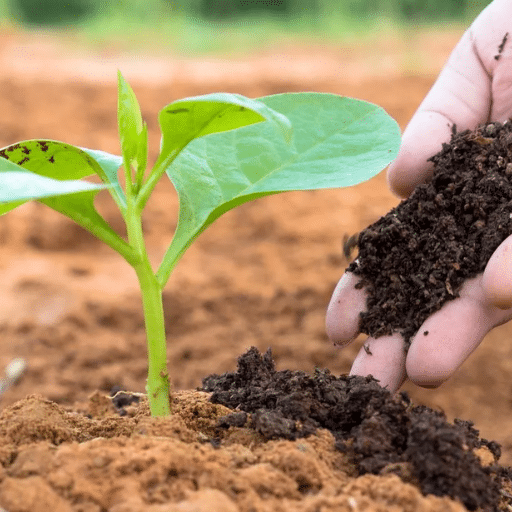
When composing organic tomatoes, therefore, compost has to be first in the game. As for improving soil structure, water retention, and the microbial diversity, these are just a few things with which compost has been vested. Already applied is age-old manure. It provides a baseline of nitrogen and phosphorus while composting too.
But, alone, neither one of them dishes out concentrated nutrition for a whole tomato season. Compost is sort of a multivitamin. The other fertilizers are your targeted supplements.
Right before transplanting, apply 2 to 3 inches of compost to your planting area, no less than two weeks, up to four weeks. Work it up into the soil to above 6 to 8 inches. If pots are used, add compost to 20 to 30 percent of the final potting mix.
Fish Emulsion and Seaweed Extract: Liquid Gold
Fish emulsion may normally contain an NPK ratio of around 5-1-1, thereby making it an excellent early season growth supplement. As it is partially decomposed, plants absorb it within days. You dilute it to 1-2 tbsp. per gallon of water and use it at 10-14-day intervals whilst in growth and vegetative development.
Sea kelp can have a weaker NPK as it usually offers 1-1-1 or near this. Designed for feeding the plants trace minerals, growth hormones, and some substances that reduce stress, sea kelp competes with foliar and drench applications during flowering and fruiting. For that reason, many organic growers regularly alternates fish and seaweed extract to address macronutrient and micronutrient needs.
Blood Meal and Bone Meal: Good Provision for Specific Purposes
Blood meal is probably the fastest-working organic source of nitrogen; it might serve for an NPK near 12-0-0, delivering greening effect to plants in 1-3 weeks. It can cause trouble if used in excess as the plant gets nitrogen burn. Flowering that can be delayed by weeks due to this excess.
Bone meal brings its phosphate in the form of 3-15-0, best suitable for root development and flowering. It breaks down so slowly that it should be worked into the soil before planting or used as a side dressing when the plants first flower. Bone meal will almost never burn plants up.
Amino Acid and Humic Acid Fertilizers: The Emerging Stars
Introduction of amino-acid organic fertilizers completes a significant enriching chapter for nourishing the organic tomatoes. In these fertilizers produced from plant or animal proteins and their hydrolysates, plants absorb directly their free amino acids without the need for microbial break-down. This way, the slow-biological break-down process that limits traditional organic fertilizers has been bypassed.
Research published in 2026 shows that amino acid fertilizers can increase tomato yields by 15 to 30 percent compared to conventional organic options (MDPI Horticulturae). Nutrient uptake becomes visible within three to seven days. Humic acid fertilizers complement this by improving soil structure, chelating micronutrients, and stimulating beneficial microbial populations.
At SHANDONG LOYAL CHEMICAL CO., LTD., we formulate amino acid and humic acid organic fertilizers to meet REACH, SGS, and BV certification standards. These products bridge the gap between traditional organic inputs and the performance growers expect from modern agriculture.
Interested in how amino acid fertilizers can transform your tomato yields? Contact our team for a custom formulation consultation.
Rock Phosphate and Greensand: Slow-Release Insurance
Rock phosphate is a natural mineral source of phosphorus with an NPK near 0 – 30 – 0. Awaiting release over months, it is ideal for soil amendments performed earlier. Greensand, on the other hand, fills the void with potassium and other trace minerals mined from ancient marine deposits. Both of these investments in soil fertility are long-term ventures of very low risk, having returns across numerous growing seasons.
How to Apply Organic Tomato Fertilizer for Maximum Results
The application technique is crucial and can make or break the best product and yet ends up terrible.
Soil Preparation after Planting
Two or four weeks before transplanting, mix 2 to 3 pounds of balanced organic fertilizer from granular per 100 sq.ft of bed. Work this into the top 6 inches of soil plus 2 to 3 inches of compost, providing a rich feeder zone for young plants that will not too inundate them.
Side Dressing: Professionals Know
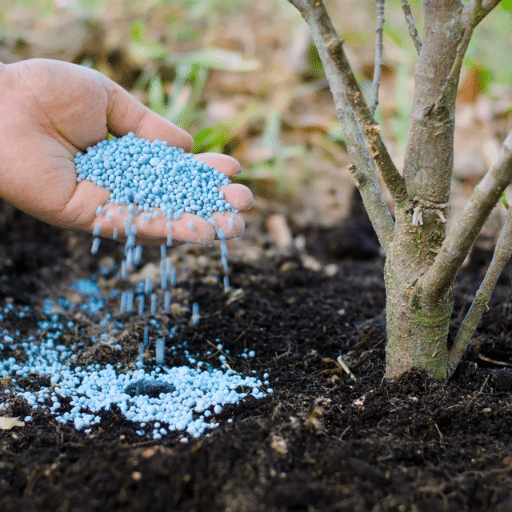
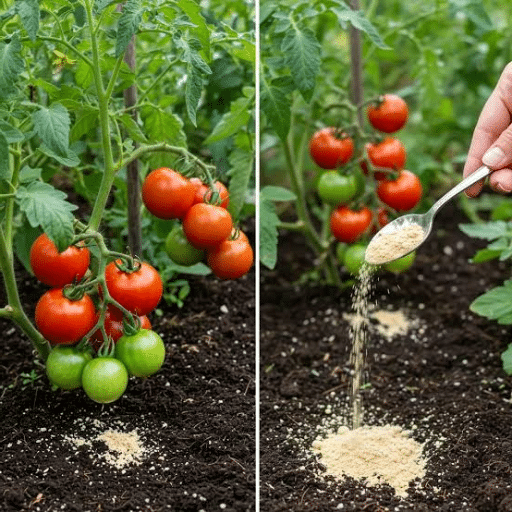
This is applying dry nutrients right along a 3-to-4-inch-wide trench right about 3-to-4 inches away from the stalk of a plant. This will make nutrients fall out nearer to the root zone, hurting them very little. For flowering plants, 1 tablespoon of bone meal or balanced organic granular fertilizer should be used per plant. Repeat this every four to six weeks during their blooming season.
Throughout and after a good side-dressing of fertilizer, water the entire area. This move helps to deduce the nutrients and help them reach the roots for uptake.
Foliar Feeding for Rapid Response
Liquid organic fertilizers such as fish emulsion, seaweed extract, or diluted compost tea can be sprayed onto leaves. This photosynthesis process is quicker, with leaves absorbing nutrients through their stomata, thus bypassing soil uptake issues.
Fertilizer mixed at half seaweed is applied directly to the leaf, but fish emulsion is a more penetrative foliar choice, while good with dilution. Application is set to the early morning or late evening on a cloudy day. Think of leaf burn under the hot sun. Avoid sunlit plants in the middle of the day. In the morning, make foliar feed applications every 7 to14 days during the fruiting or flowering process.
Container-Tomatoes: A Special Case
Container-grown tomatoes require more feeding since nutrients are carried away with every watering. Mix one teaspoon of organic granular feed mixture into the native mixture while planting to top-dress and be switched to a liquid organic feed mixture at fortnightly intervals during growing seasons. Fish emulsion and seaweed extract, due to their immediate nutrient release, work particularly well in containers, as there is no reliance on activity from soil microbials.
Organic Tomato Fertilizer Schedule: Week by Week

Consistency beats intensity in organic tomato growing. Small, regular feedings maintain steady nutrient availability without the spikes and crashes that stress plants.
Week-by-Week Feeding Calendar
Weeks 1-2 post-transplantation: Like diluted fish emulsion or compost teas for watering. Focus here on establishment, not heavy feeding.
Weeks 3-6: Apply fish emulsion every fortnight or side-dress with blood meal for dark green leaves and thick stems, which means the vegetative stage on track.
Week 7-8: Bone meal and seaweed extract work well. From the first flowers onward, the rest of the nitrogen activity must slow down.
Weeks 9-16: Phosphorus and potassium organics side dress every four to six weeks. Continue and monitor foliar feeding with seaweed extract every two weeks. Watch for blossom end rot, and add calcium as needed.
Weeks 17-20+: Begin with feeding every 3-4 weeks, focusing on potassium for fruit flavor and calcium for fruit integrity. Fertilize and stop when plants are no longer setting new fruit.
When to Switch from Nitrogen to Phosphorus
When the first flower opens, that is where transition occurs rather than with the first bud. A high nitrogen level can cause the buds to abort, but an open flower signifies a commitment to reproduction by the plant. From that moment on, adjust your fertilization schedule. Decrease or eliminate fish emulsion and blood meal. Increase bone meal, kelp meal, and potassium sources.
This transition is where our fruit tree fertilization principles overlap with tomato growing. Both crops shift from vegetative to reproductive nutrition mid-season, and both reward growers who time that shift correctly.
Troubleshooting Organic Tomato Fertilizer Problems
Nutrient-related issues are encountered by seasoned growers sometime. Understanding the symptoms before they worsen is crucial, as is knowing which one is the right organic remedy to implement.
Yellowing Lower Leaves: Nitrogen Deficiency
Old leaves will begin to have this pale green/yellow tone whilst the new growth remains a brilliant green. This happens when soil microbes are not breaking down organic matter quickly enough to meet the plants’ needs. A blast of fish emulsion or blood meal would quickly correct this nitrogen deficiency. For containers, yellowing often signifies that it is time to fertilize regardless of schedule.
Lush With No Flowering: Nitrogen Excess
Dark green to bluish-green leaves, thick stems appearing, and no flower cluster are sign of excess nitrogen. This is a common problem if the grower drives the vegetativity into flowering. Cease all nitrogen-heavy fertilizers here. Side-dress the border of the rooting zone with bone meal to transform the plant into reproductive mode. It might take 2 to 3 weeks for new flowering clusters to develop.
Blossom End Rot: Calcium Deficiency
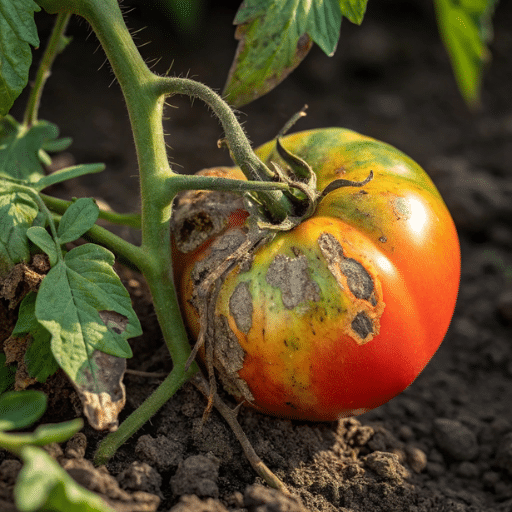
The primary symptom is a dark sunken area on the blossom end of the fruits. This is attributed to calcium deficiency, which is on the rise due to uneven watering that hinders calcium uptake. Add crushed eggshells, gypsum, or calcium-rich organic amendments to your soil, and maintain soil moisture with mulch and watering. Foliar sprays of calcium chloride or liquid calcium may give you quick results.
Poor Fruit Set: Low Phosphorus or Temperature Stress
If flowers open but fail to set fruit, the likely culprit is low phosphorus. An application of bone meal as a side-dressing during flowering will prevent this problem. Temperature plays a role here, while flowers will drop off too. Tomatoes fall off if anything gets below 55 degrees Fahrenheit or if the temperature rises up above 75 degrees Fahrenheit. Fertilizer cannot fix temperature stress, but sufficient phosphorus prep’ does help plants if conditions improve.
What to Look for in a Quality Organic Tomato Fertilizer

Without being overwhelmingly technical, let us delve into a unique plant fertile sector that is pretty crowded nowadays, where products with big promises are made, Surviving in this market would entail recognizing whether that is of good quality so you do not end up with an ineffective product and lost monies ultimately.
OMRI Listing and Organic Certifications
We can be found here as the Organic Materials Review Institute upon reviewing a product to see that it met the USDA organic standards. And then of course, when a product is organic-labeled, it is said to be verified by some pack, but this is supposed to hold good for home gardening and other operations certified for organic production. Always check OMRI status at http://omri.org/listings, whereas one is never supposed to agree with the information on the label.
REACH, SGS, and BV Certifications
Additional Certifications matter for commercial growers and export markets, indicating quality and safety. One of these certifications is a REACH certification, which signifies compliance with European regulations on chemical safety; SGS and Bureau Veritas certifications are given to confirm that the products are free of impurities (purity), have consistent composition (consistency), and adhere to predetermined standards of manufacture (manufacturing methods). That is why these certifications are deemed as a kind of guarantee that the products are indeed of an internationally recognizable standard, not mere marketing hype.
Now, in SHANDONG LOYAL CHEMICAL CO., LTD., all organic fertilizers bear a REACH certificate as well as are SGS and BV certified. This gives producer growers more confidence that the nutrients on the labels are present each and every time, there are no impurities, and no substandard additives to the products.
Solubility and Method of Application
Pre-plant, top-dress, and in-row, granularity in plan is already set considering easier figuring. They work perfectly for Q-Biology application before sowing, with contrasting use for in-furrow-gE applicability. Compacted particles may be applied sustain. Liquid concentrates are beneficial for the quick nutrient spray or can be chanted as foliar feed. Most amines reaffirm both bulk soil and foliar capabilities for application. Tail off product form: form to item applicator and/or apparatus.
Custom NPK Blending for Specific Needs
No single fertilizer is suitable in every soil and climate setup. NPK blending gives you the chance to have your fertilizer composition completely tailored for the soil report; the variety of crop, etc., and growth conditions. Especially if we were to ask the opinion of commercial greenhouse operations and extensive organic farms, standard products might not be enough.
Need a fertilizer tailored to your soil and tomato varieties? Learn about our custom fertilizer blending services.
The Bottom Line: Organic Tomatoes Start with Smart Nutrition
Yes, gardening great tomatoes organically [is not synonymous with] purchasing the most expensive product or following a rigorous, determining regimen, but is all about knowing the needs of each of your plants’ life cycles and supplying nutrition to them in a form they can use.
Those growers who, in September, have yielded pails of very fabulous tomatoes were the attentive ones in August–they [changed] from nitrogen to [a lot of] phosphorus when the first few flowers were [visible] and side-dressed with bone meal instead of top-dressing with a little compost. They foliar-fed seaweed extracts in the dark of summer when the sun drove the heat out of the baked clay soil and the soil microbes had slowed down.
The right organic tomato fertilizer can turn out a crop of tomatoes which you would skip buying at the local market. The organic matter will improve soil health, would go hand-in-hand in promoting sustainable agriculture, and because it’s also filled with black pearls of complex flavors, it is enough motivation to give it the extra care. The trick is to feed them what is most needed given their stage of growth and give it to them in a manner that will increase their efficiency in nutrient absorption through root and leaf intake. NOTE:
- Start with phosphorus for roots, transition to nitrogen for leaves, then switch to phosphorus and potassium for fruit
- Pray for and believe in liquid chemistry, but rely on greater grace from granular applications
- Always observe the first open blossom for the reason to pull back nitrogen and go for more phosphorus
- Keep a consistent watering schedule and have enough calcium available to prevent blossom end rot
- Pick those products that have been approved to have correct nutrient contents
The plant, your tomato, is already programmed toward fruit bearing; your duty is to feed them so that their programming can perform on its own. Get the nutrients correct, and then stay out of the way of the tomatoes.