
Last spring, Marcus spent $3,200 buying the best organic compost. This he spread evenly over his 12-acre operation, watered it diligently, and waited. By mid-season, his plants looked terrible with a purple tinge on the leaves and stunted fruit set. In fact, his soil was already rich in phosphorus. That costlier compost merely added more phosphorus instead of nitrogen, which would have restricted the growth which affected his crop. Marcus learned the hard lesson that knowledge is as crucial as the choice of organic source when applying fertilizers.
Surely you will agree that organic fertilizers can increase the fertility of the soil and help crops to perform better. Yet errors during the process can result in unnecessary depletion of nutrients, wastage of money, and lost potential yield. To mitigate this, this guide is laid out along manufacturer-validated stepwise instruction for all scales useful across various seasons. The readers considerably stand to gain from this in understanding the specific techniques producers utilize to test the soil, calibrate the applicator, apply the fertilizer, or mitigate any issues that may build up during application and beyond, including measures to prevent weeds and irrigation strategies unique to the particular crop. SelectListItemOptions
These eight guidelines are concentrated on achieving organic fertilizer application effectively in all contexts of one to hundreds of lands: be it vegetable production on half an acre or cereal production for 500 hectares. Now, let’s tread the same road.
Want to skip straight to customized recommendations for your soil? Our laboratory team formulates tailored organic blends based on actual soil test data, not guesswork. [Explore our customized fertilizer solutions] to see how precise formulation changes everything.
Step 1: Test Your Soil Before You Apply

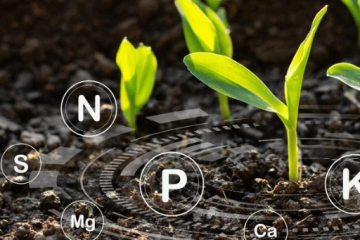
Consequently, soil analysis is a must-do first measure that stands between optimal results and costly regrets. When you receive your standard soil test, it may reveal the soil’s pH, nutrient availability of nitrogen (N), phosphorus (P), and potassium (K), percentage compositions of organic matter, and possibly critical micronutrients–such as magnesium, calcium, and sulfur–which might also come in ranking.
Not having these results is not ideal. Not knowing this and putting in some organic fertilizer is very expensive. The reason being organic nutrients are slow release; so if you make a blunder applying one, the symptoms would not show up immediately. Then you will have lost weeks of growing opportunity by the time you can visualize the fact from the deficiency symptoms.
Soil should be tested in every 2 to 3 years for an established cropping area. For high-value crops, such as vegetables, fruit trees, or greenhouses, it should be done every year. Standard tests range from 10to10to40 per sample, a negligible investment relative to the cost of misapplied fertilizer.
Interpreting findings is fairly straightforward as long as you have a good grip on the basics. Blood meal, fish emulsion, and legume-based compost are good sources of nitrogen when the numbers are low. Bone meal or rock phosphate works in response to a phosphorus deficiency. A potassium deficiency can be corrected with kelp meal or wood ash. Laser in on supplementing your amendments rather than relying on the universal “balanced” amendment.
Pro tip: For each unique landscape unit in your growing area, you should collect separate soil samples. Front lawn, vegetable bed, and orchard likely have different soil properties. By taking a single composite sample, you are bursting the important variability necessary for precision application.
Step 2: Choose the Right Organic Fertilizer for Your Soil and Crop
Test and find the product that addresses these imperfections. Organic fertilizers come in three primary forms, and each of them serves different applications.
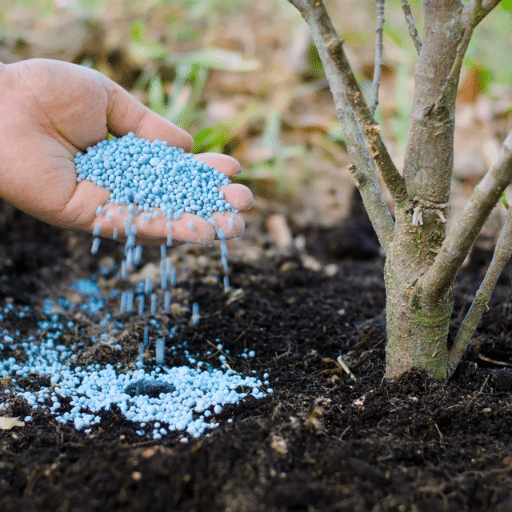
Granular or pelletized fertilizers released-upon breakdown by soil microbes provide slow nutrients that are otherwise suitable for long-term soil-building, lawn care, or pre-bed preparation. Solid organic fertilizer accounted for 65.6% of global revenue in 2025 because of its capacity to stabilize and utilize with mechanical spreaders.
Liquid organic fertilizers provide their nutrients quicker, including fish emulsion, seaweed extract, and compost teas. These work best on high-value crops and in greenhouse operations where precision is of interest.
Compost and manure assist in improving the soil structure while nourishing the plants. These are primarily to promote soil health and not for the targeted provision of nutrients. The United States is, after long-standing appraisal, still doubling up the scenery of organic fertilizers. Manures continue to hold the largest share of the market with 46.7% percent.
One should know how to read organic NPK values. Organic fertilizers display low NPK numbers compared to synthetic products because nutrient components are protected away in organic compounds and need decomposition to release their nutrients into the soil. An organic 4-3-2 may seem weak in comparison to the synthetic 20-20-20, but organic fertilization also provides complex materials for the soil biology to carry out the synthesis of plant nutrients in the medium to long term.
Common tests and requirements call for Europe’s REACH compliance, whether it might be true. The quality and credibility of a product are guaranteed by both SGS and BV certifications. OMRI listings are required for products which qualify under certified organic practices. When you choose products which have been certified, you obtain guaranteed nutritional content, contaminant analysis, and established quality. Predictability helps in accomplishing accurate measurements instead of estimated ones in applicative calculations.
For complex soil profiles or multi-crop operations, consider customized organic blends. Standardized products force you to compromise. A tailored blend matches your exact NPK needs, saving input costs and reducing waste. [Learn more about types of organic fertilizers] to understand which base materials suit your conditions.
Step 3: Select the Best Application Method

The method you select will dictate plant nutrient access. Presented is a summary of the conventional half-dozen processes of organic fertilizer application, listed by common usage.
Broadcasting (Soil Surface Application)
The organic fertilizer is evenly spread across the soil surface and lightly incorporated with a rake, hoe, or tiller. Broadcasting is applicable to lawns, large garden beds, and cereal crops. A drop or rotary spreader may be used for large-scale distributions.
Nutrient loss, however, remains the prime disadvantage. Surface deposition of organic material can cause volatilization and erosion before the material fully breaks down. It is imperative to completely blend scattered fertilizers throughout the top 2-4 inches of the soil, wherever possible.
Top Dressing
Organic fertilizer was applied to the soil surface as a thin layer for nurseries or perennials, trees, or shrubs in the absence of disturbing the roots.
When a person wants to plant dense, light-blocking trees, it really helps even with patience testing a smaller tree beside the one being tended to long-support the new tree with knowledge.
Side Dressing and Banding
Band or furrow placement of fertilizer is applied near the crop rows at about 6-8 inches from the base of a plant. Cover the fertilizer with soil after application, thus concentrating the nutrients close to the root system to benefit the nutrient availability and uptake of row crops like corn, tomatoes, peppers, etc.
The process of banding has the best results with mid-season feedings. When the vegetables come into bloom or fruiting, an application of targeted side dressing of phosphorus and potassium helps boost production without disturbing the roots already intact.
Soil incorporation.
During bed preparation or tilling, add compost or granular fertilizer to the topsoil mix. Maximum yield of nutrients equals faster microbial colonization with uniform penetration. This method generally prevails over the others for new garden beds, quick annual rotations, and field preparation.
Ideally, suppose you try to incorporate the amendments 2-4 weeks before planting as time for the beneficial microbes to start decomposition and nutrient release.
Foliar Application
Diluted liquid organic fertilizer is sprayed directly on the leaves for faster nutrient absorption. Complete foliar feeding can best help in treating micronutrient deficiencies, allowing quick remedies during crucial stages of growth.
Regarding dilution, most liquid organic fertilizers require 1 part of the fertilizer to 10-20 parts of water. Apply in the cool early morning hours to avoid burning of leaves. Even under shade, do not spray directly under the bright sun or when the temperature exceeds 85°F (29°C).
Fertigation (via Irrigation)
The liquid organic fertilizer is injected into drip irrigation or sprinkler systems. In the years 2025 and 2026, fertigation will continue to grow as the foremost method of application in high-value horticulture, greenhouse farming, and precision agriculture. Direct nutrient delivery to the root system, resulting in very little labor and minimal nutrient wastage.
Unfortunately, there is a catch: all recoveries are not full. Not all organic fertilizers are fully dissolved or fed through both the drip applicators. Used in conjunction with ever-so-organic liquid fertigation fertilizers. Just as well, regularly clean the injectors to avoid clogging.
|
Method |
Best For |
Equipment |
Rate Range |
Key Advantage |
|---|---|---|---|---|
|
Broadcasting |
Lawns, cereals, large beds |
Spreader |
5-10 lbs per 1,000 sq ft |
Fast coverage of large areas |
|
Top Dressing |
Trees, shrubs, perennials |
Hand or spreader |
1-2 lbs per plant |
Minimal root disturbance |
|
Side Dressing |
Row crops, vegetables |
Furrow opener |
1-2 lbs per 100 ft row |
Concentrated root-zone feeding |
|
Soil Incorporation |
New beds, annual crops |
Tiller, fork |
2-4 inches deep |
Uniform distribution |
|
Foliar Spray |
Quick fixes, micronutrients |
Pump sprayer |
1:10 to 1:20 dilution |
Rapid uptake |
|
Fertigation |
Greenhouses, precision ag |
Injector system |
Label-specific |
Minimal waste, automated |
Step 4: Calculate the Correct Application Rate
Rate of application will ensure whether you nourish your crop for maximum performance or just feed the weeds. Start with the application rate given by the manufacturer on the product label; this rate gives an account of the specific nutrient concentrations and release characteristics of the product in question.
For home gardens, think in terms of pounds per 100 square feet. Apply 1 to 2 pounds per 100 square feet of granular organic fertilizer for year-round feeding for most materials. For lawns, 5 to 10 pounds of a granule material for 1,000 square feet, adjusted for how you have set up the spreader.
Commercial farmers need more elaborate calculations to convert these per-area rates into scale fertilizer applications. For compost, it only takes 5 to 20 tons for a hectare. Apply about 385 pounds per acre of feather meal to provide 50 pounds of actual nitrogen. Fish emulsion requires a volume ranging from 25 to 100 gallons per acre at concentrations from 5-15 gals at a time.
The technical formula used by qualified agronomists is:
Optimal Rate = (Crop Nutrient Demand – Soil Nutrient Supply) / Fertilizer Nutrient Content
If your corn crop needs 150 pounds of nitrogen per acre. [You notice] your soil test shows 40 pounds available, and the organic fertilizer contains 10% nitrogen (0.10), then the calculation would be (150 – 40) / 0.10 = 1,100 pounds of fertilizer per acre.
Keep in mind that the organic elements release very gradually. A single application can provide the plant with the food for literally 2-4 months, depending on temperatures, moisture levels, and microbial activity. Moderate application timing based on-field plant response rather than strict calendar dates.
Step 5: Time the Application for Maximum Impact

Timing is key for both yielding a good and extraordinary harvest. These fertilizers are based mainly on organic substances. They work through the activity of microbes to release the nutrients which, in turn, need warmth and moisture to be biologically available in soil. This depends on applying within the limits of soil temperatures being above 50°F (10°C) and having adequate moisture.
General Timing Guidelines
For just about every fertilizer, apply any time during the active growing season when plants can take up nutrients immediately. Walk away should one be sweltering from the weather or has no spare moisture from which to work. This will cause fertilizer salts to suck the last of the moisture out of the ground and destroy your plants. Never apply fertilizers on the verge of heavy, ruining rain which washes away all unincorporated fertilizer, including phosphorus for lakes!
Crop-Specific Timing Guide
Vegetables: Incorporate compost or granular fertilizer into beds two to four weeks before planting; then feed nitrogen-heavy amendments as side dressing when the plants are 6 to 8 inches tall. Supplement with phosphorus and potassium during the flowers/blossom onset.
Fruit trees: Apply one dose of fertilizer after bud break in early spring and a second dose after bloom while the fruit is still small, during rapid fruit enlargement, after which refrain from fertilizing, as this might stimulate new growth, plead to nature to hold frost.
Lawns: Four feedings per year are optimal, applied early in spring, late in spring, early fall, and late fall preceding dormancy.
Commercial cereals: Apply a basal fertilizer to the soil at sowing to begin with root establishment. Top-dress these with nitrogen aimed at bulk increase at the tillering stage.
Frequency Guidelines
Granular organic fertilizers in general last 2-3 months from one application, and their application counts are based on the annual growth cycle. Liquid organics are much shorter-lasting, best dosed about every 3 weeks for the longest growing time. Compost and aged manure, in the larger mission, provide the long-term fertility they are approaching with the aim of one or two applications per year.
Elena was as an organic corn grower who was farming 40 hectares in Eastern Europe in the year 2023. She, likewise, hired the whole season’s organic fertilization while planting, keeping up the same timing of her application in line with conventional ways. By July, the corn was nitrogen deficient, but phosphorus was way too high. Working with our agronomy team, Elena broke up the application: 40% at planting, 35% tillering, and 25% V6 stage for the crop. This led to a 14% increase in yield the following year with 11% fewer total input costs because moisture was available when plants required growth-promotion.
Step 6: Apply Evenly and Safely
Frequent application prevents the uneven growth that indicates an amateur application. For large spaces like lawns and beds, calibrate the spreader before using. Fill the hopper, dial the recommended opening, then test spread on the tarp. Measure the amount of output worked out, and keep small adjustments to level up to the target.
When out and about garden to garden applying a fertilizer by hand: Break the measure of fertilizer down into two separate portions. When applying, walk across from one way, then back perpendicular the other way; you end up with crossed lines without a line left.
Keep all fertilizers away from leaves, stems, and trunks; granular organic matter will burn and rot plant tissue. Liquid concentrates will damage leaf surfaces if directly undiluted.
Particularly for manure-based products and concentrates, personal protection matters. Wear gloves, long sleeves, and eye protection. After handling, wash hands and equipment. Faeces from even organic products can contain pathogens if not adequately composted or otherwise processed.
Step 7: Water Thoroughly After Application
Water mobilizes the microbial breakdown of organic matter to release nutrients. When it is glossy as it has been for a day, your fertilizer has been laying there, not in contact with roots and microbes.
For lawns, apply a 15-minute rinse after spreading or dropping. This pushes granules into the soil, where they can be trapped by roots and microbes.
For gardens and trees, deep watering to the root zone is critical. Shallow watering is not reaching the roots. Deeper penetration into the range of 6 to 12 inches, depending on the type of crop, is expected.
Give the soil a light watering within 24 hours of application to encourage microbial colonization and nitrogen mineralization. A few times, watering directly after a foliar application contains extra sufficient humidity for the plants condensed by standing droplets, except when it just runs off and washes the nutrients away before they are taken up through the stomata.
Step 8: Monitor, Adjust, and Troubleshoot
Monitor this aspect of the activity. A sign will emerge to tell you there is a need for a slight modification in the way you are applying fertilizer.
One of the symptoms of nitrogen deficiency is the uniform development of yellowish-green starting from the older leaves. Stunted growth is usually seen, displaying pale green coloration. Purple or reddish pigmentation of the leaves on the underside accompanied by a poor root system comes from lack of phosphorus, whereas less potassium will have browning and curling leaf edges-including older leaves.
Equally, signs of over application are crucial. The presence of leaf tip burn, soil crust on the surface of the soil, or leaf apices of salt may occur, with lush but weak growth. Danger of organic fertilizers is that they may burn plants inside, showing it has been applied in excess and too near to the plant stem; this is particularly so when animal manure or concentrated blood meal is used.
If you believe, however, that you have over-applied, give them a good leaching by some deep watering to flush the excess salts from the soil. For severe cases, try incorporating partially converted compost as well as carbon-rich mulch, as this will temporarily immobilize excess nitrogen while the soil biology balances.
Crunchy soils leach away nutrients both quickly and frequent in constant need of light applications. Heavy clays with long nutrient-retention times will make them waterlogged to halt microbial activities. Accordingly, parameters can be adjusted on soil texture as a normal order regarding the time frame of either method, rather than coming up with the manufacturer’s instructions.
Integrating Organic Fertilizer with Synthetic Programs

Discover a secret that every guide will not tell you about! The decisive figures are that 64.4% of farmers actually mix both organic and inorganic fertilizers. Organic farming works with some crops, but the integrated farming ethos dominates the world of farming because it produces the best results.
The fundamental rule in this process is separation and not mixture: Apply organic amendments for long-term soil building and basal nutrition. Synthetic applications are to be made very selectively, during short periods when immediate nutrient release is of some consequence. Mixing organic and synthetic fertilizers in vats or batches, except that some products may have been so formulated, should not be done.
By wetting the sparring use by 2 to 4 weeks, showing an increased competition. This way, nutrient lockout can be avoided, and time is allowed for soil biology to process organic inputs before the synthetic salts change the chemistry. As the soil organic content increases, it is possible in time to reduce dependence on the synthetics and nitrogen to maintain the yields by adding these biological inputs.
Building long-term soil health does not require abandoning short-term productivity. Our amino acid and humic acid organic fertilizers are specifically designed to complement conventional programs, improving nutrient use efficiency from both organic and synthetic sources. [Explore our organic fertilizer range] to find products that fit your current operation.
Storage and Handling Best Practices
With the matter of organic fertilizer, the way the storage is composed is just as important as the way it is applied.
Storage for dry organic fertilizers should be in a cool, dry, covered place. Moisture makes the fertilizer clump and activate microbes prematurely, resulting in a loss of nutrients. Pelletized products, on the other hand, absorb moisture, which makes them dissolve into powder paste if left in the open.
Liquid organic fertilizers, on the other hand, require temperature-controlled storage. Extreme heat denatures biological active ingredients. Most liquid products store well between 40 and 80°F (4-27°C). Shake or agitate containers before use, since contents tend to settle during storage.
With manure and compost, special extra attention is necessary. Spread only fully composted manure for crops. Fresh manure contains pathogens and soluble salts that burn plants and pollute produce. Compost manure for at least 6 months, turning regularly, in order to achieve the thermophilic heating that destroys weed seeds and harmful organisms.
The period of sustainability varies by the product. For example, dried granules usually carry a life of 1-2 years if kept wisely. The liquid concentrates remain potent for a duration of 12-18 months. The compost builds quality over time, up to a point, but the nitrogen content drops after about 18-24 months.
Frequently Asked Questions

How do you apply stepwise an organic fertilizer?
Soil tests are done, and the believers supply materials and then offer the proper applications to fit your crop, make rate calculations, and apply the active-growing-season scheduling by timing. The product must be paired with the product deficiency, and then the specific method and application rate to suit the chosen crop. Soil; more often; is topped with burning sugarcane refuse or mulch.
How are organic fertilizers applied?
Primary forms of application would be broadcast, top-dress, sidedress or band, incorporate into soil, foliar spray, fertigation by irrigation systems.
When should I apply organic fertilizer?
Apply during the active growing season, except during heavy rainfall or drought-dormant conditions, and seasonality by particular crop: vegetables (pre-planting, mid season), fruit trees (early spring: post-bloom), lawns (four seasonal applications).
How much organic fertilizing should I apply?
Always follow manufacturers’ rates of application. General rates of application consist of 1 to 2 lb per 100 square feet in garden beds, 5 to 10 pounds per 1,000 sq ft in lawns, and 5 to 20 tons per acre for commercial use.
Can you put organic fertilizer on top of the soil?
Yes, top dressing can work well on established perennials and trees. For better results, one should lightly incorporate the applied fertilizer onto the topsoil to prevent nutrient loss and speed up the microbial breakdown.
How often should organic fertilizer be applied?
Granular organic fertilizers typically feed for about 2-3 months. Liquid organics work best every three weeks during the growing seaso n. More inoculated compost and aged manure applications are required every year.
Do you need to water after applying organic fertilizer?
Yes, because watering triggers microbial decomposition and sends nutrients down to roots. Lawns require at least 15 minutes of overnight irrigation. Gardens need deep watering down but still need to hold water 6 to 12 inches.
Can organic fertilizers burn plants?
Yes if over-applied and placed too close to stems. The highest burn risks come from freshly applied manures, concentrated blood meal, and other liquid products applied at full concentration. Keep fertilizers away from direct contact of the plant and follow the rate guidelines, always.
How long does organic fertilizer take to work?
With liquid organic fertilizers showing results within days to around two weeks and granular organic fertilizers requiring around two to six weeks. The time of fertilizer use in granules again depends on soil temperature and moisture. Compost and other slow-release organic amendments are used over a period of months to years to actually build fertility.
Conclusion
Applying organic fertilizer correctly is not complicated, yet it is so. Those farmers and growers who get exceptional results maintain consistency in their application framework. A test before application. Matching the plant with appropriate deficiency theory. Choose the method according to your crop species and scale. Other methods should strictly follow rates. Always time the application for the plant comfort but not the calendar date. They are mandatory and applied consistently and responsibly-keeping everything equal-let the plants tell.
The five principles are as follows:
- Soil testing prevents expensive guesswork. Forgetting that is to waste at least $5 for another dollar thrown at inputs.
- Method matters as much as material. Simply put: broadcasting, banding, or fertigation-the application depends on the scenario.
- Timing aligns with plant biology, not your convenience. The split applications often perform better compared to dumping heavy doses once.
- Certified products will perform with almost predictable results. With a REACH, SGS, or BV certification, you know what you are getting for value, safety to human health for your plants.
- It is the integration that wins over the ideology. A balance of organic and synthetic inputs at the right time gives an advantage not only over maintaining soil health, but also over getting higher yields in the short-term.
Ready to stop guessing and start growing with precision? Contact SHANDONG LOYAL CHEMICAL CO., LTD. for customized organic fertilizer blends tailored to your soil test results, bulk application guidance for commercial operations, or certification documentation for export markets. Our laboratory and experimental fields have tested formulations across climate zones worldwide. Let us put that expertise to work for your next growing season.
If you would like to know something about crops and fertilizers, we have some small guides on [best organic fertilizer for vegetables], [best organic fertilizer for fruit trees], [ organic fertilizer for cannabis], and [Tomato Plant Fertilizer Organic]. Speaking of nitrogen deficiency, we also unpacked the topic of [best organic nitrogen fertilizer] and several strategies for applying fertilizers.