Carlos Mendez watched his Elberta peach trees explode with blossoms that March morning in Georgia. Pink petals carpeted the orchard floor, and the hum of pollinators filled the air. He had applied a heavy dose of organic fish emulsion the week before, convinced that more nitrogen meant more fruit.
By June, the picture changed. His trees carried a heavy crop, but the peaches were small, bland, and riddled with split pits. Worse, a flush of tender new growth in late summer triggered a severe outbreak of peach leaf curl the following spring. Carlos had fed his trees, but he had fed them at the wrong times with the wrong balance.
You already know peach trees need rich soil and consistent nutrition. Choosing the best organic fertilizer for peach trees is where most growers, like Carlos, make costly mistakes. Walk into any garden center and you will find dozens of bags promising bigger, sweeter fruit. The reality is that peach trees shift their nutritional demands dramatically from dormancy through harvest. Feed them incorrectly, and you get small fruit, weak flavor, and stressed trees vulnerable to disease.
This guide breaks down exactly which organic options deliver real results for peach trees. You will learn when to fertilize peach trees organically, how much to apply by tree age, and how to match nutrition to each growth stage. We will cover application techniques, split pit prevention, and how to customize blends for your specific soil. By the end, you will have a clear, season-by-season plan rooted in stone fruit science.
At SHANDONG LOYAL CHEMICAL CO., LTD., we formulate certified organic fertilizers backed by laboratory testing and experimental field data. We have seen what works across orchards in North America, Europe, and Asia, including China, where the majority of the world’s peaches are grown. The advice below comes from that experience.
Want to explore how tailored organic blends can support your peach orchard? Discover our customized fertilizer solutions.
What Do Peach Trees Actually Need from Fertilizer?

Peach trees are aggressive growers and heavy feeders. They push vigorous new shoots, set fruit on one-year-old wood, and demand a steady nutrient supply from bud break through post-harvest recovery. Understanding their nutritional requirements is the foundation of every effective organic fertilization program.
Macronutrients and Their Roles
Nitrogen, phosphorus, and potassium form the backbone of peach tree nutrition. Nitrogen drives vegetative growth, leaf development, and the formation of new fruiting wood. Without adequate nitrogen, peach trees produce short, pale shoots and small leaves.
Phosphorus supports root expansion, flower bud formation, and early fruit development. Potassium regulates water movement, sugar transport, and fruit size. During the weeks before harvest, potassium uptake spikes dramatically. According to UC Davis Fruit and Nut Research Center, mature peach trees can remove 60 to 80 lbs of K2O per acre annually just in harvested fruit.
This is why Carlos’s peaches tasted bland. His heavy nitrogen application early in the season neglected the potassium his trees needed during fruit development. The excess nitrogen also fueled vegetative growth at the expense of sugar accumulation. If you want a deeper breakdown of how NPK ratios affect fruit tree performance at each growth stage, the guide on NPK for Fruit Trees: A Complete Guide to Ratios, Timing, and Application covers this in detail.
Secondary and Micronutrients
Calcium deserves special attention for peach growers. It strengthens cell walls and prevents split pit, a physiological disorder that ruins fruit quality. Magnesium, often supplemented through Epsom salt applications, supports chlorophyll production and prevents the yellowing between leaf veins known as interveinal chlorosis.
Boron influences pollen viability and fruit set. Zinc prevents rosetting, the clustering of small leaves at shoot tips. Iron becomes critical in alkaline soils where high pH locks it out of root reach. Peach trees absorb nutrients most efficiently when soil pH sits between 6.0 and 6.5.
Growth Stage Nutrition Shifts
Peach trees do not need the same nutrients in February and July. From dormancy to bloom, they crave nitrogen to fuel spur development and strong bloom. During fruit set and pit hardening, phosphorus and calcium take priority for cell division and pit formation.
As fruit approaches harvest, potassium becomes critical for sugar accumulation and final fruit size. After harvest, trees shift toward building carbohydrate reserves and storing nutrients in roots for the following spring.
Matching your organic fertilizer for peach trees to these shifting demands is what separates small, forgettable fruit from orchard-quality peaches.
The Best Organic Fertilizers for Peach Trees (Ranked by Use Case)
Not all organic fertilizers perform equally for peach trees. Some excel at building soil structure. Others deliver rapid nutrient availability. The best choice depends on your tree’s age, soil condition, and growth stage.
Determining the best organic fertilizer for peach trees depends on your specific goals. Are you building soil health, fueling vegetative growth, or pushing fruit sugar content? Each scenario calls for a different approach. For growers who want a broader comparison of organic fertilizer options across fruit tree species, the Best Organic Fruit Tree Fertilizer: A 2026 Buyer’s Guide for Higher Yields and Healthier Soil is a useful companion resource.
Compost and Well-Rotted Manure
Compost remains the foundation of most organic peach programs. It improves soil structure, feeds beneficial microbes, and releases nutrients slowly over 4 to 12 weeks. Well-rotted manure adds nitrogen and organic matter, though fresh manure can burn roots and introduce pathogens. Apply compost in early spring, spreading it evenly from the trunk to the dripline.
Compost works best as a base layer, not a complete solution. Most composts lack the precise NPK ratios peach trees need during fruit development. They also vary wildly in nutrient content. One batch might test at 1-1-1, while another hits 2-1-2. Without testing, you are essentially guessing.
Blood Meal and Bone Meal
Blood meal delivers a rapid nitrogen boost with an NPK around 12-0-0. It is ideal for young, non-bearing trees that need structural growth. Bone meal provides phosphorus and calcium at roughly 3-15-0, making it valuable during flowering and early fruit set. Used together, these amendments create a simple two-part organic system.
The downside is inconsistency. Blood meal releases quickly, which can trigger tender flush growth vulnerable to frost and disease. Bone meal breaks down slowly in cool soils, sometimes too slowly for spring demands. Neither provides potassium, so you will need a third amendment to support fruit development.
Fish Emulsion and Kelp Extracts
Fish emulsion offers a balanced, fast-acting organic liquid fertilizer typically rated around 5-1-1. It works well for foliar feeding and soil drenches during periods of rapid growth. Kelp and seaweed extracts supply micronutrients, plant hormones, and stress-relief compounds that improve tree resilience during heat waves and drought.
These products excel as supplements, not primary nutrition sources. Their nitrogen content is modest, and they lack the potassium density needed for high-quality fruit. Use them for mid-season boosts or recovery after stress events.
Amino Acid and Humic Acid Formulations
This is where advanced organic fertilization diverges from basic backyard practices. Amino acid-based organic fertilizers provide nitrogen in plant-available forms that bypass soil microbial processing. Humic acid soil conditioners improve cation exchange capacity, meaning your soil holds onto nutrients longer instead of letting them leach away.
These formulations represent the cutting edge of eco-friendly orchard management. They combine the sustainability benefits of organic fertilizers with the precision and consistency that commercial growers demand. At SHANDONG LOYAL CHEMICAL CO., LTD., we manufacture amino acid and humic acid products specifically designed for fruit tree applications, with batch-to-batch consistency verified by SGS and BV certification.
| Organic Fertilizer Type | Best For | NPK (Typical) | Release Speed |
|---|---|---|---|
| Compost/Manure | Soil building, base nutrition | 1-1-1 to 2-1-2 | Slow (4-12 weeks) |
| Blood Meal | Young trees, nitrogen boost | 12-0-0 | Fast (1-2 weeks) |
| Bone Meal | Flowering, calcium support | 3-15-0 | Slow (4-8 weeks) |
| Fish Emulsion | Mid-season supplements | 5-1-1 | Fast (1-2 weeks) |
| Amino Acid/Humic | Precision nutrition, soil health | Varies by blend | Moderate |
When to Fertilize Peach Trees Organically

Timing matters as much as product selection. Apply the right fertilizer at the wrong moment, and you waste money, stress the tree, or invite disease the following season. Peach trees follow seasonal patterns shared by most temperate fruit crops — if you grow other species alongside your peaches, the guide on When to Fertilize Fruit Trees: A Seasonal Guide for Every Climate and Growth Stage can help you coordinate your whole orchard calendar.
Early Spring (Before Bud Swell)
The main application window opens in early spring, just before buds begin to swell. This is when peach trees draw heavily on stored reserves to push new growth and bloom. A balanced organic fertilizer with an NPK around 10-10-10 supports this explosive vegetative phase for mature trees. Young trees benefit from a slightly higher nitrogen blend.
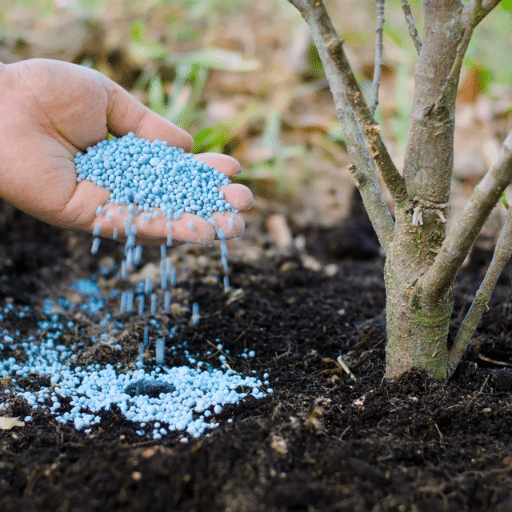
Spread granular products or work compost into the topsoil from the trunk to the dripline. For liquid organic fertilizers, apply as a soil drench after the last hard frost.
Sarah Jennings learned this lesson in her North Carolina backyard orchard. For two seasons, she applied organic fertilizer in late April, well after her trees had bloomed. The trees leafed out fine, but fruit set stayed sparse and uneven.
A local extension agent from NC State Extension reviewed her schedule and pointed out the problem. By April, her trees had already committed their stored energy to bloom. The late fertilizer fed summer leaf growth instead of supporting the fruit that needed potassium. Sarah switched to a pre-swell application in late February, added a potassium-heavy organic feed after fruit set, and her third-year harvest doubled in volume.
Late Spring to Early Summer (After Fruit Set)
Once fruit has set and begun to size, shift your focus. Reduce nitrogen and increase potassium and calcium. This second application, typically 3 to 5 weeks after full bloom, supports fruit expansion, sugar accumulation, and pit hardening. Organic potassium sources like potassium humate and organic calcium amendments work best during this window.
Mid-Summer (Fruit Development Stage)
As fruit approaches maturity, potassium demand peaks. A third light application of potassium-focused organic fertilizer can improve fruit size and sweetness in heavy-bearing years. Avoid nitrogen entirely during this window. Late nitrogen stimulates tender new growth that invites peach leaf curl spores and fails to harden off before autumn.
Post-Harvest (Late Summer to Early Fall)
After the last peach is picked, trees need to rebuild reserves. A low-nitrogen, phosphorus-focused organic amendment supports root growth and carbohydrate storage. This is also the best time to apply compost and humic acid soil conditioners. They improve soil structure over winter without pushing unwanted vegetative growth.
What to Avoid in Late Fall and Winter
Never apply high-nitrogen organic fertilizers after September in most temperate zones. Late nitrogen stimulates tender new growth that will not harden off before frost. In humid climates, this fresh growth creates ideal conditions for peach leaf curl infection during winter rains.
If you must fertilize in late autumn, use low-nitrogen soil amendments like compost or humic acid conditioners that improve soil biology without pushing vegetative growth.
How to Apply Organic Fertilizer the Right Way
Even the best organic fertilizer for peach trees fails if applied incorrectly. Method, placement, and concentration all influence results. For a thorough walkthrough of application methods that apply across all fruit tree types, see How to Fertilize Fruit Trees: A Complete Season-by-Season Guide.
Soil Surface Broadcasting
For granular and compost applications, broadcast evenly across the soil surface from the trunk to the dripline. This is where the active feeder roots concentrate. Lightly scratch the material into the topsoil, then water thoroughly. Organic fertilizers need moisture to activate microbial breakdown and nutrient release.
Foliar Feeding for Micronutrients
Liquid organic fertilizers like fish emulsion, kelp extract, and micronutrient blends can be applied directly to leaves. This bypasses soil chemistry issues and delivers nutrients straight to the tree. Foliar feeding works best for micronutrient corrections, especially boron and zinc at bloom time. Apply in early morning or evening to avoid leaf burn.
The One-Foot Buffer Rule
Keep all fertilizer at least 12 to 18 inches away from the trunk. Direct contact with bark or surface roots can cause chemical burn, especially with concentrated organic amendments like blood meal. Young trees are particularly vulnerable. Create a donut-shaped application zone, not a mound against the trunk.
Ready to match fertilizer to your orchard’s exact conditions? Contact our team for a tailored organic blend based on your soil test results.
Preventing Peach Disorders Through Nutrition

Peach trees suffer from several physiological disorders with direct nutritional connections. The right organic fertilizer program prevents most of them.
Split Pit and Calcium Deficiency
Split pit ruins otherwise perfect peaches. The pit cracks open, allowing flesh to grow into the cavity and creating misshapen, unmarketable fruit. It is most common in early varieties and heavy-bearing years.
The disorder links to calcium deficiency during the critical pit hardening stage. Fast vegetative growth, inconsistent watering, and excess nitrogen all compete with calcium for transport into developing fruit. When calcium is inadequate during the weeks after bloom, cell walls in the pit remain weak.
Calcium application during and after bloom can reduce split pit incidence significantly. Organic growers can use gypsum, liquid calcium amendments, or bone meal applied in early spring. Equally important is mulching. A 3 to 4 inch layer of organic mulch around the dripline stabilizes soil moisture, which is essential for steady calcium uptake.
The Tanaka family orchard in Japan’s Yamanashi Prefecture struggled with split pit on their early-ripening Hakuto peaches. Soil tests showed adequate calcium, but tissue analysis revealed low calcium levels in developing fruit.
After working with a soil specialist, they implemented a three-part organic approach: early spring bone meal application, mid-season liquid calcium foliar sprays, and heavy rice straw mulching. Within two seasons, split pit dropped from 40% to under 10%. Their premium peach pack-out rate for the Tokyo market improved dramatically, and their organic certification remained intact.
Peach Leaf Curl and Late-Season Nitrogen
Peach leaf curl is a fungal disease, but tree vigor plays a major role in susceptibility. Excess nitrogen in late summer produces soft, succulent growth that is far more vulnerable to infection. Keeping nitrogen applications confined to early spring reduces this risk considerably.
Balanced nutrition also helps trees recover faster in spring. Trees entering winter with adequate potassium and phosphorus stores produce stronger buds that are less affected even when spores are present.
Gummosis and Over-Fertilization
Gummosis, the oozing of sap from trunk and branches, often follows physical damage or bacterial infection. However, excessive nitrogen and salt buildup from over-fertilization can trigger or worsen the condition. Organic fertilizers carry lower salt risk than synthetic formulations, but even compost piles against the trunk can cause problems. Keep all organic matter away from the base of the tree.
Customizing Organic Fertilizer for Your Soil and Climate
Off-the-shelf organic fertilizers work for some growers. But if you are managing multiple varieties, challenging soil, or scaling beyond a backyard orchard, customization becomes essential.
Start with a Soil Test
Every effective fertilization program begins with data, not guesswork. A comprehensive soil test reveals pH, macronutrient levels, organic matter percentage, and micronutrient availability. Test in late fall or early spring, before applying amendments. Retest every 2 to 3 years to track changes.
Without a soil test, you cannot know whether your trees lack phosphorus, struggle with iron chlorosis due to high pH, or need sulfur to lower alkalinity. You are flying blind.
pH Adjustments for Better Nutrient Uptake
Peach trees absorb nutrients most efficiently between pH 6.0 and 6.5. In acidic soils below 6.0, add agricultural lime to raise pH and supply calcium. In alkaline soils above 7.0, elemental sulfur or organic matter amendments gradually lower pH. These adjustments take 6 to 12 months to fully manifest, so plan ahead.
Iron chlorosis is a common problem in alkaline soils. The soil may contain plenty of iron, but high pH makes it unavailable to peach roots. Foliar iron sprays and soil sulfur amendments address the root cause.
Adapting to Soil Texture
Sandy soils drain quickly and leach nutrients. Organic peach growers in sandy regions need more frequent, lighter applications of organic fertilizers and heavier compost amendments to build water-holding capacity.
Clay soils hold nutrients but can become waterlogged. Heavy compost incorporation improves drainage, while less frequent, deeper feeding reduces the risk of anaerobic conditions around roots.
When Tailored Blending Makes Sense
Commercial orchards and serious hobby growers often outgrow bagged products. Your soil might test low in potassium but adequate in phosphorus. A standard 10-10-10 organic fertilizer wastes money on unnecessary phosphorus while underfeeding potassium. This is where tailored solutions become valuable.
Finding the best organic fertilizer for peach trees often means moving beyond one-size-fits-all products. When your soil test reveals specific imbalances, a customized approach delivers better results at lower cost.
At SHANDONG LOYAL CHEMICAL CO., LTD., we specialize in creating customized organic NPK blends based on soil test data. Our laboratory analyzes your sample, then formulates a precise blend using amino acids, humic acid, seaweed extracts, potassium humate, and mineral amendments. Every batch carries REACH, SGS, and BV certification. Whether you manage 5 trees or 5,000, tailored blending eliminates waste and targets exactly what your orchard needs.
Order a tailored organic fertilizer blend designed for your orchard’s exact soil profile and climate conditions.
Nectarine Trees: The Same Rules Apply
Nectarines are genetically identical to peaches. They belong to the same species, differing by a single recessive gene that controls skin fuzz. Because they are the same species, nectarine trees have identical nutritional requirements, fertilization schedules, and disorder susceptibility.
Everything in this guide applies equally to nectarine trees. The NPK needs, timing, application methods, and disorder prevention strategies remain the same. If you are searching for the best organic fertilizer for peach trees and happen to grow nectarines instead, you have already found your answer.
This genetic overlap means you can often fertilize peach and nectarine blocks together in commercial orchards. The only difference is that nectarines, with their smooth skin, sometimes show more visible split pit damage. Calcium management becomes even more critical.
Organic vs. Synthetic: What Orchard Science Actually Shows

The debate between organic and synthetic fertilization often generates more heat than light. The science is more nuanced than most gardening blogs suggest.
Soil Biology Benefits
Organic fertilizers feed soil microbes, which in turn feed your trees. This biological intermediary improves soil structure, increases water retention, and builds long-term fertility. Synthetic fertilizers deliver nutrients directly, bypassing the microbial ecosystem. Over time, this can reduce soil organic matter and microbial diversity. For orchards managed as long-term investments, soil biology matters.
Slow-Release Advantages
Organic fertilizers release nutrients over 4 to 12 weeks, compared to 1 to 3 weeks for many synthetic formulations. This steady supply reduces leaching, prevents nutrient burn, and matches the tree’s natural uptake patterns. For peach trees, where fruit quality depends on steady potassium delivery during the weeks before harvest, this consistency is a major advantage.
When a Hybrid Approach Works
The best orchards often blend both worlds. An organic base of compost and humic acid conditioners builds soil health. Targeted amendments address specific deficiencies. This balanced approach respects soil biology while ensuring no nutrient limits your yield potential. If you grow other fruit trees alongside your peaches, you may find it helpful to compare approaches — the guides on Best Organic Fertilizer for Apple Trees: A Grower’s Guide to Healthier Harvests and Best Organic Fertilizer for Citrus Trees: A Grower’s Guide to Sweet Success show how organic nutrition strategies shift across different fruit crops.
Conclusion
Choosing the best organic fertilizer for peach trees is not about finding a magic product. It is about matching nutrition to growth stage, soil conditions, and tree age. Test your soil first. Apply a balanced organic blend before bud swell. Shift to potassium and calcium after fruit set. Avoid late-season nitrogen. Mulch consistently. And when bagged products no longer fit your needs, consider a tailored blend designed for your specific orchard.
The growers who get the best results treat fertilization as a system, not a single application. They observe their trees, test their soil, and adjust season by season. That discipline pays off in heavier harvests, sweeter fruit, and healthier trees that produce for decades.
Start with your soil. Order a soil test this season, then reach out to discuss how our certified organic fertilizers and tailored blending services can help you build a precision nutrition program for your peach orchard.